II. Medizinische Klinik und Poliklinik, Klinikum rechts der Isar, Technical University of Munich, Munich, Germany.
PLoS One. 2010 Jun 7;5(6):e10988. doi: 10.1371/journal.pone.0010988.
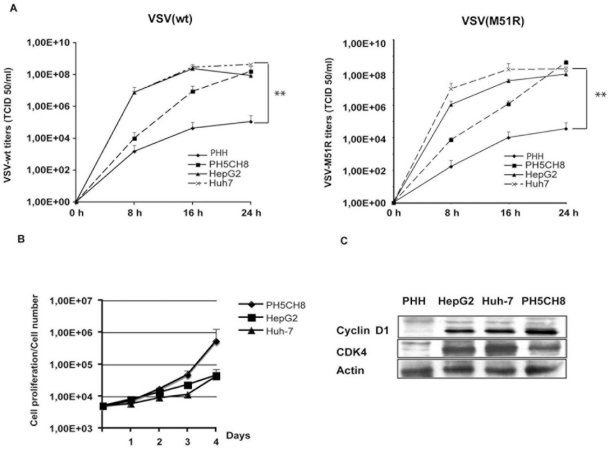
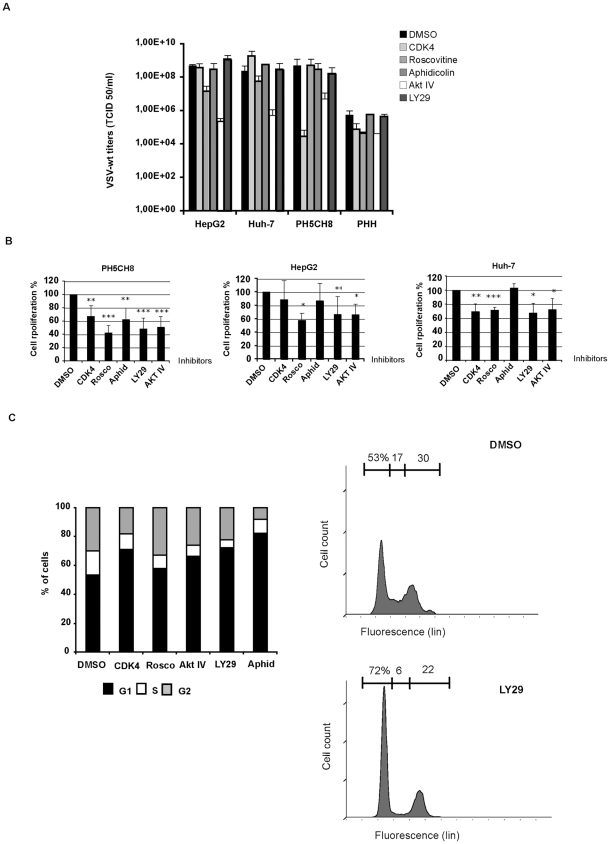
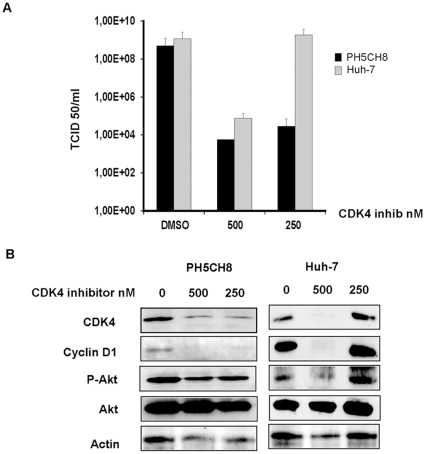
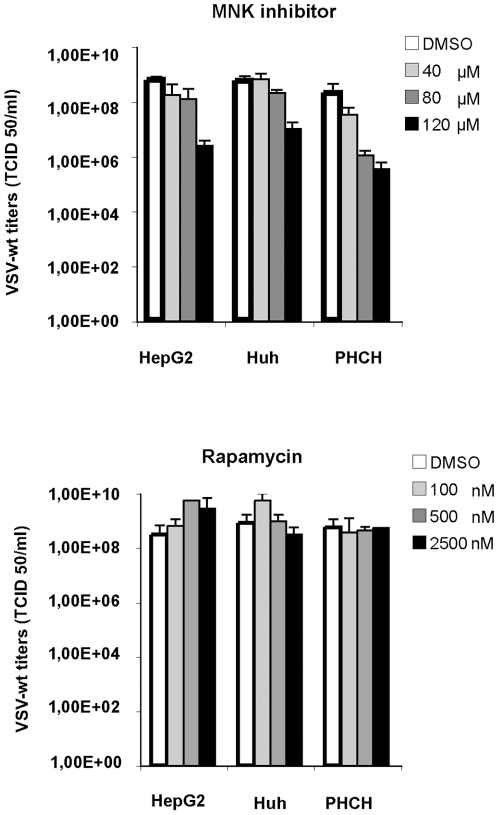
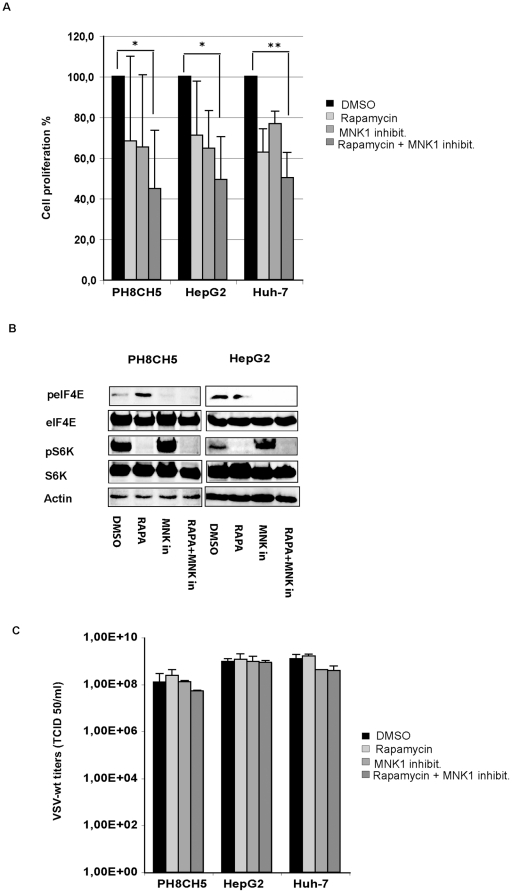
The intrinsic oncolytic specificity of vesicular stomatitis virus (VSV) is currently being exploited to develop alternative therapeutic strategies for hepatocellular carcinoma (HCC). Identifying key regulators in diverse transduction pathways that define VSV oncolysis in cancer cells represents a fundamental prerequisite to engineering more effective oncolytic viral vectors and adjusting combination therapies. After having identified defects in the signalling cascade of type I interferon induction, responsible for attenuated antiviral responses in human HCC cell lines, we have now investigated the role of cell proliferation and translation initiation. Cell cycle progression and translation initiation factors eIF4E and eIF2Bepsilon have been recently identified as key regulators of VSV permissiveness in T-lymphocytes and immortalized mouse embryonic fibroblasts, respectively. Here, we show that in HCC, decrease of cell proliferation by cell cycle inhibitors or siRNA-mediated reduction of G(1) cyclin-dependent kinase activities (CDK4) or cyclin D1 protein expression, do not significantly alter viral growth. Additionally, we demonstrate that translation initiation factors eIF4E and eIF2Bepsilon are negligible in sustaining VSV replication in HCC. Taken together, these results indicate that cellular proliferation and the initiation phase of cellular protein synthesis are not essential for successful VSV oncolysis of HCC. Moreover, our observations indicate the importance of cell-type specificity for VSV oncolysis, an important aspect to be considered in virotherapy applications in the future.
水疱性口炎病毒(VSV)的内在溶瘤特异性目前正被用于开发治疗肝细胞癌(HCC)的替代治疗策略。确定在不同转导途径中定义 VSV 在癌细胞中溶瘤的关键调节因子,是工程更有效的溶瘤病毒载体和调整联合治疗的基本前提。在确定了负责人 HCC 细胞系中抗病毒反应减弱的 I 型干扰素诱导信号级联缺陷后,我们现在研究了细胞增殖和翻译起始的作用。细胞周期进程和翻译起始因子 eIF4E 和 eIF2Bepsilon 最近被确定为 T 淋巴细胞和永生化的小鼠胚胎成纤维细胞中 VSV 允许性的关键调节因子。在这里,我们表明在 HCC 中,细胞周期抑制剂或 siRNA 介导的降低 G1 周期蛋白依赖性激酶(CDK4)或细胞周期蛋白 D1 蛋白表达的细胞增殖减少不会显著改变病毒生长。此外,我们证明翻译起始因子 eIF4E 和 eIF2Bepsilon 在维持 HCC 中的 VSV 复制方面微不足道。总之,这些结果表明,细胞增殖和细胞蛋白质合成的起始阶段对于 HCC 的成功 VSV 溶瘤作用并不是必需的。此外,我们的观察结果表明了 VSV 溶瘤的细胞类型特异性的重要性,这是未来病毒治疗应用中需要考虑的一个重要方面。