Ahn Kay, Johnson Douglas S, Cravatt Benjamin F
Pfizer Global Research and Development, Groton/New London Laboratories, Groton, CT 06340.
Expert Opin Drug Discov. 2009 Jul;4(7):763-784. doi: 10.1517/17460440903018857.
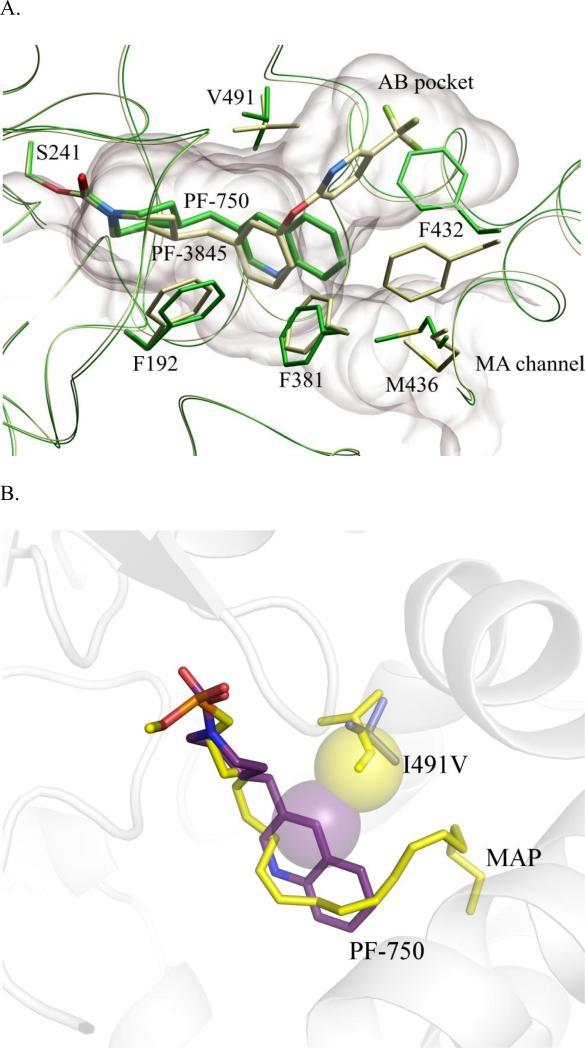
Fatty acid amide hydrolase (FAAH) is an integral membrane enzyme that hydrolyzes the endocannabinoid anandamide and related amidated signaling lipids. Genetic or pharmacological inactivation of FAAH produces analgesic, anti-inflammatory, anxiolytic, and antidepressant phenotypes without showing the undesirable side effects of direct cannabinoid receptor agonists, indicating that FAAH may be a promising therapeutic target. OBJECTIVES: This review highlights advances in the development of FAAH inhibitors of different mechanistic classes and their in vivo efficacy. Also highlighted are advances in technology for the in vitro and in vivo selectivity assessment of FAAH inhibitors employing activity-based protein profiling (ABPP) and click chemistry-ABPP, respectively. Recent reports on structure-based drug design for human FAAH generated by protein engineering using interspecies active site conversion are also discussed. METHODS: The literature searches of Medline and SciFinder databases were used. CONCLUSIONS: There has been tremendous progress in our understanding in FAAH and development of FAAH inhibitors with in vivo efficacy, selectivity, and drug like pharmacokinetic properties.
脂肪酸酰胺水解酶(FAAH)是一种整合膜酶,可水解内源性大麻素花生四烯乙醇胺及相关酰胺化信号脂质。FAAH的基因失活或药理学失活可产生镇痛、抗炎、抗焦虑和抗抑郁表型,而不会表现出直接大麻素受体激动剂的不良副作用,这表明FAAH可能是一个有前景的治疗靶点。目的:本综述重点介绍了不同作用机制类别的FAAH抑制剂的开发进展及其体内疗效。还重点介绍了分别采用基于活性的蛋白质谱分析(ABPP)和点击化学-ABPP对FAAH抑制剂进行体外和体内选择性评估的技术进展。还讨论了利用种间活性位点转换通过蛋白质工程进行人FAAH基于结构的药物设计的最新报道。方法:使用Medline和SciFinder数据库进行文献检索。结论:我们对FAAH的理解以及具有体内疗效、选择性和类药药代动力学特性的FAAH抑制剂的开发取得了巨大进展。