Department of Psychiatry and Behavioral Sciences, University of Texas-Houston, Houston, TX, USA.
Exp Clin Psychopharmacol. 2010 Jun;18(3):238-44. doi: 10.1037/a0019195.
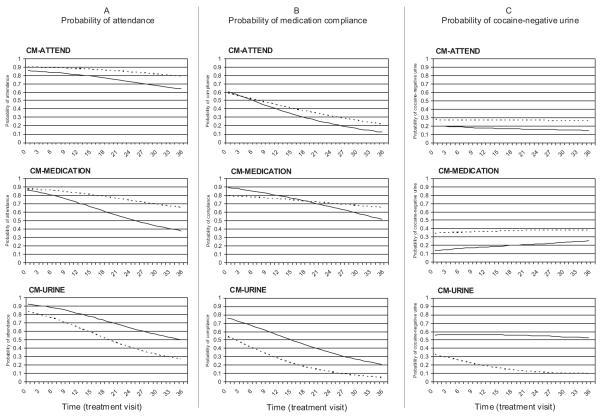
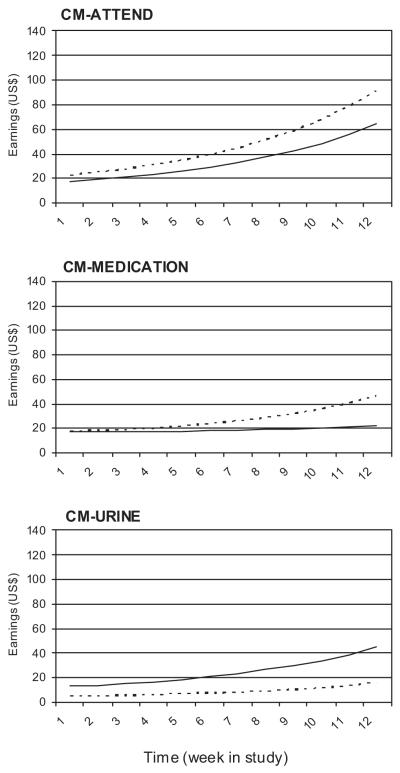
New data support use of levodopa pharmacotherapy with behavioral contingency management (CM) as one efficacious combination in cocaine dependence disorder treatment. A potential mechanism of the combined treatment effects may be related to dopamine-induced enhancement of the saliency of contingently delivered reinforcers. Evidence to support this mechanism was sought by evaluating levodopa-enhancing effects across distinct CM conditions that varied in behavioral targets. A total of 136 treatment-seeking, cocaine dependent subjects participated in this 12-week, randomized, placebo-controlled trial of levodopa (vs. placebo) administered in combination with one of three behavioral CM conditions. In the CM-URINE condition, subjects received cash-valued vouchers contingent on cocaine-negative urine toxicology results. In the CM-ATTEND condition, the same voucher schedule was contingent on attending thrice weekly clinic visits. In the CM-MEDICATION condition, the same voucher schedule was contingent on Medication Event Monitoring Systems- and riboflavin-based evidence of pill-taking behavior. Primary outcomes associated with each CM target behavior were analyzed using generalized linear mixed models for repeated outcomes. CM responding in the CM-ATTEND and CM-MEDICATION conditions showed orderly effects, with each condition producing corresponding changes in targeted behaviors, regardless of medication condition. In contrast, CM responding in the CM-URINE condition was moderated by medication, with levodopa-treated subjects more likely to submit cocaine-negative urines. These findings specify the optimal target behavior for CM when used in combination with levodopa pharmacotherapy.
新数据支持将左旋多巴药物治疗与行为条件管理 (CM) 相结合,作为可卡因依赖障碍治疗的一种有效方法。联合治疗效果的潜在机制可能与多巴胺诱导的条件性强化物的显著增强有关。通过评估在行为目标不同的 CM 条件下,左旋多巴增强作用,寻求支持该机制的证据。共有 136 名寻求治疗的可卡因依赖患者参与了这项为期 12 周的随机、安慰剂对照试验,研究左旋多巴(与安慰剂相比)联合三种行为 CM 条件之一的治疗效果。在 CM-URINE 条件下,受试者根据可卡因阴性尿液毒理学结果获得现金价值的代金券。在 CM-ATTEND 条件下,相同的代金券计划取决于每周三次的诊所就诊。在 CM-MEDICATION 条件下,相同的代金券计划取决于药物监测系统和核黄素的证据表明药物的服用行为。使用重复结果的广义线性混合模型分析与每个 CM 目标行为相关的主要结果。CM 在 CM-ATTEND 和 CM-MEDICATION 条件下的反应表现出有序的影响,每个条件都会导致目标行为相应的变化,无论药物条件如何。相比之下,CM 在 CM-URINE 条件下的反应受到药物的调节,接受左旋多巴治疗的受试者更有可能提交可卡因阴性尿液。这些发现明确了在与左旋多巴药物治疗联合使用时,CM 的最佳目标行为。