Department of Biomedical Engineering, Duke University, Durham, North Carolina 27708-0181, USA.
Adv Drug Deliv Rev. 2010 Dec 30;62(15):1456-67. doi: 10.1016/j.addr.2010.05.004. Epub 2010 May 27.
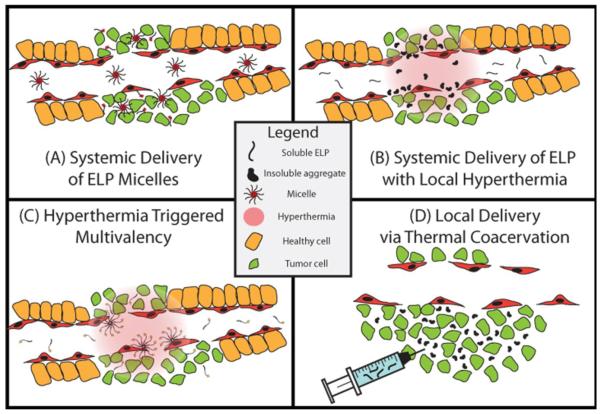
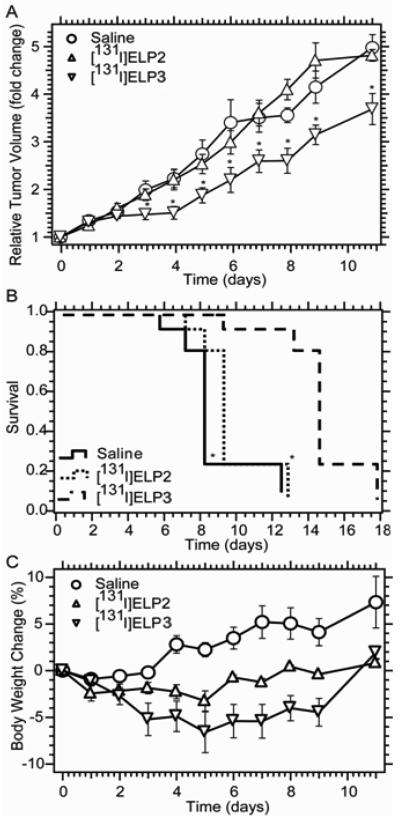
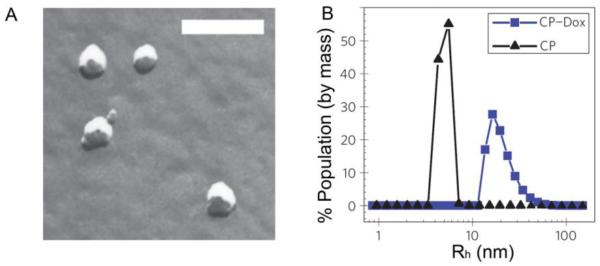
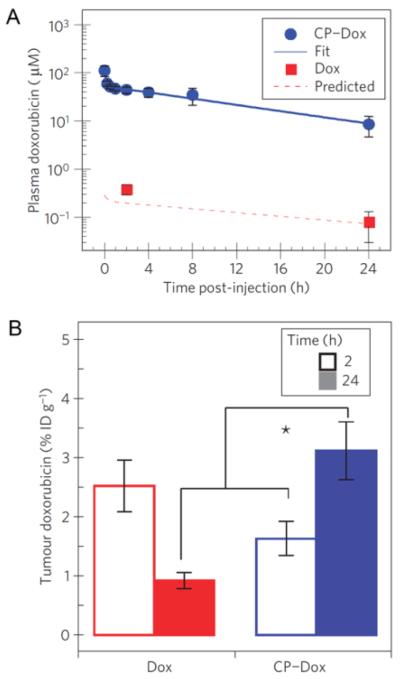
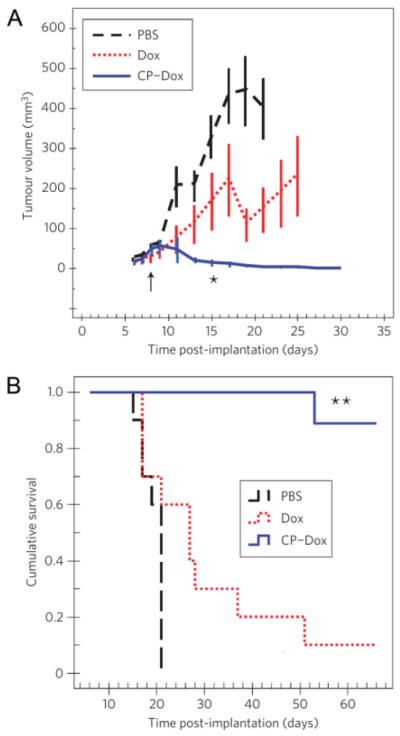
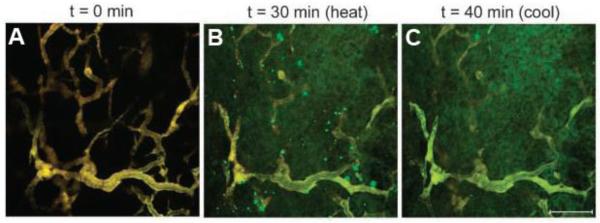
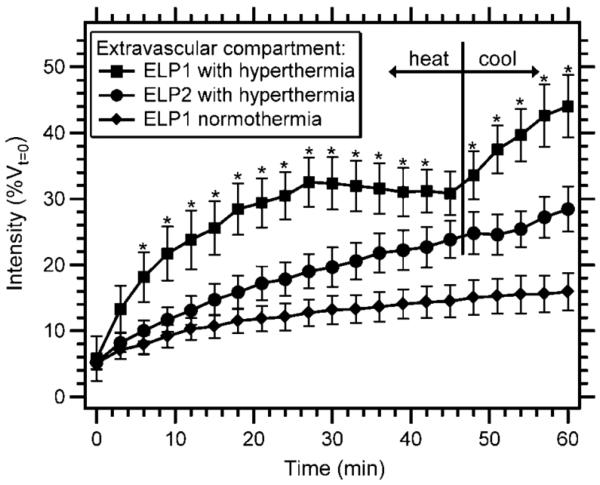
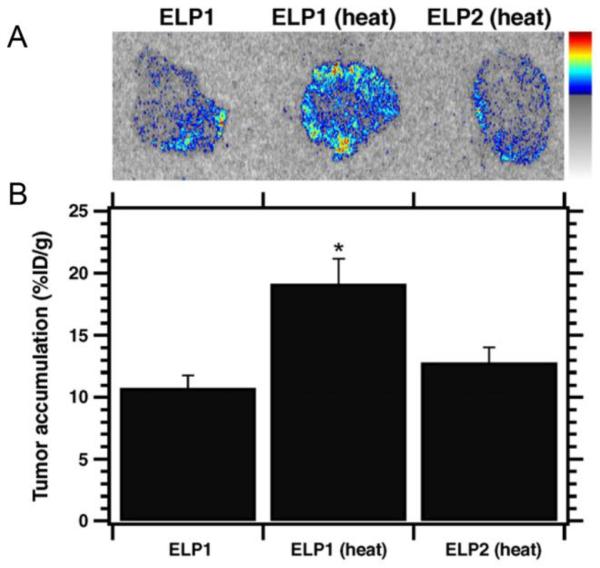
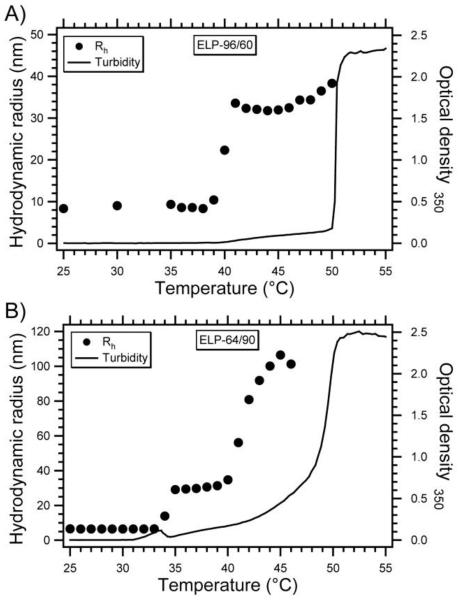
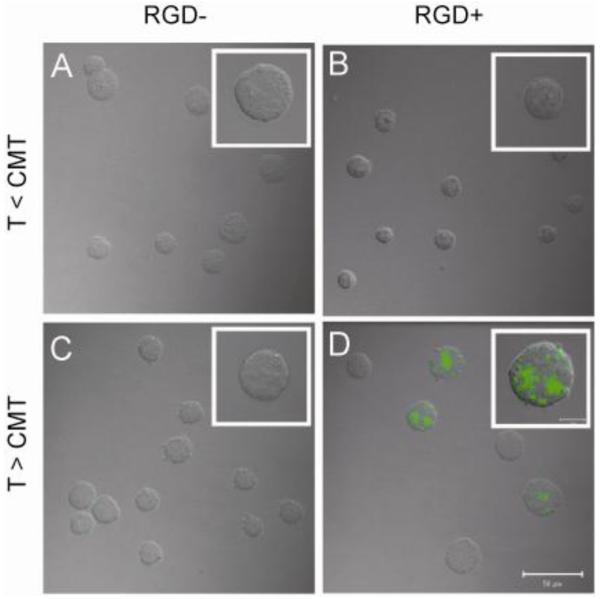
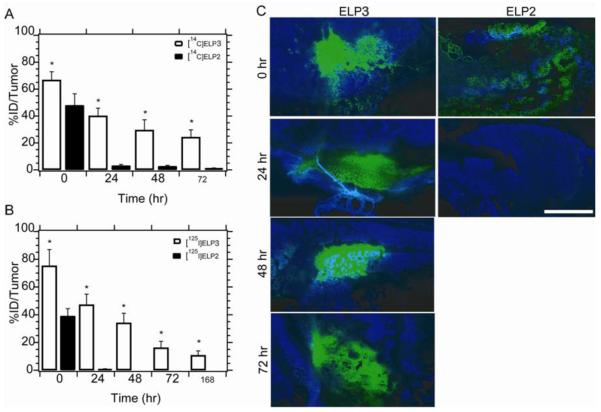
Thermally responsive elastin-like polypeptides (ELPs) are a promising class of recombinant biopolymers for the delivery of drugs and imaging agents to solid tumors via systemic or local administration. This article reviews four applications of ELPs to drug delivery, with each delivery mechanism designed to best exploit the relationship between the characteristic transition temperature (T(t)) of the ELP and body temperature (T(b)). First, when T(t)≫T(b), small hydrophobic drugs can be conjugated to the C-terminus of the ELP to impart the amphiphilicity needed to mediate the self-assembly of nanoparticles. These systemically delivered ELP-drug nanoparticles preferentially localize to the tumor site via the EPR effect, resulting in reduced toxicity and enhanced treatment efficacy. The remaining three approaches take direct advantage of the thermal responsiveness of ELPs. In the second strategy, where T(b)<T(t)<42°C, an ELP-drug conjugate can be injected in conjunction with external application of mild hyperthermia to the tumor to induce ELP coacervation and an increase in concentration within the tumor vasculature. The third approach utilizes hydrophilic-hydrophobic ELP block copolymers that have been designed to assemble into nanoparticles in response to hyperthermai due to the independent thermal transition of the hydrophobic block, thus resulting in multivalent ligand display of a ligand for spatially enhanced vascular targeting. In the final strategy, ELPs with T(t)<T(b) are conjugated with radiotherapeutics, injtect intioa tumor where they undergo coacervation to form an injectable drug depot for intratumoral delivery. These injectable coacervate ELP-radionuclide depots display a long residence in the tumor and result in inhibition of tumor growth.
热响应弹性蛋白样多肽(ELP)是一类有前途的重组生物聚合物,可通过全身或局部给药将药物和成像剂递送至实体瘤。本文综述了 ELP 在药物传递中的四种应用,每种传递机制都旨在充分利用 ELP 的特征转变温度(T(t))与体温(T(b))之间的关系。首先,当 T(t)≫T(b)时,可以将疏水性小分子药物与 ELP 的 C 端缀合,赋予介导纳米颗粒自组装所需的两亲性。这些系统递送至 ELP-药物纳米颗粒通过 EPR 效应优先定位至肿瘤部位,从而降低毒性并提高治疗效果。其余三种方法直接利用 ELP 的热响应性。在第二种策略中,当 T(b)<T(t)<42°C 时,可以与肿瘤部位的温和热疗联合注射 ELP-药物缀合物,以诱导 ELP 凝聚并增加肿瘤血管内的浓度。第三种方法利用亲水-疏水 ELP 嵌段共聚物,这些共聚物由于疏水嵌段的独立热转变而设计成在热疗下组装成纳米颗粒,从而导致配体的多价配体显示出空间增强的血管靶向性。在最后一种策略中,T(t)<T(b)的 ELP 与放射治疗剂缀合,注入肿瘤部位,在那里它们凝聚形成可注射的药物储库,用于肿瘤内递药。这些可注射凝聚的 ELP-放射性核素储库在肿瘤内的停留时间长,并抑制肿瘤生长。