Boys Town National Research Hospital, Omaha, Nebraska 68131, USA.
Ear Hear. 2010 Oct;31(5):625-35. doi: 10.1097/AUD.0b013e3181df5cc2.
Studies of language development in children with mild-moderate hearing loss are relatively rare. Longitudinal studies of children with late-identified hearing loss are relevant for determining how a period of unaided mild-moderate hearing loss impacts development. In recent years, newborn hearing screening programs have effectively reduced the ages of identification for most children with permanent hearing loss. However, some children continue to be identified late, and research is needed to guide management decisions. Furthermore, studies of this group may help to discern whether language normalizes after intervention and/or whether certain aspects of language might be vulnerable to persistent delays. The current study examines the impact of late identification and reduced audibility on speech and language outcomes via a longitudinal study of four children with mild-moderate sensorineural hearing loss.
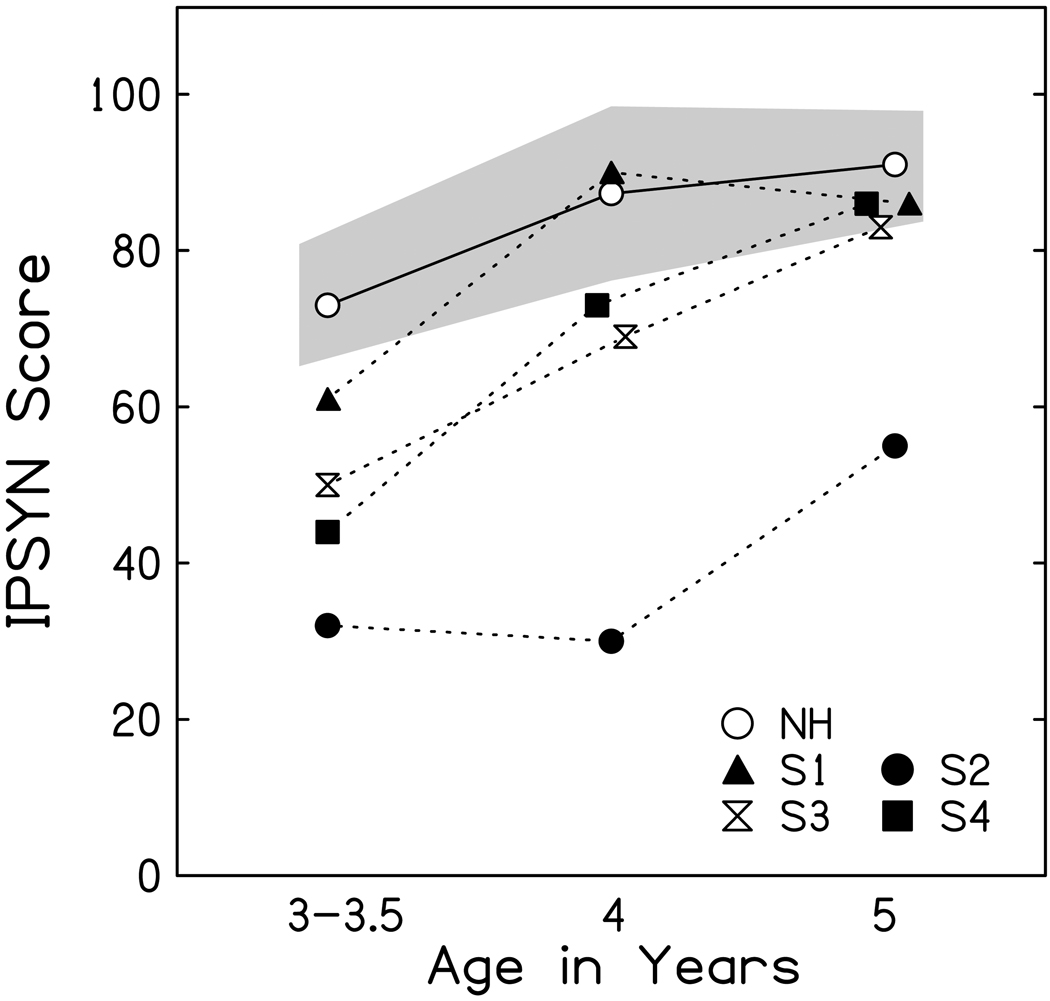
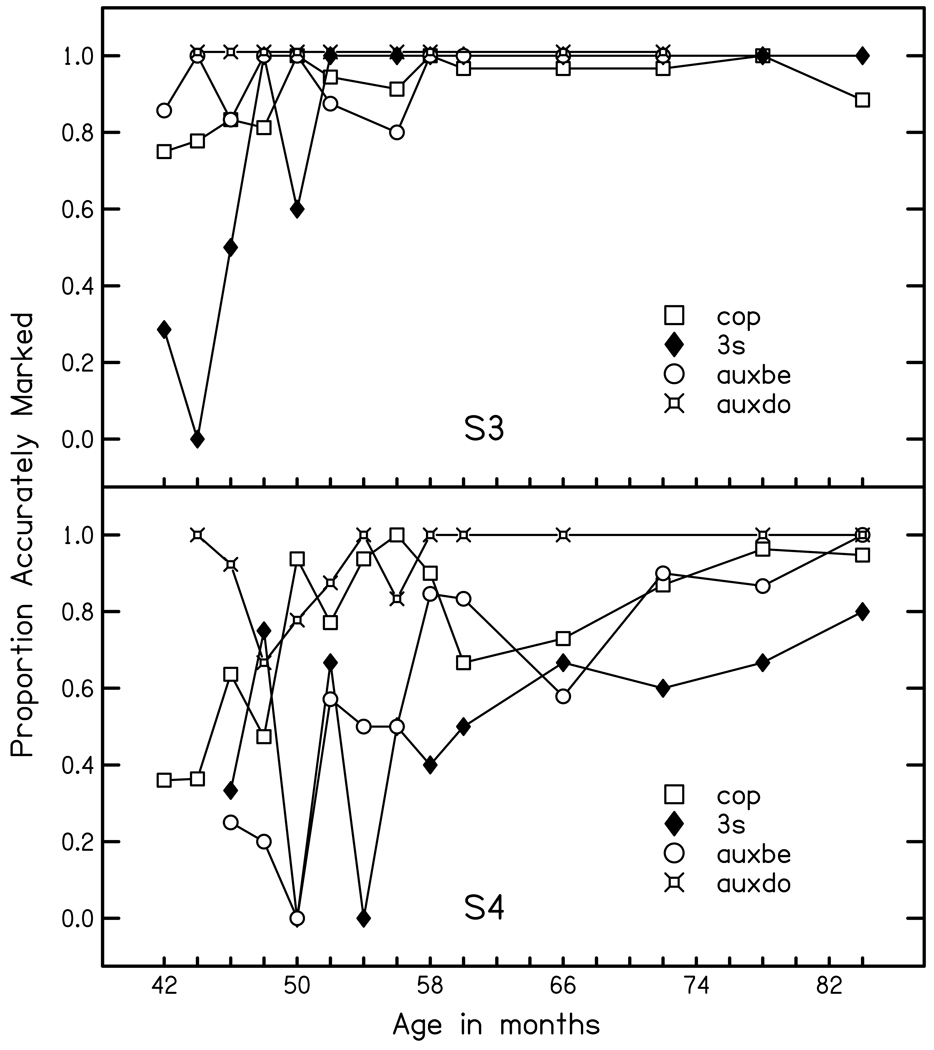
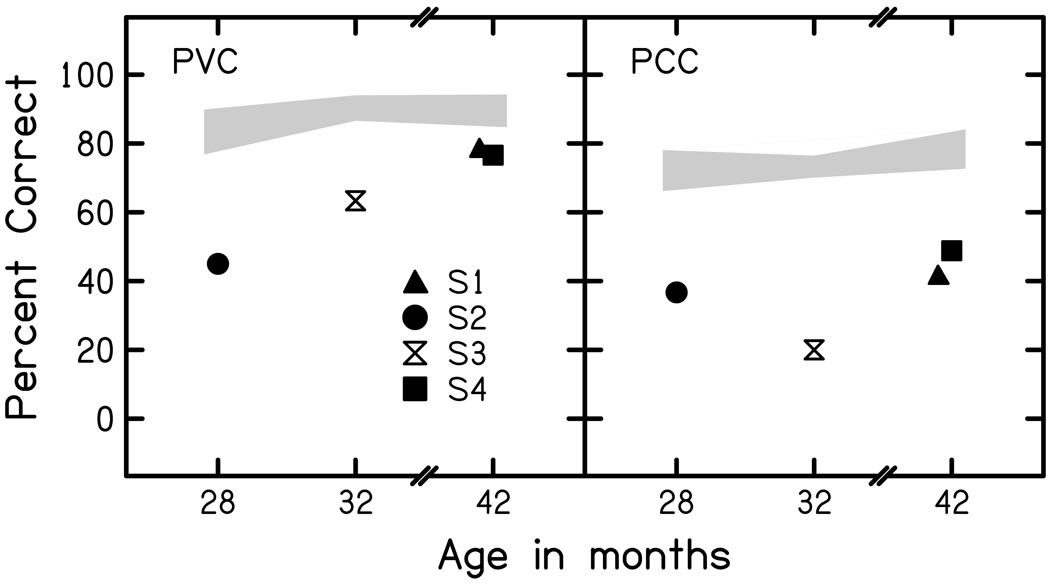
Longitudinal outcomes of four children with late-identified mild-moderate sensorineural hearing loss were studied using standardized measures and language sampling procedures from at or near the point of identification (28 to 41 mos) through 84 mos of age. The children with hearing loss were compared with 10 age-matched children with normal hearing on a majority of the measures through 60 mos of age. Spontaneous language samples were collected from mother-child interaction sessions recorded at consistent intervals in a laboratory-based play setting. Transcripts were analyzed using computer-based procedures (Systematic Analysis of Language Transcripts) and the Index of Productive Syntax. Possible influences of audibility were explored by examining the onset and productive use of a set of verb tense markers and by monitoring the children's accuracy in the use of morphological endings. Phonological samples at baseline were transcribed and analyzed using Computerized Profiling.
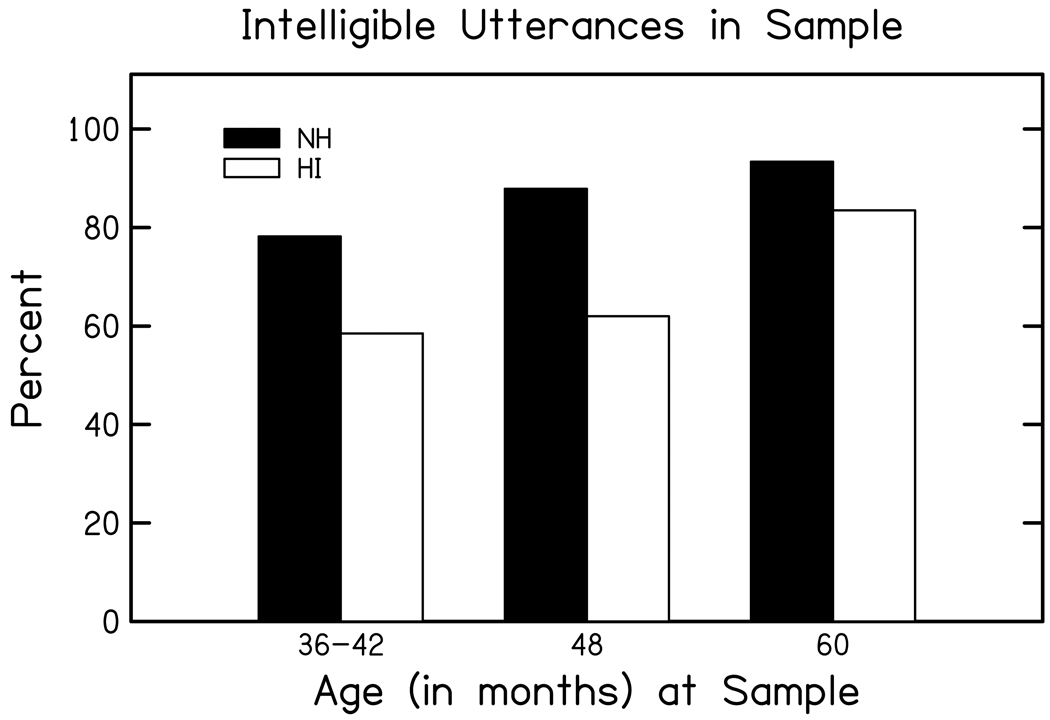
At entry to the study, the four children with hearing loss demonstrated language delays with pronounced delays in phonological development. Three of the four children demonstrated rapid progress with development and interventions and performed within the average range on standardized speech and language measures compared with age-matched children by 60 mos of age. However, persistent differences from children with normal hearing were observed in the areas of morphosyntax, speech intelligibility in conversation, and production of fricatives. Children with mild-moderate hearing loss demonstrated later than typical emergence of certain verb tense markers, which may be related to reduced or inconsistent audibility.
The results of this study suggest that early communication delays will resolve for children with late-identified, mild-moderate hearing loss, given appropriate amplification and intervention services. A positive result is that three of four children demonstrated normalization of broad language behaviors by 60 mos of age, despite significant delays at baseline. However, these children are at risk for persistent delays in phonology at the conversational level and for accuracy in use of morphological markers. The ways in which reduced auditory experiences and audibility may contribute to these delays are explored along with implications for evaluation of outcomes.
对于轻度至中度听力损失儿童的语言发展研究相对较少。对后期确诊听力损失儿童进行纵向研究有助于确定未经干预的轻度至中度听力损失对发展的影响。近年来,新生儿听力筛查项目有效地降低了大多数永久性听力损失儿童的确诊年龄。然而,一些儿童仍被确诊较晚,需要研究来指导管理决策。此外,对这一群体的研究可能有助于辨别语言在干预后是否正常化,以及语言的某些方面是否容易持续延迟。本研究通过对 4 名轻度至中度感音神经性听力损失儿童的纵向研究,考察了后期确诊和可听度降低对言语和语言结果的影响。
使用标准化的测量方法和语言抽样程序,对 4 名后期确诊的轻度至中度感音神经性听力损失儿童(28 至 41 个月龄)的结果进行了纵向研究,一直到 84 个月龄。在 60 个月龄之前,通过大多数测试,将听力损失儿童与 10 名年龄匹配的正常听力儿童进行了比较。在基于实验室的游戏环境中,从母婴互动会话中收集自发语言样本,并在一致的间隔记录。使用基于计算机的程序(语言转录系统分析)和生产性语法索引对转录本进行分析。通过检查一组动词时态标记的出现和生产性使用,以及监测儿童在使用形态结尾方面的准确性,来探讨可听度的可能影响。在基线时,对语音样本进行转录和计算机分析。
在研究开始时,4 名听力损失儿童表现出语言延迟,语音发展明显延迟。其中 3 名儿童在发展和干预方面进展迅速,到 60 个月龄时,与年龄匹配的儿童相比,在标准化言语和语言测试中表现处于平均水平。然而,与正常听力儿童相比,在形态句法、会话中的语音可懂度和摩擦音的产生方面仍存在持续的差异。听力损失儿童出现某些动词时态标记的时间晚于典型时间,这可能与可听度降低或不一致有关。
本研究结果表明,对于后期确诊、轻度至中度听力损失的儿童,如果给予适当的放大和干预服务,早期的沟通延迟将得到解决。一个积极的结果是,尽管在基线时存在显著的延迟,但 4 名儿童中有 3 名在 60 个月龄时表现出广泛的语言行为正常化。然而,这些儿童在会话层面的语音和形态标记使用准确性方面仍存在持续延迟的风险。本文探讨了减少听觉体验和可听度如何导致这些延迟的方式,以及对评估结果的影响。