• 文献检索
  • 文档翻译
  • 深度研究
  • 学术资讯
  • Suppr Zotero 插件Zotero 插件
  • 邀请有礼
  • 套餐&价格
  • 历史记录
应用&插件
Suppr Zotero 插件Zotero 插件浏览器插件Mac 客户端Windows 客户端微信小程序
定价
高级版会员购买积分包购买API积分包
服务
文献检索文档翻译深度研究API 文档MCP 服务
关于我们
关于 Suppr公司介绍联系我们用户协议隐私条款
关注我们

Suppr 超能文献

核心技术专利:CN118964589B侵权必究
粤ICP备2023148730 号-1Suppr @ 2026

文献检索

告别复杂PubMed语法,用中文像聊天一样搜索,搜遍4000万医学文献。AI智能推荐,让科研检索更轻松。

立即免费搜索

文件翻译

保留排版,准确专业,支持PDF/Word/PPT等文件格式,支持 12+语言互译。

免费翻译文档

深度研究

AI帮你快速写综述,25分钟生成高质量综述,智能提取关键信息,辅助科研写作。

立即免费体验

评估植物多样性的分子技术简要综述。

A brief review of molecular techniques to assess plant diversity.

作者信息

Arif Ibrahim A, Bakir Mohammad A, Khan Haseeb A, Al Farhan Ahmad H, Al Homaidan Ali A, Bahkali Ali H, Sadoon Mohammad Al, Shobrak Mohammad

机构信息

Molecular Fingerprinting and Biodiversity Unit, Prince Sultan Research Chair for Environment and Wildlife, College of Sciences, King Saud University, Riyadh, Saudi Arabia.

出版信息

Int J Mol Sci. 2010 May 10;11(5):2079-96. doi: 10.3390/ijms11052079.

DOI:10.3390/ijms11052079
PMID:20559503
原文链接:https://pmc.ncbi.nlm.nih.gov/articles/PMC2885095/
Abstract

Massive loss of valuable plant species in the past centuries and its adverse impact on environmental and socioeconomic values has triggered the conservation of plant resources. Appropriate identification and characterization of plant materials is essential for the successful conservation of plant resources and to ensure their sustainable use. Molecular tools developed in the past few years provide easy, less laborious means for assigning known and unknown plant taxa. These techniques answer many new evolutionary and taxonomic questions, which were not previously possible with only phenotypic methods. Molecular techniques such as DNA barcoding, random amplified polymorphic DNA (RAPD), amplified fragment length polymorphism (AFLP), microsatellites and single nucleotide polymorphisms (SNP) have recently been used for plant diversity studies. Each technique has its own advantages and limitations. These techniques differ in their resolving power to detect genetic differences, type of data they generate and their applicability to particular taxonomic levels. This review presents a basic description of different molecular techniques that can be utilized for DNA fingerprinting and molecular diversity analysis of plant species.

摘要

在过去几个世纪中,大量珍贵植物物种的丧失及其对环境和社会经济价值的不利影响引发了对植物资源的保护。对植物材料进行恰当的识别和特征描述对于成功保护植物资源并确保其可持续利用至关重要。过去几年中开发的分子工具为鉴定已知和未知植物分类群提供了简便、省力的方法。这些技术回答了许多新的进化和分类学问题,而仅靠表型方法此前是无法做到的。诸如DNA条形码、随机扩增多态性DNA(RAPD)、扩增片段长度多态性(AFLP)、微卫星和单核苷酸多态性(SNP)等分子技术最近已用于植物多样性研究。每种技术都有其自身的优点和局限性。这些技术在检测遗传差异的分辨能力、所产生的数据类型以及对特定分类水平的适用性方面存在差异。本综述对可用于植物物种DNA指纹识别和分子多样性分析的不同分子技术进行了基本描述。
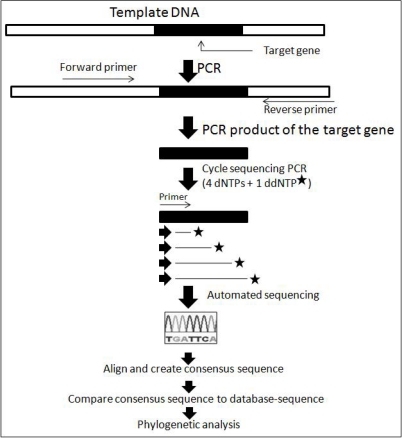
https://cdn.ncbi.nlm.nih.gov/pmc/blobs/ca36/2885095/d193d15e605c/ijms-11-02079f7.jpg
https://cdn.ncbi.nlm.nih.gov/pmc/blobs/ca36/2885095/e560154bbe22/ijms-11-02079f1.jpg
https://cdn.ncbi.nlm.nih.gov/pmc/blobs/ca36/2885095/8460a2097a02/ijms-11-02079f2.jpg
https://cdn.ncbi.nlm.nih.gov/pmc/blobs/ca36/2885095/620b6d080673/ijms-11-02079f3.jpg
https://cdn.ncbi.nlm.nih.gov/pmc/blobs/ca36/2885095/dfe39e087a42/ijms-11-02079f4.jpg
https://cdn.ncbi.nlm.nih.gov/pmc/blobs/ca36/2885095/c7172ff5b880/ijms-11-02079f5.jpg
https://cdn.ncbi.nlm.nih.gov/pmc/blobs/ca36/2885095/eca9f497e1f4/ijms-11-02079f6.jpg
https://cdn.ncbi.nlm.nih.gov/pmc/blobs/ca36/2885095/d193d15e605c/ijms-11-02079f7.jpg
https://cdn.ncbi.nlm.nih.gov/pmc/blobs/ca36/2885095/e560154bbe22/ijms-11-02079f1.jpg
https://cdn.ncbi.nlm.nih.gov/pmc/blobs/ca36/2885095/8460a2097a02/ijms-11-02079f2.jpg
https://cdn.ncbi.nlm.nih.gov/pmc/blobs/ca36/2885095/620b6d080673/ijms-11-02079f3.jpg
https://cdn.ncbi.nlm.nih.gov/pmc/blobs/ca36/2885095/dfe39e087a42/ijms-11-02079f4.jpg
https://cdn.ncbi.nlm.nih.gov/pmc/blobs/ca36/2885095/c7172ff5b880/ijms-11-02079f5.jpg
https://cdn.ncbi.nlm.nih.gov/pmc/blobs/ca36/2885095/eca9f497e1f4/ijms-11-02079f6.jpg
https://cdn.ncbi.nlm.nih.gov/pmc/blobs/ca36/2885095/d193d15e605c/ijms-11-02079f7.jpg

相似文献

1
A brief review of molecular techniques to assess plant diversity.评估植物多样性的分子技术简要综述。
Int J Mol Sci. 2010 May 10;11(5):2079-96. doi: 10.3390/ijms11052079.
2
Random Amplified Polymorphic DNA (RAPD) and Derived Techniques.随机扩增多态性 DNA(RAPD)及衍生技术。
Methods Mol Biol. 2021;2222:219-247. doi: 10.1007/978-1-0716-0997-2_13.
3
Integration of advanced technologies for plant variety and cultivar identification.用于植物品种和栽培品种鉴定的先进技术整合。
J Biosci. 2021;46.
4
[DNA barcoding of animal and plant species as an approach for their molecular identification and describing of diversity].[动植物物种的DNA条形码技术作为其分子鉴定和多样性描述的一种方法]
Zh Obshch Biol. 2009 Jul-Aug;70(4):296-315.
5
Herbarium Specimens: A Treasure for DNA Extraction, an Update.植物标本馆标本:DNA提取的宝库,最新进展
Methods Mol Biol. 2021;2222:69-88. doi: 10.1007/978-1-0716-0997-2_4.
6
Automated DNA-based plant identification for large-scale biodiversity assessment.自动化 DNA 植物鉴定在大规模生物多样性评估中的应用。
Mol Ecol Resour. 2015 Jan;15(1):136-52. doi: 10.1111/1755-0998.12256. Epub 2014 Apr 12.
7
Advances in molecular marker techniques and their applications in plant sciences.分子标记技术进展及其在植物科学中的应用。
Plant Cell Rep. 2008 Apr;27(4):617-31. doi: 10.1007/s00299-008-0507-z. Epub 2008 Feb 2.
8
Assessing Date Palm Genetic Diversity Using Different Molecular Markers.使用不同分子标记评估海枣遗传多样性。
Methods Mol Biol. 2017;1638:125-142. doi: 10.1007/978-1-4939-7159-6_12.
9
Determining Phylogenetic Relationships Among Date Palm Cultivars Using Random Amplified Polymorphic DNA (RAPD) and Inter-Simple Sequence Repeat (ISSR) Markers.利用随机扩增多态性DNA(RAPD)和简单序列重复区间(ISSR)标记确定枣椰树品种间的系统发育关系
Methods Mol Biol. 2017;1638:153-172. doi: 10.1007/978-1-4939-7159-6_14.
10
DNA from soil mirrors plant taxonomic and growth form diversity.土壤 DNA 反映了植物分类和生长形式的多样性。
Mol Ecol. 2012 Aug;21(15):3647-55. doi: 10.1111/j.1365-294X.2012.05545.x. Epub 2012 Apr 16.

引用本文的文献

1
and as plant growth-promoting bacteria in soybean and cannabis.以及作为大豆和大麻中促进植物生长的细菌。
Front Plant Sci. 2025 Jun 2;16:1529859. doi: 10.3389/fpls.2025.1529859. eCollection 2025.
2
Assessing population genetic structure and diversity and their driving factors in Phoebe zhennan populations.评估桢楠种群的遗传结构、遗传多样性及其驱动因素。
BMC Plant Biol. 2024 Nov 18;24(1):1091. doi: 10.1186/s12870-024-05810-1.
3
Polymorphic Loci of Adaptively Significant Genes Selection for Determining Nucleotide Polymorphism of L. Populations in the Urals.

本文引用的文献

1
AFLP-based molecular characterization of an elite germplasm collection of Jatropha curcas L., a biofuel plant.基于扩增片段长度多态性的麻疯树优良种质资源分子特征分析,麻疯树是一种生物燃料植物。
Plant Sci. 2009 Apr;176(4):505-13. doi: 10.1016/j.plantsci.2009.01.006. Epub 2009 Jan 20.
2
Phylogeny and quaternary history of the European montane/alpine endemic Soldanella (Primulaceae) based on ITS and AFLP variation.基于 ITS 和 AFLP 变异的欧洲山地/高山特有 Soldanella(报春花科)的系统发育和第四纪历史。
Am J Bot. 2001 Dec;88(12):2331-45.
3
Species relationships in Lactuca s.l. (Lactuceae, Asteraceae) inferred from AFLP fingerprints.
适应意义重要基因多态性位点的选择对确定乌拉尔地区 L. 种群核苷酸多态性的影响。
Genes (Basel). 2024 Oct 21;15(10):1343. doi: 10.3390/genes15101343.
4
DNA Barcoding and Fertilization Strategies in subsp. , a Local Endemic Plant of Crete with High Medicinal Value.DNA 条形码与 Cretan 特有药用植物 亚种的受精策略。
Int J Mol Sci. 2024 Feb 4;25(3):1891. doi: 10.3390/ijms25031891.
5
Genetic Diversity of Weedy Rice and Its Potential Application as a Novel Source of Disease Resistance.杂草稻的遗传多样性及其作为新型抗病源的潜在应用
Plants (Basel). 2023 Aug 2;12(15):2850. doi: 10.3390/plants12152850.
6
DBALM: A novel method for identifying ornamental flowering plants based on DNA barcodes-leaf morphology.DBALM:一种基于DNA条形码-叶片形态识别观赏开花植物的新方法。
Ecol Evol. 2023 Jul 4;13(7):e10250. doi: 10.1002/ece3.10250. eCollection 2023 Jul.
7
Identifying phytopathogenic fungi in Al-Baha province, Saudi Arabia through their molecular and morphological features: An overview.通过分子和形态特征鉴定沙特阿拉伯巴哈省的植物病原真菌:综述。
Saudi J Biol Sci. 2023 Mar;30(3):103572. doi: 10.1016/j.sjbs.2023.103572. Epub 2023 Jan 26.
8
Genetic variation of Cerastium alpinum L. from Babia Góra, a critically endangered species in Poland.来自波兰极危物种高山瞿麦的遗传变异。
J Appl Genet. 2023 Feb;64(1):37-53. doi: 10.1007/s13353-022-00731-x. Epub 2022 Nov 2.
9
Selection of Sweetpotato Parental Genotypes Using Simple Sequence Repeat Markers.利用简单序列重复标记选择甘薯亲本基因型
Plants (Basel). 2022 Jul 8;11(14):1802. doi: 10.3390/plants11141802.
10
Study on species in the Bulgarian flora.保加利亚植物区系物种研究。
Heliyon. 2019 Dec 13;5(12):e03021. doi: 10.1016/j.heliyon.2019.e03021. eCollection 2019 Dec.
基于扩增片段长度多态性(AFLP)指纹图谱推断菊苣族(菊科)广义莴苣属的物种关系。
Am J Bot. 2001 Oct;88(10):1881-7.
4
Isolation of microsatellite loci from the endangered plant Galium catalinense subspecies acrispum (Rubiaceae).从濒危植物 Galium catalinense 亚种 acrispum(茜草科)中分离微卫星位点。
Mol Ecol Resour. 2009 May;9(3):984-6. doi: 10.1111/j.1755-0998.2009.02545.x. Epub 2009 Feb 10.
5
Microsatellites, from molecules to populations and back.微卫星:从分子到群体再到分子。
Trends Ecol Evol. 1996 Oct;11(10):424-9. doi: 10.1016/0169-5347(96)10049-5.
6
Microsatellites and kinship.微卫星和亲属关系。
Trends Ecol Evol. 1993 Aug;8(8):285-8. doi: 10.1016/0169-5347(93)90256-O.
7
Generation and analysis of expressed sequence tags from the medicinal plant Salvia miltiorrhiza.从药用植物丹参中生成和分析表达序列标签。
Sci China Life Sci. 2010 Feb;53(2):273-85. doi: 10.1007/s11427-010-0005-8. Epub 2010 Mar 7.
8
Characterization of duplicate gene evolution in the recent natural allopolyploid Tragopogon miscellus by next-generation sequencing and Sequenom iPLEX MassARRAY genotyping.通过下一代测序和 Sequenom iPLEX MassARRAY 基因分型技术对近期天然异源多倍体 Tragopogon miscellus 中重复基因进化的特征进行描述。
Mol Ecol. 2010 Mar;19 Suppl 1:132-46. doi: 10.1111/j.1365-294X.2009.04469.x.
9
Next generation molecular ecology.下一代分子生态学。
Mol Ecol. 2010 Mar;19 Suppl 1:1-3. doi: 10.1111/j.1365-294X.2009.04489.x.
10
Assembly algorithms for next-generation sequencing data.下一代测序数据的组装算法。
Genomics. 2010 Jun;95(6):315-27. doi: 10.1016/j.ygeno.2010.03.001. Epub 2010 Mar 6.