NSERM U987, Hopital Ambroise Pare, APHP, F-92100 Boulogne-Billancourt, France.
BMC Med. 2010 Jun 21;8:37. doi: 10.1186/1741-7015-8-37.
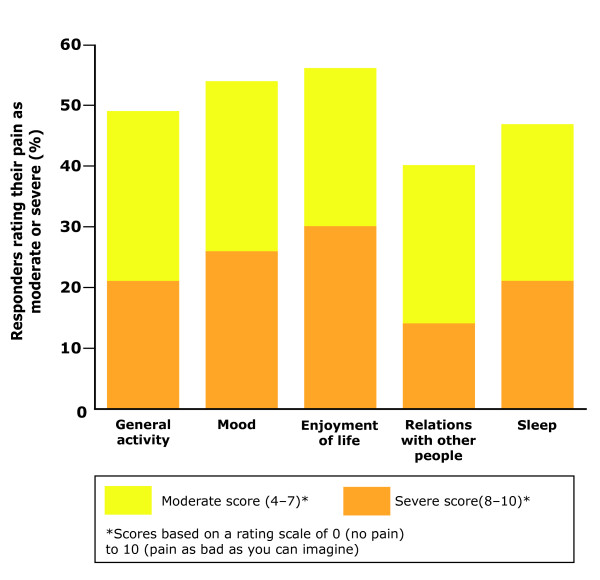
The potentially serious nature of herpes zoster (HZ) and the long-term complication post-herpetic neuralgia (PHN) are often underestimated. One in four people will contract herpes zoster in their lifetime, with this risk rising markedly after the age of 50 years, and affecting one in two in elderly individuals. Pain is the predominant symptom in all phases of HZ disease, being reported by up to 90% of patients. In the acute phase, pain is usually moderate or severe, with patients ranking HZ pain as more intense than post-surgical or labour pains. Up to 20% of patients with HZ develop PHN, which is moderate-to-severe chronic pain persisting for months or years after the acute phase. We review the available data on the effect of HZ and PHN on patients' quality-of-life.
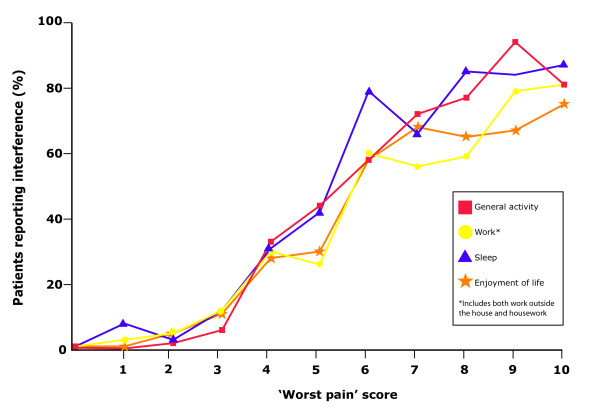
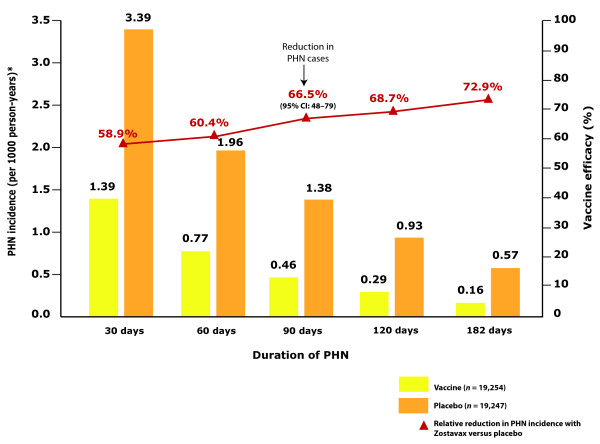
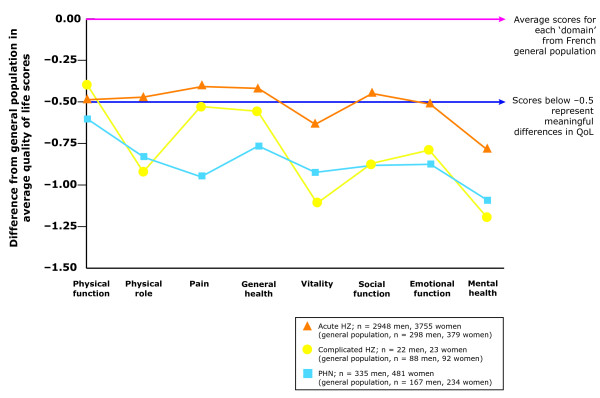
Findings show that HZ, and particularly PHN, have a major impact on patients' lives across all four health domains--physical, psychological, functional and social. There is a clear correlation between increasing severity of pain and greater interference with daily activities. Non-pain complications such as HZ ophthalmicus can increase the risk of permanent physical impairment. Some elderly individuals may experience a permanent loss of independence after an acute episode of HZ. Current challenges in the management of HZ and PHN are highlighted, including the difficulty in administering antiviral agents before pain becomes established and the limited efficacy of pain treatments in many patients. We discuss the clinical rationale for the HZ vaccine and evidence demonstrating that the vaccine reduces the burden of the disease. The Shingles Prevention Study, conducted among >38,000 people aged >or=60 years old, showed that the HZ vaccine significantly reduces the burden of illness and the incidence of both HZ and PHN. In the entire study population, zoster vaccination reduced the severity of interference of HZ and PHN with activities of daily living by two-thirds, as measured by two questionnaires specific to HZ.
A vaccination scheme may positively impact the incidence and course of HZ disease, thereby improving patients' quality-of-life.
带状疱疹(HZ)可能导致严重后果,疱疹后神经痛(PHN)是其长期并发症,而这两种病症往往被低估。HZ 终生发病率为四分之一,年龄超过 50 岁后风险明显增加,老年人群中发病率达二分之一。疼痛是 HZ 各阶段的主要症状,高达 90%的患者会出现疼痛。在急性期,疼痛通常为中度或重度,患者将 HZ 疼痛评为比术后或分娩疼痛更严重。高达 20%的 HZ 患者会发展为 PHN,即急性发作后持续数月或数年的中重度慢性疼痛。我们对 HZ 和 PHN 对患者生活质量的影响的现有数据进行了综述。
研究结果表明,HZ 尤其是 PHN 对所有四个健康领域(身体、心理、功能和社会)的患者生活均有重大影响。疼痛程度越严重,对日常生活的干扰越大。HZ 眼疱疹等非疼痛并发症会增加永久性身体损伤的风险。一些老年患者在急性 HZ 发作后可能会永久性丧失独立性。文中还强调了 HZ 和 PHN 管理方面的当前挑战,包括在疼痛出现之前使用抗病毒药物的困难以及许多患者对疼痛治疗的效果有限。我们讨论了 HZ 疫苗的临床原理以及证明疫苗可降低疾病负担的证据。在一项针对 38000 多名年龄≥60 岁人群的 Shingles Prevention Study 中,HZ 疫苗显著降低了疾病负担以及 HZ 和 PHN 的发生率。在整个研究人群中,带状疱疹疫苗使 HZ 和 PHN 对日常生活活动的干扰严重程度降低了三分之二,这是通过两种针对 HZ 的特定问卷来衡量的。
疫苗接种方案可能会对 HZ 疾病的发病率和病程产生积极影响,从而提高患者的生活质量。