Division of Global Health Equity, Brigham and Women's Hospital, 641 Huntington Avenue, Boston 02115, USA.
BMC Public Health. 2010 Jun 21;10:355. doi: 10.1186/1471-2458-10-355.
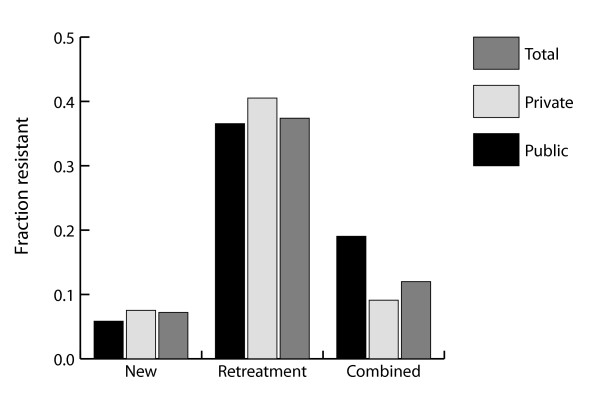
Accurate assessment of the burden of drug-resistant TB requires systematic efforts to quantify its magnitude and trend. In approximately half the countries where resistance has been reported, estimates are based on surveys conducted in public sector facilities. However, in locations where a substantial fraction of TB cases seek care with private providers, these surveys may not accurately measure resistance in the entire population.
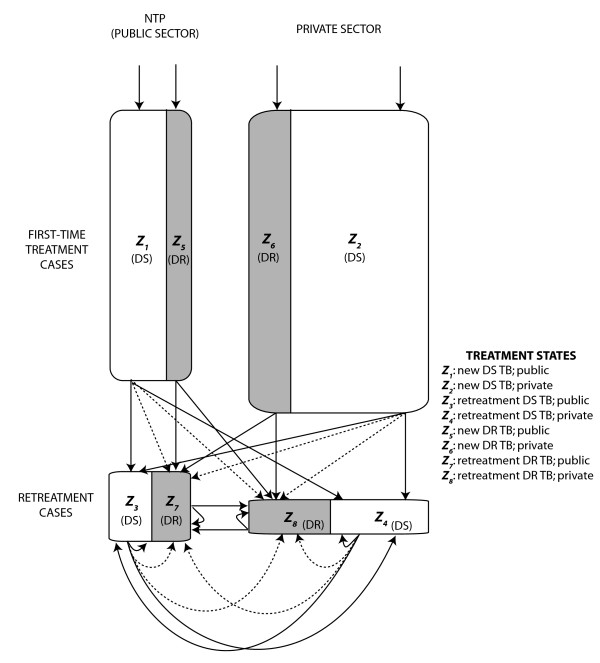
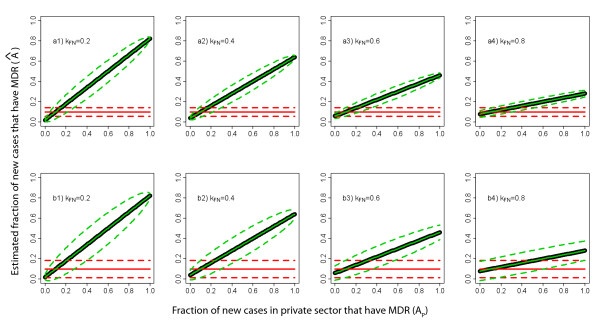
We describe a mathematical model to investigate biases associated with sampling only from public sector cases in India, where TB treatment is offered in both public and private sectors. We then propose and demonstrate a weighted estimator as an efficient method for including small numbers of cases from the private sector as a way to recover valid estimates of resistance in the population under study.
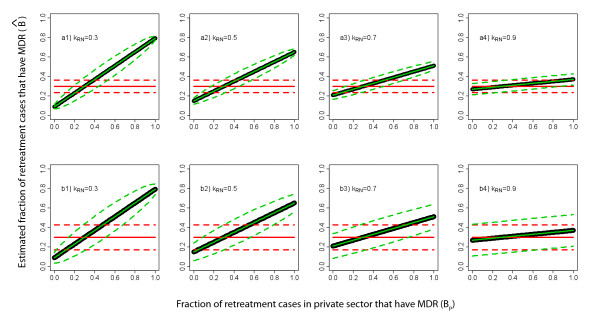
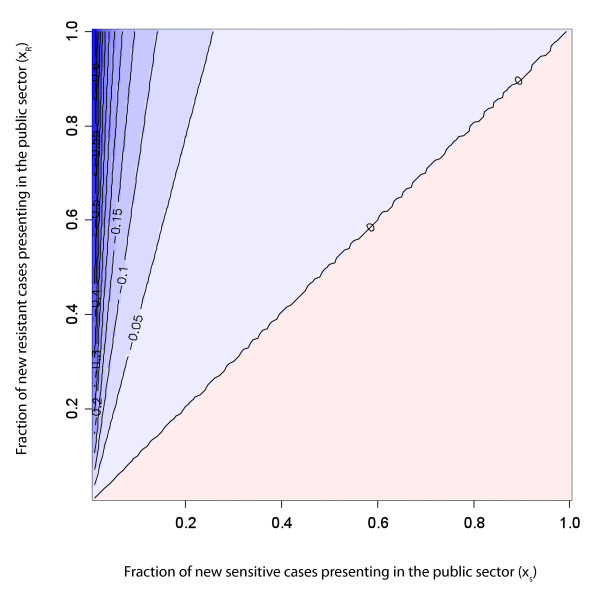
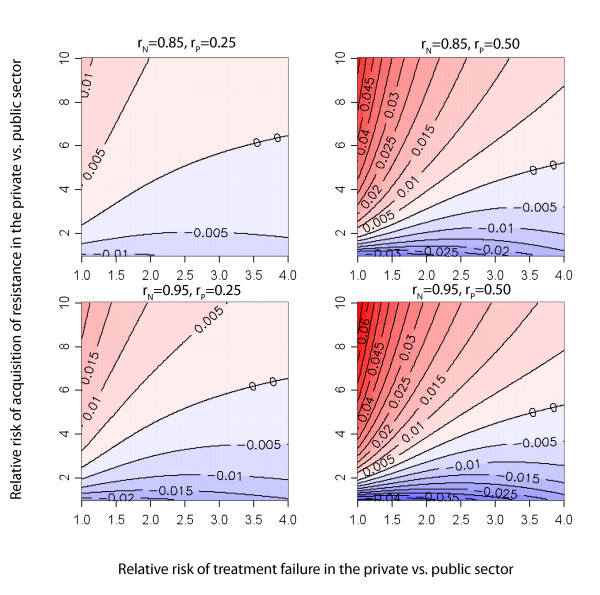
We find that public sector surveys rarely provide valid estimates of drug-resistance among new and retreatment cases. Further, the magnitude and direction of the bias are sensitive to many parameters describing the health-seeking behaviours and treatment outcomes of tuberculosis patients, disallowing simple adjustments to recover accurate estimates.
In locations where large numbers of tuberculosis patients are diagnosed and treated by private sector practitioners who are not typically included in drug resistance surveys, targeted surveys for assessing drug resistance are required to validly estimate resistance.
准确评估耐药结核病的负担需要系统地努力来量化其规模和趋势。在大约一半报告耐药情况的国家,估计数是基于在公共部门机构进行的调查得出的。然而,在相当一部分结核病病例向私人提供者寻求治疗的地方,这些调查可能无法准确衡量整个人群的耐药情况。
我们描述了一个数学模型,以调查仅从印度公共部门病例中抽样所带来的偏差,在印度,结核病的治疗既在公共部门也在私人部门提供。然后,我们提出并演示了一种加权估计器,作为一种有效的方法,纳入私人部门的少量病例,以恢复研究人群中耐药情况的有效估计。
我们发现,公共部门的调查很少能提供新病例和复治病例中药物耐药的有效估计。此外,偏倚的大小和方向对描述结核病患者的寻医行为和治疗结果的许多参数敏感,不允许进行简单的调整以获得准确的估计。
在大量结核病患者由私人部门医生诊断和治疗的地方,而这些医生通常不包括在耐药性调查中,需要进行有针对性的调查来有效评估耐药性。