Department of Infectious Diseases, Aarhus University Hospital, Skejby, DK-8200, Aarhus N, Denmark.
Retrovirology. 2010 Jun 22;7:54. doi: 10.1186/1742-4690-7-54.
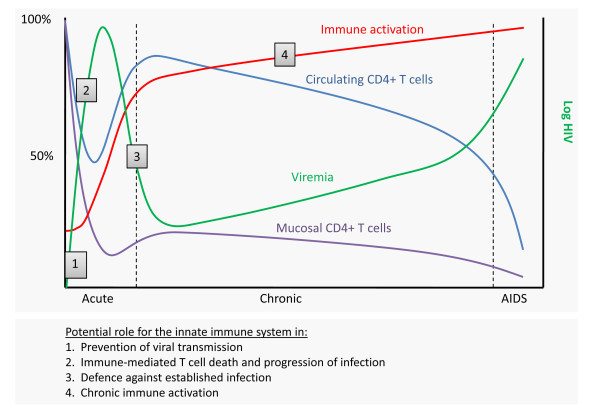
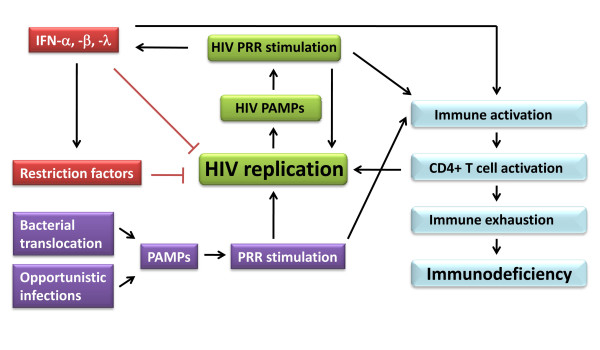
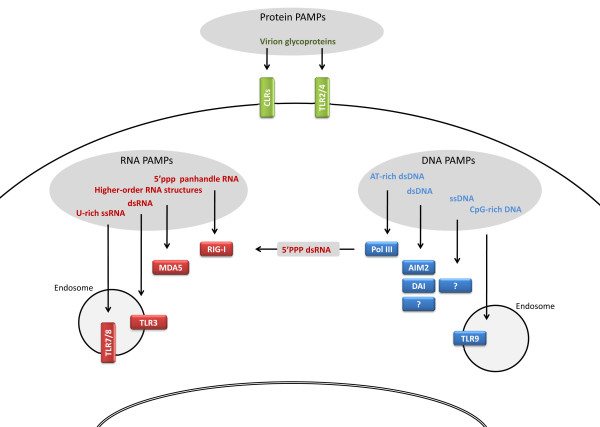
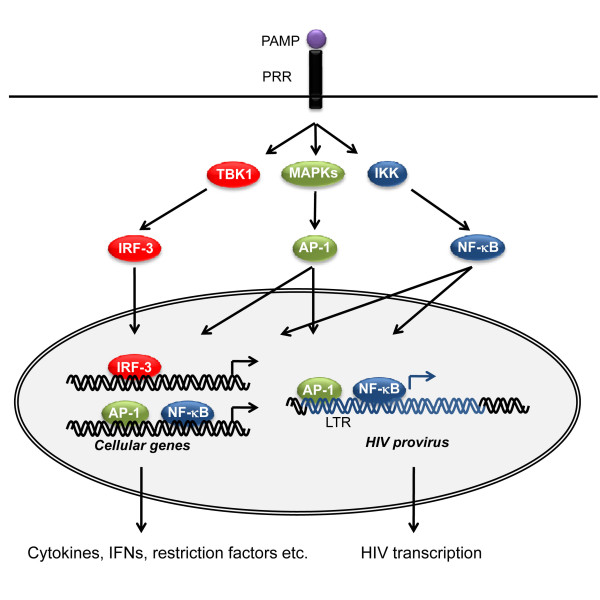
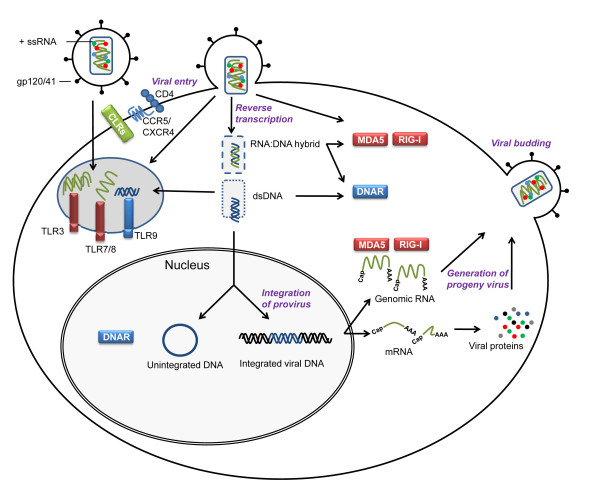
The pathogenesis of HIV infection, and in particular the development of immunodeficiency, remains incompletely understood. Whichever intricate molecular mechanisms are at play between HIV and the host, it is evident that the organism is incapable of restricting and eradicating the invading pathogen. Both innate and adaptive immune responses are raised, but they appear to be insufficient or too late to eliminate the virus. Moreover, the picture is complicated by the fact that the very same cells and responses aimed at eliminating the virus seem to play deleterious roles by driving ongoing immune activation and progressive immunodeficiency. Whereas much knowledge exists on the role of adaptive immunity during HIV infection, it has only recently been appreciated that the innate immune response also plays an important part in HIV pathogenesis. In this review, we present current knowledge on innate immune recognition and activation during HIV infection based on studies in cell culture, non-human primates, and HIV-infected individuals, and discuss the implications for the understanding of HIV immunopathogenesis.
HIV 感染的发病机制,尤其是免疫缺陷的发展,仍不完全清楚。无论 HIV 和宿主之间存在何种复杂的分子机制,很明显,机体无法限制和消除入侵的病原体。先天和适应性免疫反应都被引发,但它们似乎不足以或为时过晚而无法消除病毒。此外,由于事实是,旨在消除病毒的相同细胞和反应似乎通过驱动持续的免疫激活和进行性免疫缺陷而发挥有害作用,情况变得更加复杂。虽然在 HIV 感染期间适应性免疫的作用有很多知识,但最近才意识到,先天免疫反应在 HIV 发病机制中也起着重要作用。在这篇综述中,我们根据细胞培养、非人类灵长类动物和 HIV 感染者的研究,介绍了 HIV 感染期间先天免疫识别和激活的最新知识,并讨论了对 HIV 免疫发病机制理解的影响。