B.B. Brodie Department of Neuroscience, University of Cagliari, Monserrato, Italy.
Biol Psychiatry. 2010 Aug 1;68(3):256-64. doi: 10.1016/j.biopsych.2010.04.016. Epub 2010 Jun 8.
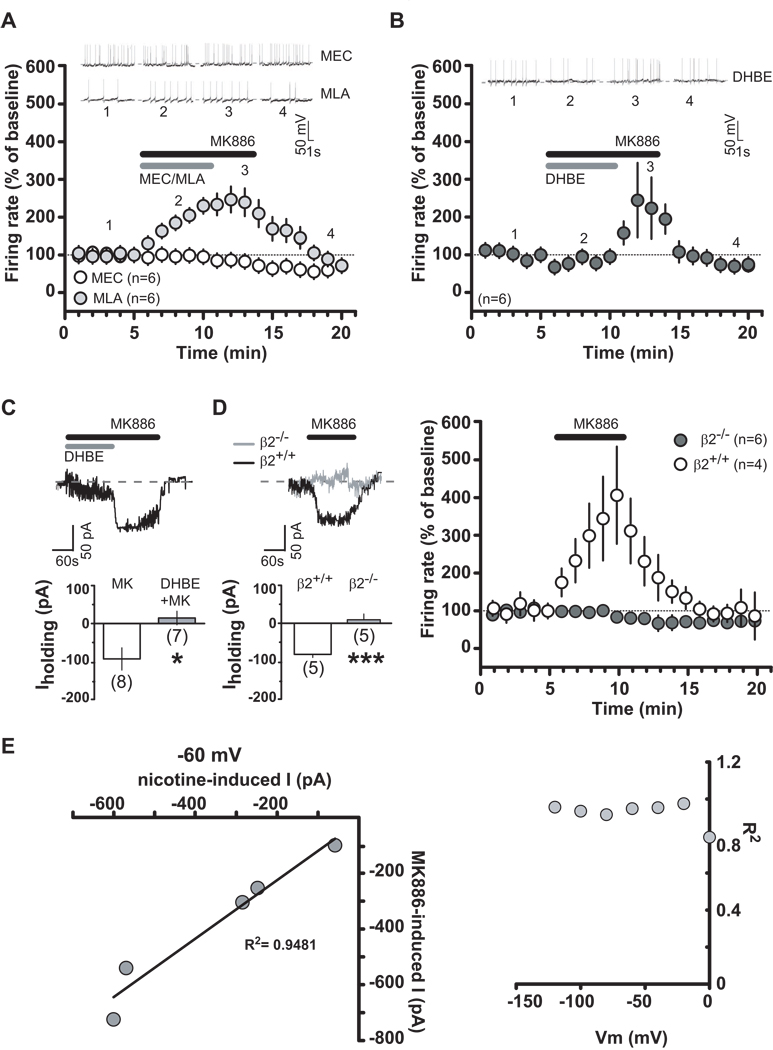
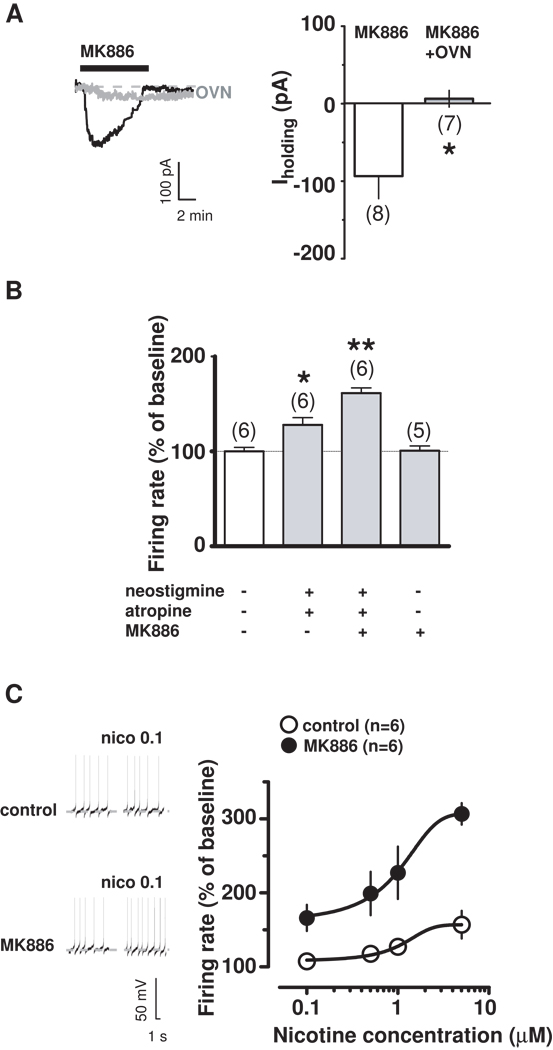
Modulation of midbrain dopamine neurons by nicotinic acetylcholine receptors (nAChRs) plays an important role in behavior, cognition, motivation, and reward. Specifically, nAChRs containing beta2 subunits (beta2-nAChRs) switch dopamine cells from a resting to an excited state. However, how beta2-nAChRs can be modulated and thereby how dopamine firing activity is affected remains elusive. Because changes in dopamine cell activity are reflected in the dynamics of microcircuits generating altered responses to stimuli and inputs, factors regulating their state are fundamental. Among these, endogenous ligands to the nuclear receptor-transcription factor peroxisome proliferator-activated receptors type-alpha (PPARalpha) have been recently found to suppress nicotine-induced responses of dopamine neurons.
We used both in vitro and in vivo electrophysiological techniques together with behavioral analysis to investigate on the effects of modulation of PPARalpha in Sprague-Dawley rat and C57BLJ/6 mouse dopamine neurons and their interactions with beta2-nAChRs. To this aim, we took advantage of a selective reexpression of beta2-nAChR exclusively in dopamine cells by stereotaxically injecting a lentiviral vector in the mouse ventral tegmental area.
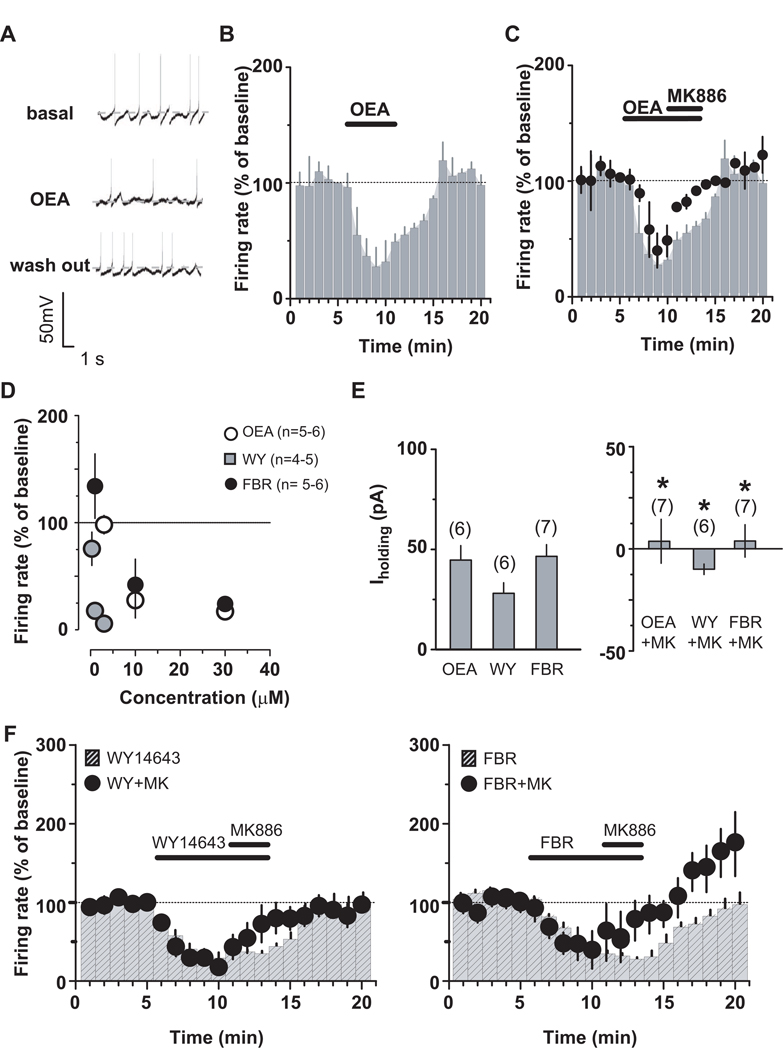
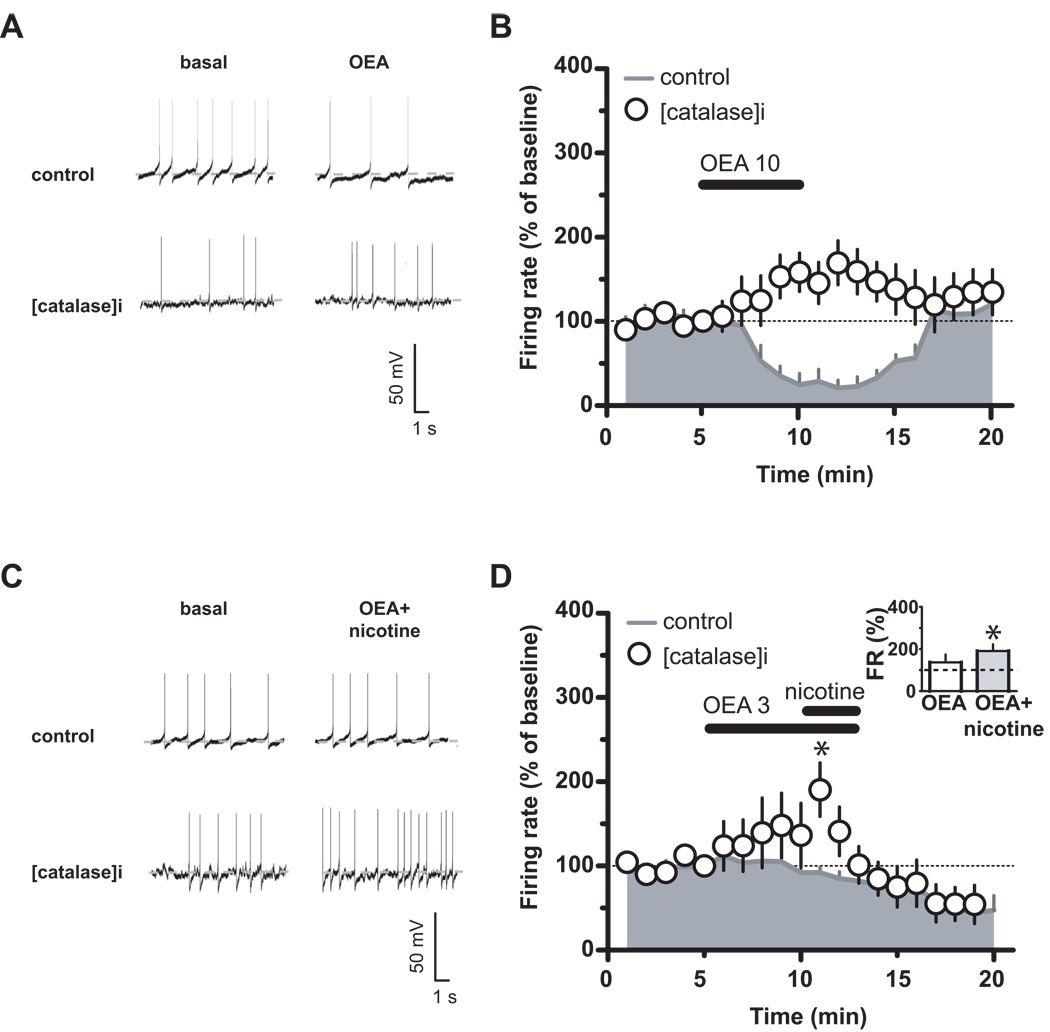
We found that activation of PPARalpha decreases in vitro both dopamine cell activity and ventral tegmental area net output through negative modulation of beta2-nAChRs. Additionally, PPARalpha activation in vivo reduces both the number of spontaneously active dopamine neurons and nicotine-induced increased locomotion.
Our combined findings suggest PPARalpha ligands as important negative modulators of beta2-nAChRs on dopamine neurons. Thus, PPARalpha ligands might prove beneficial in treating disorders in which dopamine dysfunction plays a prominent role, such as schizophrenia and nicotine addiction.
烟碱型乙酰胆碱受体(nAChRs)对中脑多巴胺神经元的调制在行为、认知、动机和奖赏中起着重要作用。具体来说,含有β2 亚基的 nAChRs(β2-nAChRs)将多巴胺细胞从静息状态切换到兴奋状态。然而,β2-nAChRs 如何被调制以及多巴胺放电活动如何受到影响仍然难以捉摸。由于多巴胺细胞活动的变化反映在产生对刺激和输入改变反应的微电路动力学中,因此调节其状态的因素是基础。在这些因素中,核受体-转录因子过氧化物酶体增殖物激活受体-α(PPARα)的内源性配体最近被发现可抑制尼古丁诱导的多巴胺神经元反应。
我们使用了体外和体内电生理技术以及行为分析来研究 PPARα 调制对 Sprague-Dawley 大鼠和 C57BLJ/6 小鼠多巴胺神经元的影响及其与β2-nAChRs 的相互作用。为此,我们利用立体定向注射慢病毒载体在小鼠腹侧被盖区特异性重新表达仅在多巴胺细胞中表达的β2-nAChR。
我们发现,通过负性调制β2-nAChRs,PPARα 的激活可在体外降低多巴胺细胞活性和腹侧被盖区净输出。此外,体内 PPARα 的激活可减少自发活动的多巴胺神经元数量和尼古丁诱导的运动增加。
我们的综合研究结果表明,PPARα 配体是多巴胺神经元上β2-nAChRs 的重要负性调节剂。因此,PPARα 配体可能在治疗多巴胺功能障碍起主要作用的疾病方面具有益处,例如精神分裂症和尼古丁成瘾。