Department of Cancer Biology, University of Massachusetts Medical School, Worcester, Massachusetts 01605, USA.
Nature. 2010 Jun 24;465(7301):1093-6. doi: 10.1038/nature09127.
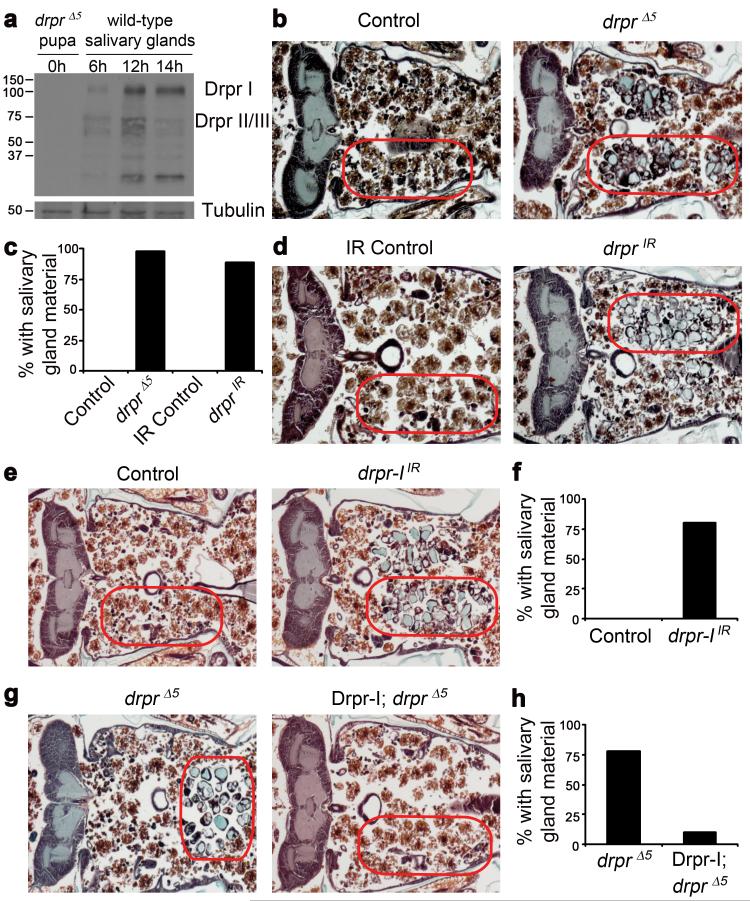
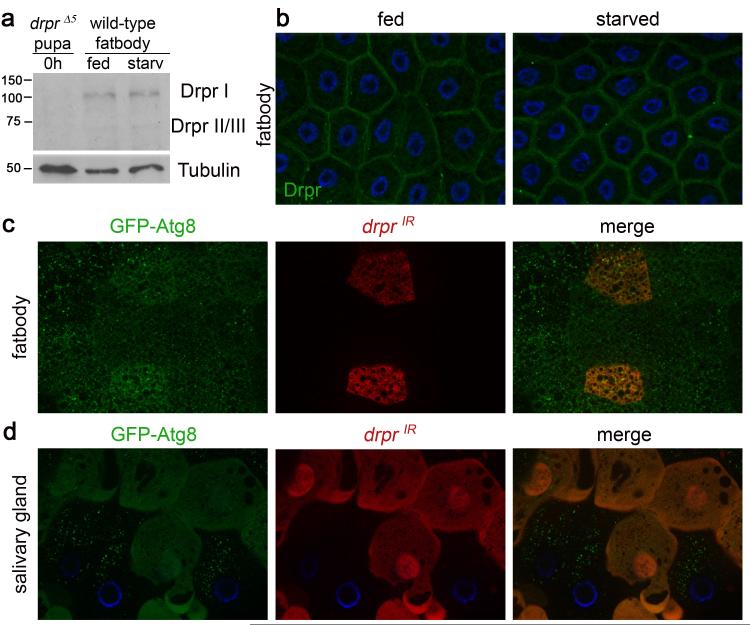
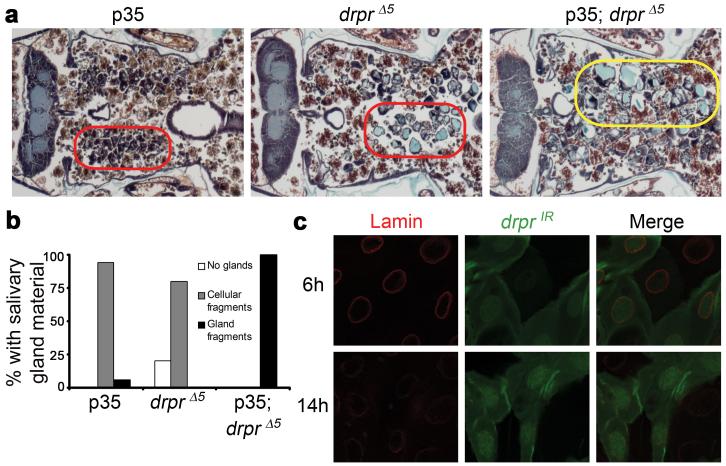
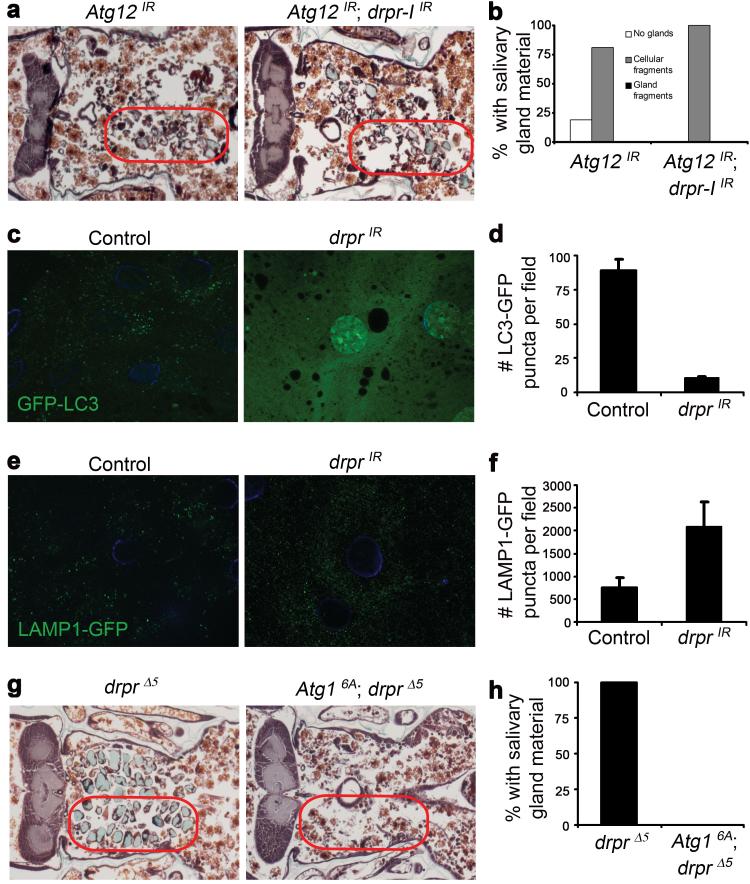
Autophagy degrades cytoplasmic components that are required for cell survival in response to starvation. Autophagy has also been associated with cell death, but it is unclear how this is distinguished from autophagy during cell survival. Drosophila salivary glands undergo programmed cell death that requires autophagy genes, and engulfment of salivary gland cells by phagocytes does not appear to occur. Here we show that Draper (Drpr), the Drosophila melanogaster orthologue of the Caenorhabditis elegans engulfment receptor CED-1, is required for autophagy during cell death. Null mutations in, and salivary gland-specific knockdown of, drpr inhibit salivary gland degradation. Knockdown of drpr prevents the induction of autophagy in dying salivary glands, and expression of the Atg1 autophagy regulator in drpr mutants suppresses the failure in degradation of salivary glands. Surprisingly, drpr is required in the same dying salivary gland cells in which it regulates autophagy induction, but drpr knockdown does not prevent starvation-induced autophagy in the fat body, which is associated with survival. In addition, components of the conserved engulfment pathway are required for clearance of dying salivary glands. To our knowledge, this is the first example of an engulfment factor that is required for self-clearance of cells. Further, Drpr is the first factor that distinguishes autophagy that is associated with cell death from autophagy associated with cell survival.
自噬降解细胞质成分,这些成分是细胞在饥饿时存活所必需的。自噬也与细胞死亡有关,但尚不清楚如何将其与细胞存活期间的自噬区分开来。果蝇唾液腺经历程序性细胞死亡,需要自噬基因,而吞噬细胞吞噬唾液腺细胞似乎不会发生。在这里,我们表明,果蝇的 Draper(Drpr)是秀丽隐杆线虫吞噬受体 CED-1 的同源物,在细胞死亡期间需要自噬。 drpr 的缺失突变和唾液腺特异性敲低抑制了唾液腺的降解。 drpr 的敲低阻止了垂死的唾液腺中自噬的诱导,并且 Atg1 自噬调节剂在 drpr 突变体中的表达抑制了唾液腺降解的失败。令人惊讶的是,drpr 在调节自噬诱导的同一垂死的唾液腺细胞中是必需的,但 drpr 的敲低并不阻止与存活相关的脂肪体中饥饿诱导的自噬。此外,保守的吞噬途径的成分对于清除垂死的唾液腺是必需的。据我们所知,这是第一个需要吞噬因子自我清除细胞的例子。此外,Drpr 是第一个区分与细胞死亡相关的自噬和与细胞存活相关的自噬的因素。