• 文献检索
  • 文档翻译
  • 深度研究
  • 学术资讯
  • Suppr Zotero 插件Zotero 插件
  • 邀请有礼
  • 套餐&价格
  • 历史记录
应用&插件
Suppr Zotero 插件Zotero 插件浏览器插件Mac 客户端Windows 客户端微信小程序
定价
高级版会员购买积分包购买API积分包
服务
文献检索文档翻译深度研究API 文档MCP 服务
关于我们
关于 Suppr公司介绍联系我们用户协议隐私条款
关注我们

Suppr 超能文献

核心技术专利:CN118964589B侵权必究
粤ICP备2023148730 号-1Suppr @ 2026

文献检索

告别复杂PubMed语法,用中文像聊天一样搜索,搜遍4000万医学文献。AI智能推荐,让科研检索更轻松。

立即免费搜索

文件翻译

保留排版,准确专业,支持PDF/Word/PPT等文件格式,支持 12+语言互译。

免费翻译文档

深度研究

AI帮你快速写综述,25分钟生成高质量综述,智能提取关键信息,辅助科研写作。

立即免费体验

纳米技术、生物纳米技术和微生物细胞工厂。

Nanotechnology, bionanotechnology and microbial cell factories.

出版信息

Microb Cell Fact. 2010 Jul 5;9:53. doi: 10.1186/1475-2859-9-53.

DOI:10.1186/1475-2859-9-53
PMID:20602780
原文链接:https://pmc.ncbi.nlm.nih.gov/articles/PMC2916890/
Abstract

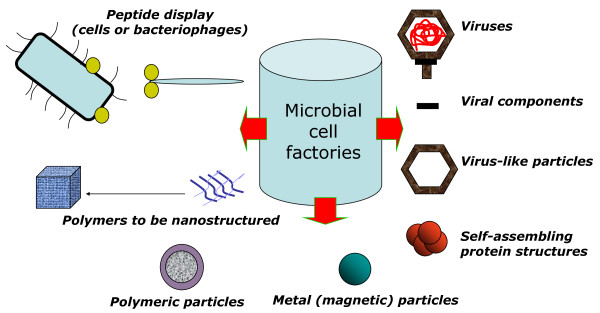
Nanotechnology is increasingly using both materials and nano-objects synthesized by living beings, most of them produced by microbial cells. Emerging technologies and highly integrative approaches (such as 'omics and systems biology), that have been largely proven successful for the production of proteins and secondary metabolites are now expected to become fully adapted for the improved biological production of nanostructured materials with tailored properties. The so far underestimated potential of microbial cell factories in nanotechnology and nanomedicine is expected to emerge, in the next years, in the context of novel needs envisaged in the nanoscience universe. This should prompt a careful revisiting of the microbial cell factories as the most versatile biological platforms to supply functional materials for nanotechnological applications.

摘要

纳米技术越来越多地使用由生物体合成的材料和纳米物体,其中大多数是由微生物细胞产生的。新兴技术和高度综合的方法(如“组学”和系统生物学)已经在蛋白质和次生代谢物的生产中被证明是非常成功的,现在预计将完全适应于具有定制特性的纳米结构材料的生物生产的改进。在纳米科学领域,预计微生物细胞工厂在纳米技术和纳米医学方面的潜力,在未来几年内,将随着新的需求而显现出来。这应该促使人们重新审视微生物细胞工厂作为供应用于纳米技术应用的功能材料的最通用的生物平台。
https://cdn.ncbi.nlm.nih.gov/pmc/blobs/da0a/2916890/5575ef9ee856/1475-2859-9-53-1.jpg

相似文献

1
Nanotechnology, bionanotechnology and microbial cell factories.纳米技术、生物纳米技术和微生物细胞工厂。
Microb Cell Fact. 2010 Jul 5;9:53. doi: 10.1186/1475-2859-9-53.
2
The History of Nanoscience and Nanotechnology: From Chemical-Physical Applications to Nanomedicine.纳米科学与纳米技术的历史:从化学物理应用到纳米医学。
Molecules. 2019 Dec 27;25(1):112. doi: 10.3390/molecules25010112.
3
Methodological needs in the quality and safety characterisation of nanotechnology-based health products: Priorities for method development and standardisation.基于纳米技术的健康产品质量和安全特性的方法学需求:方法开发和标准化的优先事项。
J Control Release. 2021 Aug 10;336:192-206. doi: 10.1016/j.jconrel.2021.06.016. Epub 2021 Jun 12.
4
Tools and strategies of systems metabolic engineering for the development of microbial cell factories for chemical production.系统代谢工程工具和策略在化学产品微生物细胞工厂开发中的应用。
Chem Soc Rev. 2020 Jul 21;49(14):4615-4636. doi: 10.1039/d0cs00155d.
5
Engineering microbial cell factories for the production of plant natural products: from design principles to industrial-scale production.构建用于生产植物天然产物的微生物细胞工厂:从设计原理到工业规模生产
Microb Cell Fact. 2017 Jul 19;16(1):125. doi: 10.1186/s12934-017-0732-7.
6
Nanotechnology for nanomedicine and delivery of drugs.用于纳米医学和药物递送的纳米技术。
Curr Pharm Des. 2008;14(22):2184-200. doi: 10.2174/138161208785740180.
7
Nano-Scale Gene Delivery Systems: Current Technology, Obstacles, and Future Directions.纳米级基因传递系统:当前技术、障碍与未来方向。
Curr Med Chem. 2018;25(21):2448-2464. doi: 10.2174/0929867325666180108100723.
8
Nanomanufacturing and characterization modalities for bio-nano-informatics systems.生物纳米信息系统的纳米制造与表征方法
J Nanosci Nanotechnol. 2006 Apr;6(4):875-91. doi: 10.1166/jnn.2006.173.
9
[Synthetic biology toward microbial secondary metabolites and pharmaceuticals].[面向微生物次级代谢产物和药物的合成生物学]
Yao Xue Xue Bao. 2013 Feb;48(2):155-60.
10
Nanostructured bacterial materials for innovative medicines.用于创新药物的纳米结构细菌材料。
Trends Microbiol. 2010 Sep;18(9):423-30. doi: 10.1016/j.tim.2010.06.007. Epub 2010 Jul 31.

引用本文的文献

1
Beyond , Pharmaceutical Molecule Production in Cell-Free Systems and the Use of Noncanonical Amino Acids Therein.此外,无细胞系统中的药物分子生产及其在其中使用非天然氨基酸。
Chem Rev. 2025 Feb 12;125(3):1303-1331. doi: 10.1021/acs.chemrev.4c00126. Epub 2025 Jan 22.
2
Biotechnological advances in microbial synthesis of gold nanoparticles: Optimizations and applications.微生物合成金纳米粒子的生物技术进展:优化与应用
3 Biotech. 2024 Nov;14(11):263. doi: 10.1007/s13205-024-04110-7. Epub 2024 Oct 7.
3
Innovations in CAZyme gene diversity and its modification for biorefinery applications.

本文引用的文献

1
Hyaluronic acid production by Streptococcus zooepidemicus in marine by-products media from mussel processing wastewaters and tuna peptone viscera.从贻贝加工废水中的海洋副产物和金枪鱼蛋白内脏中,酿脓链球菌(Streptococcus zooepidemicus)生产透明质酸。
Microb Cell Fact. 2010 Jun 14;9:46. doi: 10.1186/1475-2859-9-46.
2
Quality control of inclusion bodies in Escherichia coli.大肠杆菌包涵体的质量控制。
Microb Cell Fact. 2010 May 28;9:41. doi: 10.1186/1475-2859-9-41.
3
Microbial polyhydroxyalkanote synthesis repression protein PhaR as an affinity tag for recombinant protein purification.
用于生物炼制应用的碳水化合物活性酶(CAZyme)基因多样性创新及其修饰
Biotechnol Rep (Amst). 2020 Sep 1;28:e00525. doi: 10.1016/j.btre.2020.e00525. eCollection 2020 Dec.
4
Analytical study of biosynthesised silver nanoparticles against multi-drug resistant biofilm-forming pathogens.生物合成银纳米粒子对抗多药耐药生物膜形成病原体的分析研究。
IET Nanobiotechnol. 2020 Jun;14(4):331-340. doi: 10.1049/iet-nbt.2019.0287.
5
Exploiting Self-organization in Bioengineered Systems: A Computational Approach.利用生物工程系统中的自组织:一种计算方法。
Front Bioeng Biotechnol. 2017 Apr 28;5:27. doi: 10.3389/fbioe.2017.00027. eCollection 2017.
6
Structural and functional features of self-assembling protein nanoparticles produced in endotoxin-free Escherichia coli.在无内毒素的大肠杆菌中产生的自组装蛋白质纳米颗粒的结构和功能特征
Microb Cell Fact. 2016 Apr 8;15:59. doi: 10.1186/s12934-016-0457-z.
7
Microbial glycolipoprotein-capped silver nanoparticles as emerging antibacterial agents against cholera.微生物糖脂蛋白包覆的银纳米颗粒作为新型抗霍乱抗菌剂
Microb Cell Fact. 2016 Feb 1;15:25. doi: 10.1186/s12934-016-0422-x.
8
Non-recombinant display of the B subunit of the heat labile toxin of Escherichia coli on wild type and mutant spores of Bacillus subtilis.非重组表达大肠杆菌不耐热肠毒素 B 亚单位于野生型和突变型枯草芽孢杆菌孢子。
Microb Cell Fact. 2013 Oct 29;12:98. doi: 10.1186/1475-2859-12-98.
9
Systems metabolic engineering, industrial biotechnology and microbial cell factories.系统代谢工程、工业生物技术与微生物细胞工厂
Microb Cell Fact. 2012 Dec 11;11:156. doi: 10.1186/1475-2859-11-156.
10
Intracellular CXCR4⁺ cell targeting with T22-empowered protein-only nanoparticles.利用 T22 增强的蛋白纳米颗粒靶向细胞内 CXCR4 ⁺ 细胞。
Int J Nanomedicine. 2012;7:4533-44. doi: 10.2147/IJN.S34450. Epub 2012 Aug 15.
聚羟基烷酸合成阻遏蛋白 PhaR 作为亲和标签用于重组蛋白的纯化。
Microb Cell Fact. 2010 May 10;9:28. doi: 10.1186/1475-2859-9-28.
4
The nanoscale properties of bacterial inclusion bodies and their effect on mammalian cell proliferation.细菌包含体的纳米级特性及其对哺乳动物细胞增殖的影响。
Biomaterials. 2010 Aug;31(22):5805-12. doi: 10.1016/j.biomaterials.2010.04.008. Epub 2010 May 8.
5
Tunable geometry of bacterial inclusion bodies as substrate materials for tissue engineering.可调节细菌包含体的几何形状作为组织工程的基质材料。
Nanotechnology. 2010 May 21;21(20):205101. doi: 10.1088/0957-4484/21/20/205101. Epub 2010 Apr 23.
6
Nanostructured hyaluronic acid-based materials for active delivery to cancer.基于纳米结构透明质酸的主动递药系统用于癌症治疗
Expert Opin Drug Deliv. 2010 Jun;7(6):681-703. doi: 10.1517/17425241003730399.
7
Influence of production process design on inclusion bodies protein: the case of an Antarctic flavohemoglobin.生产工艺设计对包涵体蛋白的影响:以一种南极血蓝蛋白为例。
Microb Cell Fact. 2010 Mar 24;9:19. doi: 10.1186/1475-2859-9-19.
8
Phage display in molecular imaging and diagnosis of cancer.噬菌体展示技术在癌症分子成像与诊断中的应用
Chem Rev. 2010 May 12;110(5):3196-211. doi: 10.1021/cr900317f.
9
Mucoadhesive nanoparticles as carrier systems for prolonged ocular delivery of gatifloxacin/prednisolone bitherapy.作为一种载药系统的黏膜黏附型纳米粒,用于延长加替沙星/泼尼松龙联合治疗的眼部药物释放。
Mol Pharm. 2010 Apr 5;7(2):576-85. doi: 10.1021/mp900279c.
10
Expression and display of UreA of Helicobacter acinonychis on the surface of Bacillus subtilis spores.空肠弯曲菌 UreA 的表达与展示在枯草芽孢杆菌孢子表面。
Microb Cell Fact. 2010 Jan 18;9:2. doi: 10.1186/1475-2859-9-2.