Forsman Huamei, Dahlgren Claes
Department of Rheumatology and Inflammation Research, University of Gothenburg, Sweden.
BMC Cell Biol. 2010 Jul 6;11:52. doi: 10.1186/1471-2121-11-52.
The molecular basis for neutrophil recognition of chemotactic peptides is their binding to specific G-protein-coupled cell surface receptors (GPCRs). Human neutrophils express two pattern recognition GPCRs, FPR1 and FPR2, which belong to the family of formyl peptide receptors. The high degree of homology between these two receptors suggests that they share many functional and signal transduction properties, although they exhibit some differences with respect to signaling. The aims of this study were to determine whether FPR2 triggers a unique signal that allows direct influx of extracellular calcium without the emptying of intracellular calcium stores, and whether the gelsolin-derived PIP2-binding peptide, PBP10, selectively inhibits FPR2-mediated transient rise in intracellular Ca2+.
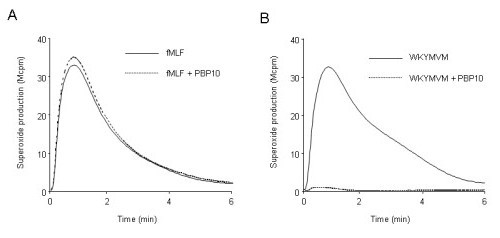
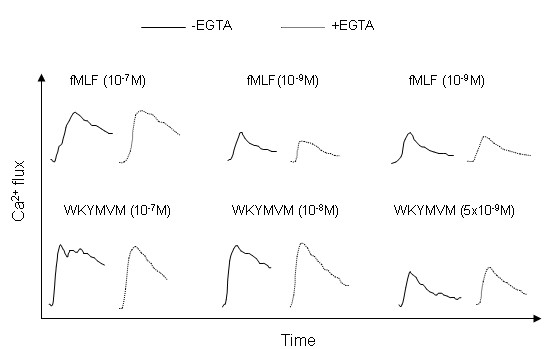
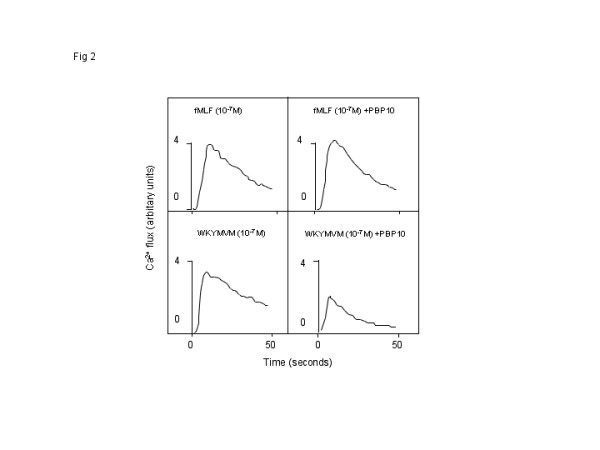
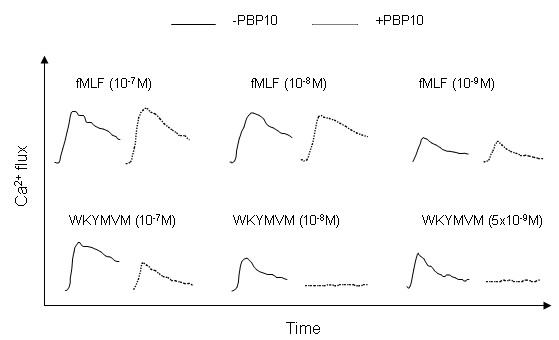
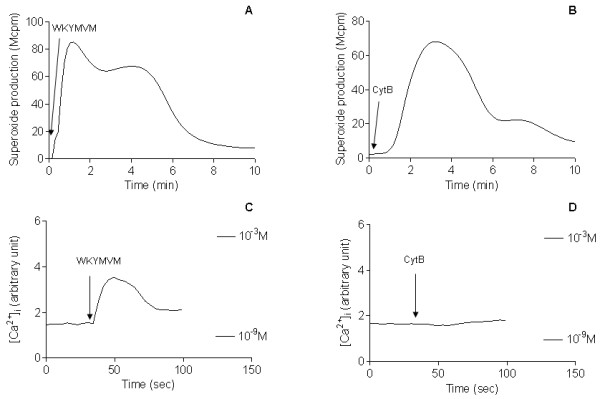
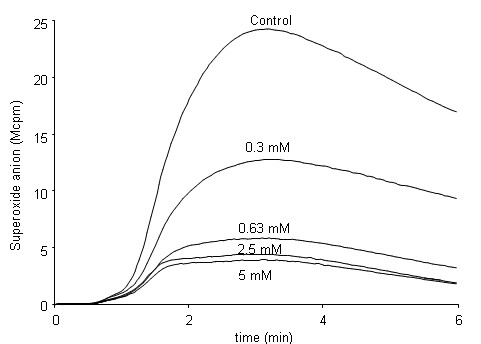
The transient rise in intracellular Ca2+ induced by agonists for FPR1 or FPR2 in human neutrophils occurred also in the presence of a chelator of Ca2+ (EGTA). PBP10 inhibited not only FPR2-induced oxidase activity, but also the transient rise in intracellular Ca2+.
Ca2+ signaling mediated via FPR2 follows the same route as FPR1, which involves initial emptying of the intracellular stores. PBP10 inhibits selectively the signals generated by FPR2, both with respect to NADPH-oxidase activity and the transient rise in intracellular Ca2+ induced by agonist exposure.
中性粒细胞识别趋化肽的分子基础是它们与特定的G蛋白偶联细胞表面受体(GPCRs)结合。人类中性粒细胞表达两种模式识别GPCRs,FPR1和FPR2,它们属于甲酰肽受体家族。这两种受体之间的高度同源性表明它们具有许多功能和信号转导特性,尽管它们在信号传导方面存在一些差异。本研究的目的是确定FPR2是否触发一种独特的信号,允许细胞外钙直接流入而不消耗细胞内钙储存,以及凝溶胶蛋白衍生的PIP2结合肽PBP10是否选择性抑制FPR2介导的细胞内Ca2+瞬时升高。
在存在Ca2+螯合剂(EGTA)的情况下,FPR1或FPR2激动剂诱导的人类中性粒细胞内Ca2+瞬时升高也会发生。PBP10不仅抑制FPR2诱导的氧化酶活性,还抑制细胞内Ca2+的瞬时升高。
通过FPR2介导的Ca2+信号传导与FPR1遵循相同的途径,这涉及细胞内储存的初始排空。PBP10在NADPH氧化酶活性以及激动剂暴露诱导的细胞内Ca2+瞬时升高方面选择性抑制FPR2产生的信号。