Department of Cell and Developmental Biology, University College London, London WC1E 6BT, UK.
Dev Cell. 2010 Jul 20;19(1):39-53. doi: 10.1016/j.devcel.2010.06.012.
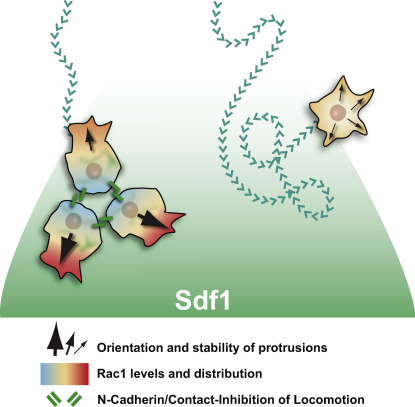
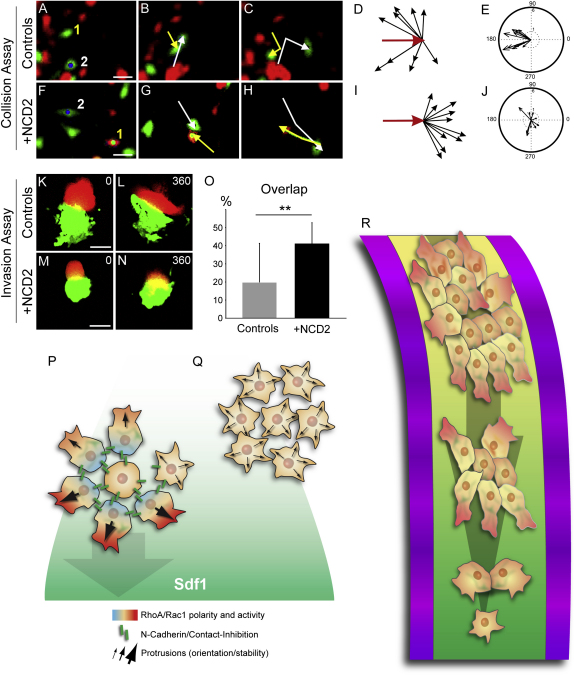
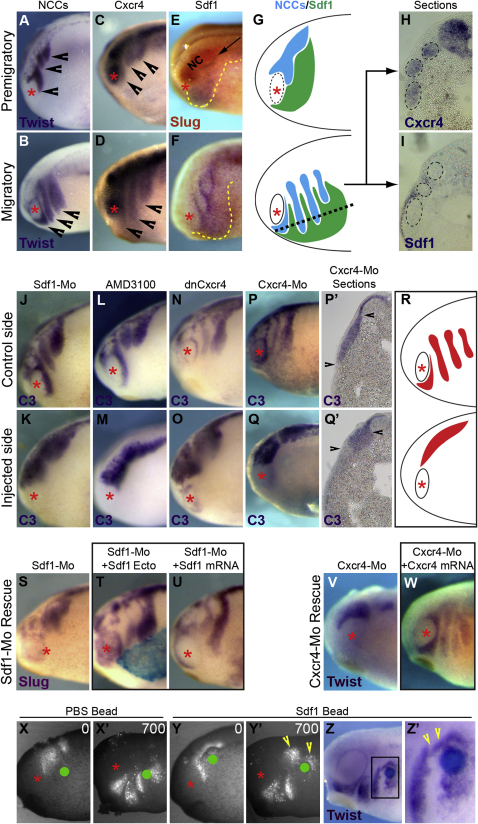
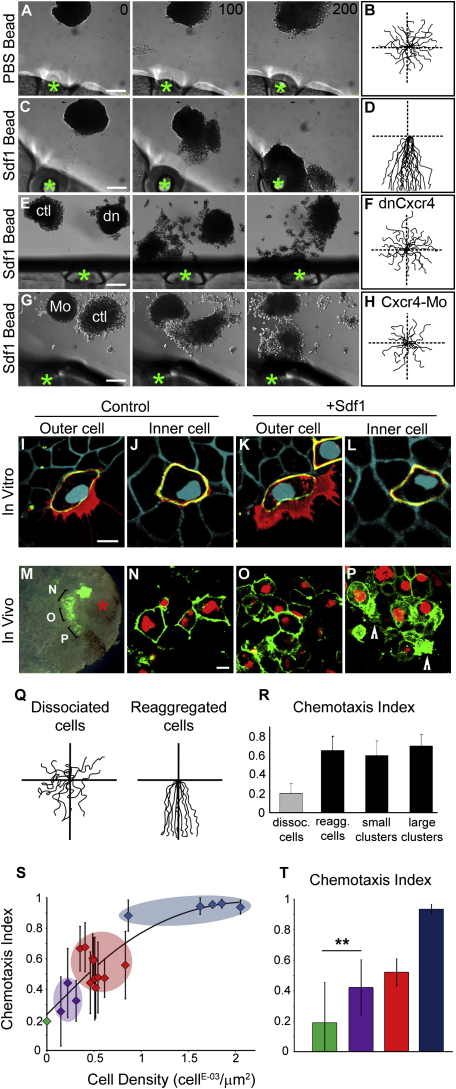
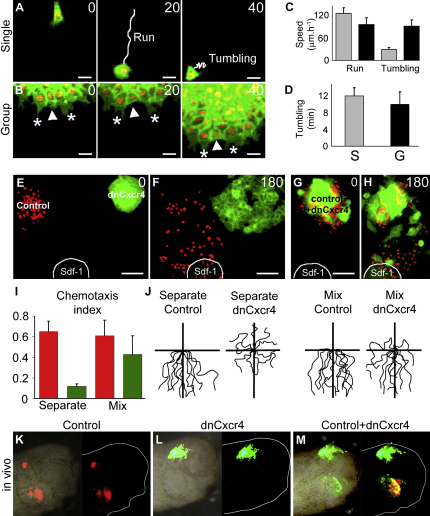
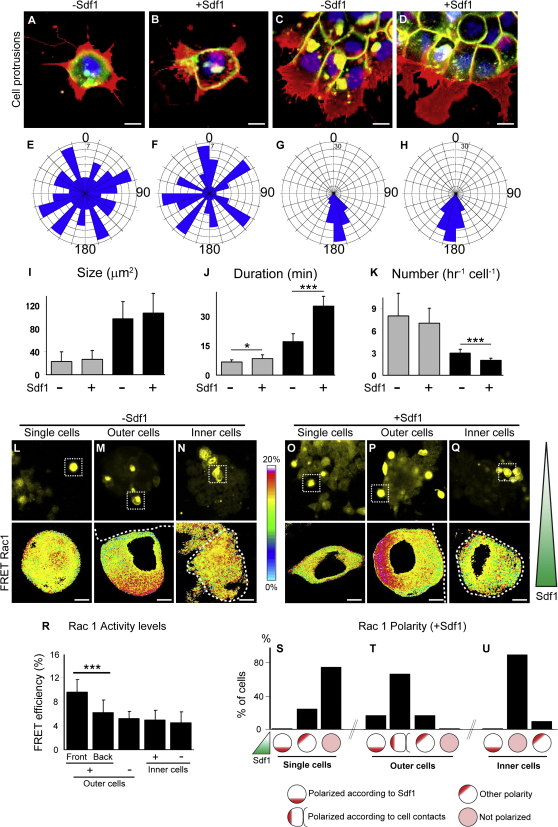
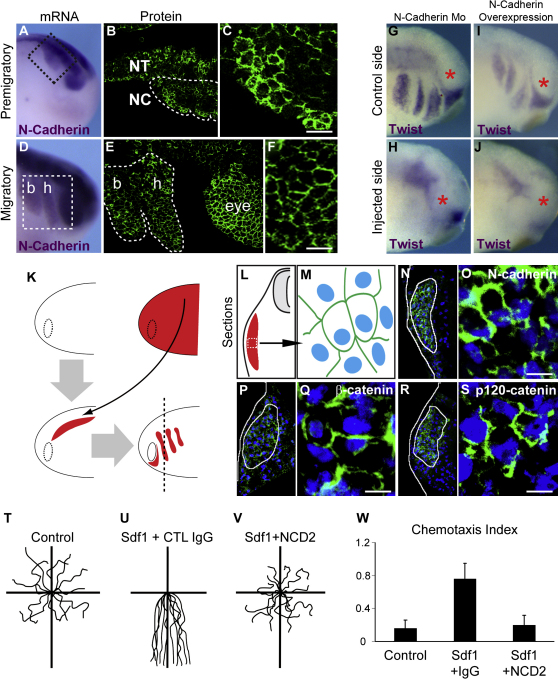
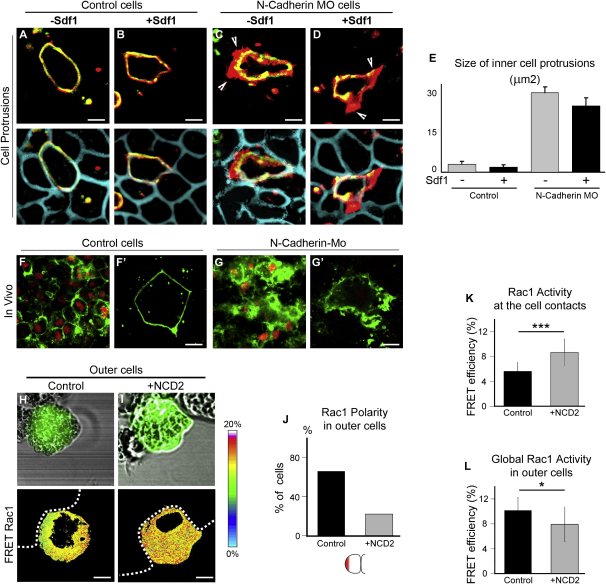
Directional collective migration is now a widely recognized mode of migration during embryogenesis and cancer. However, how a cluster of cells responds to chemoattractants is not fully understood. Neural crest cells are among the most motile cells in the embryo, and their behavior has been likened to malignant invasion. Here, we show that neural crest cells are collectively attracted toward the chemokine Sdf1. While not involved in initially polarizing cells, Sdf1 directionally stabilizes cell protrusions promoted by cell contact. At this cell contact, N-cadherin inhibits protrusion and Rac1 activity and in turn promotes protrusions and activation of Rac1 at the free edge. These results show a role for N-cadherin during contact inhibition of locomotion, and they reveal a mechanism of chemoattraction likely to function during both embryogenesis and cancer metastasis, whereby attractants such as Sdf1 amplify and stabilize contact-dependent cell polarity, resulting in directional collective migration.
定向集体迁移是胚胎发生和癌症过程中广泛认可的迁移模式。然而,细胞簇如何对趋化因子做出反应还不完全清楚。神经嵴细胞是胚胎中最具迁移能力的细胞之一,其行为类似于恶性侵袭。在这里,我们表明神经嵴细胞被趋化因子 Sdf1 集体吸引。虽然 Sdf1 最初不参与细胞极化,但它定向稳定了细胞接触促进的细胞突起。在这个细胞接触处,N-钙粘蛋白抑制突起和 Rac1 活性,反过来又促进游离边缘的突起和 Rac1 的激活。这些结果表明 N-钙粘蛋白在细胞接触抑制运动过程中起作用,并且它们揭示了趋化吸引的一种机制,可能在胚胎发生和癌症转移过程中发挥作用,即趋化因子如 Sdf1 放大和稳定接触依赖性细胞极性,导致定向集体迁移。