Department of Comparative Biosciences, School of Veterinary Medicine, University of Wisconsin, Madison, WI 53706, USA.
Mol Biol Cell. 2010 Sep 15;21(18):3258-68. doi: 10.1091/mbc.E10-05-0454. Epub 2010 Jul 28.
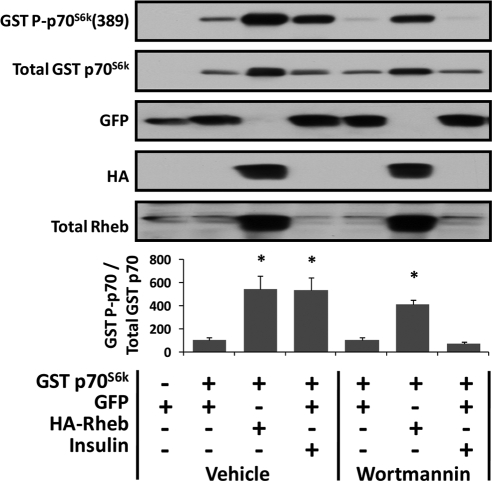
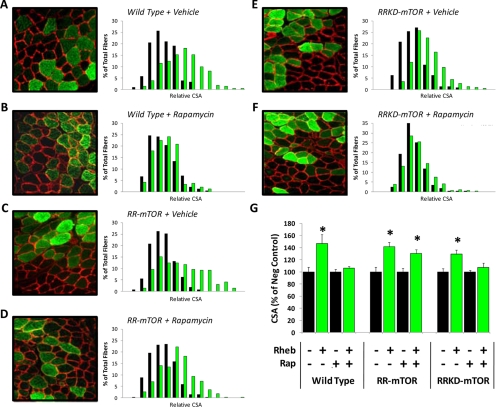
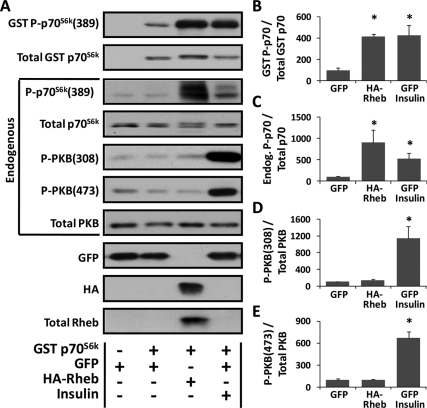
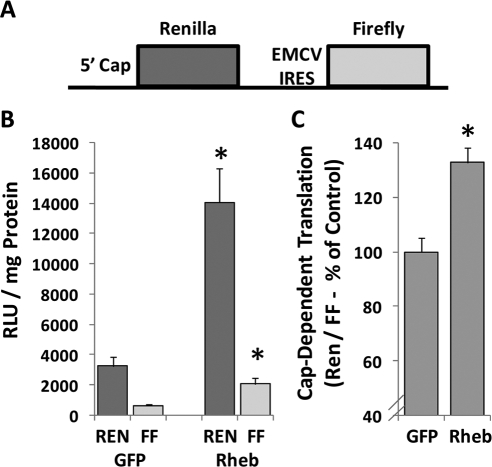
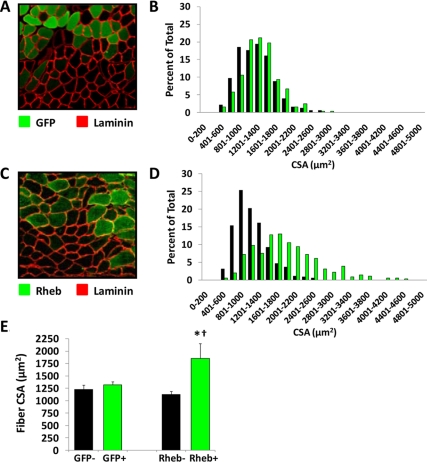
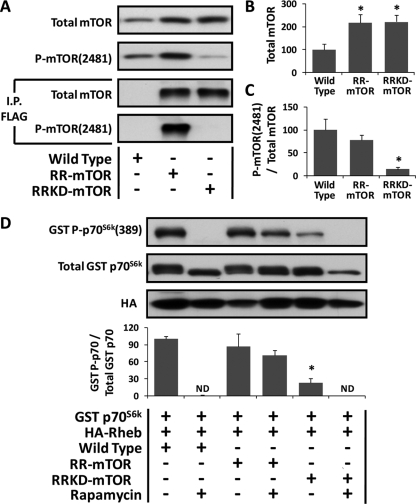
It has been widely proposed that signaling by mammalian target of rapamycin (mTOR) is both necessary and sufficient for the induction of skeletal muscle hypertrophy. Evidence for this hypothesis is largely based on studies that used stimuli that activate mTOR via a phosphatidylinositol 3-kinase (PI3K)/protein kinase B (PKB)-dependent mechanism. However, the stimulation of signaling by PI3K/PKB also can activate several mTOR-independent growth-promoting events; thus, it is not clear whether signaling by mTOR is permissive, or sufficient, for the induction of hypertrophy. Furthermore, the presumed role of mTOR in hypertrophy is derived from studies that used rapamycin to inhibit mTOR; yet, there is very little direct evidence that mTOR is the rapamycin-sensitive element that confers the hypertrophic response. In this study, we determined that, in skeletal muscle, overexpression of Rheb stimulates a PI3K/PKB-independent activation of mTOR signaling, and this is sufficient for the induction of a rapamycin-sensitive hypertrophic response. Transgenic mice with muscle specific expression of various mTOR mutants also were used to demonstrate that mTOR is the rapamycin-sensitive element that conferred the hypertrophic response and that the kinase activity of mTOR is necessary for this event. Combined, these results provide direct genetic evidence that a PI3K/PKB-independent activation of mTOR signaling is sufficient to induce hypertrophy. In summary, overexpression of Rheb activates mTOR signaling via a PI3K/PKB-independent mechanism and is sufficient to induce skeletal muscle hypertrophy. The hypertrophic effects of Rheb are driven through a rapamycin-sensitive (RS) mechanism, mTOR is the RS element that confers the hypertrophy, and the kinase activity of mTOR is necessary for this event.
已经广泛提出,哺乳动物雷帕霉素靶蛋白(mTOR)的信号传导对于诱导骨骼肌肥大是必要且充分的。这一假设的证据主要基于使用通过磷脂酰肌醇 3-激酶(PI3K)/蛋白激酶 B(PKB)依赖性机制激活 mTOR 的刺激物的研究。然而,PI3K/PKB 的信号传导的刺激也可以激活几种 mTOR 非依赖性的促进生长的事件;因此,尚不清楚 mTOR 的信号传导对于诱导肥大是否是允许的或充分的。此外,mTOR 在肥大中的假定作用源自使用雷帕霉素抑制 mTOR 的研究;然而,几乎没有直接证据表明 mTOR 是赋予肥大反应的雷帕霉素敏感元件。在这项研究中,我们确定在骨骼肌中,Rheb 的过表达刺激 mTOR 信号传导的 PI3K/PKB 非依赖性激活,这足以诱导雷帕霉素敏感的肥大反应。还使用具有肌肉特异性表达各种 mTOR 突变体的转基因小鼠来证明 mTOR 是赋予肥大反应的雷帕霉素敏感元件,并且 mTOR 的激酶活性对于该事件是必需的。综上所述,这些结果提供了直接的遗传证据,表明 mTOR 信号传导的 PI3K/PKB 非依赖性激活足以诱导肥大。总之,Rheb 的过表达通过 PI3K/PKB 非依赖性机制激活 mTOR 信号传导,足以诱导骨骼肌肥大。Rheb 的肥大效应是通过雷帕霉素敏感(RS)机制驱动的,mTOR 是赋予肥大的 RS 元件,并且 mTOR 的激酶活性对于该事件是必需的。