INSERM, U884, F-38041, Grenoble, France.
PLoS One. 2010 Jul 26;5(7):e11792. doi: 10.1371/journal.pone.0011792.
Prolonged opening of the mitochondrial permeability transition pore (PTP) leads to cell death. Various ubiquinone analogs have been shown to regulate PTP opening but the outcome of PTP regulation by ubiquinone analogs on cell fate has not been studied yet.
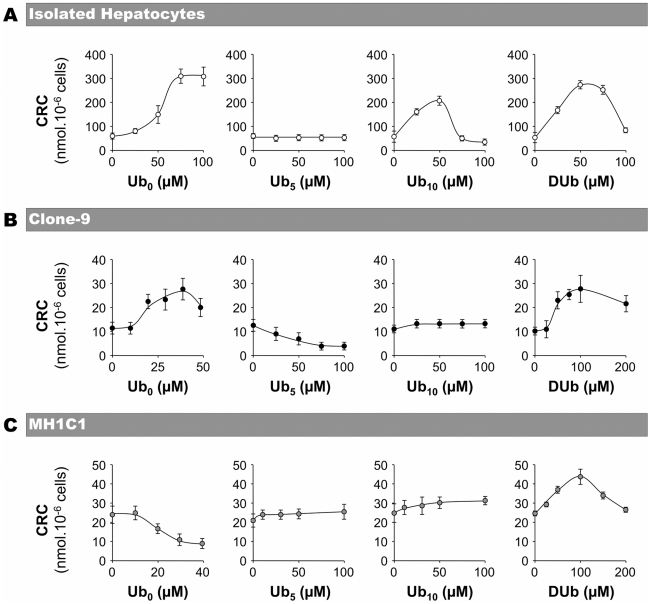
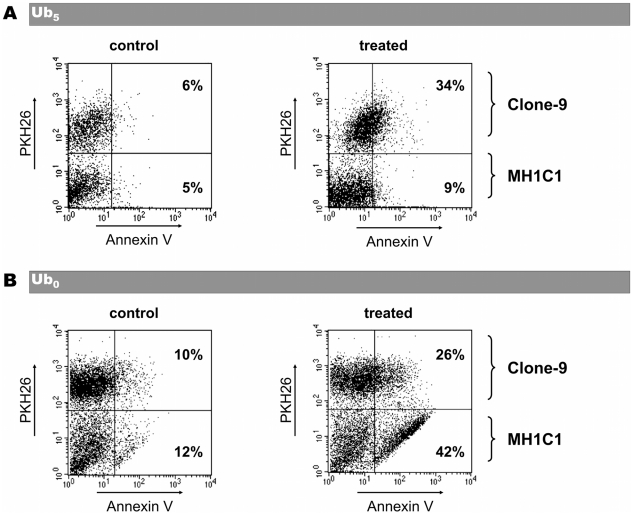
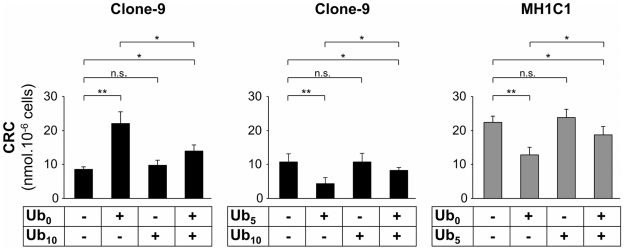
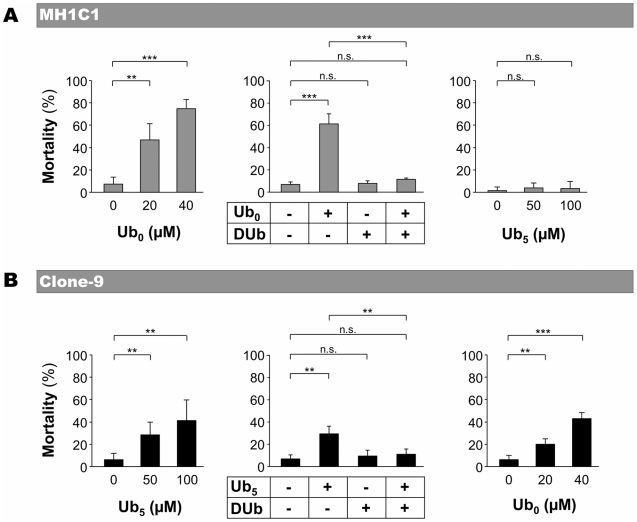
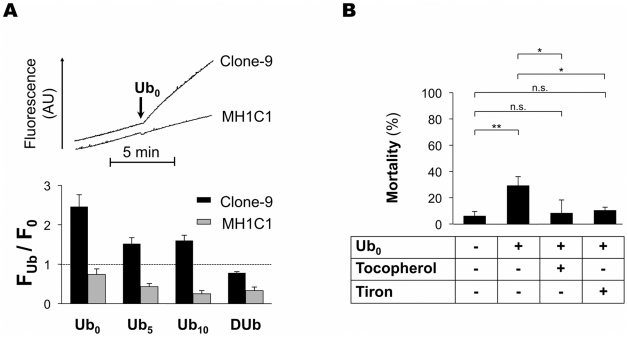
METHODOLOGY/PRINCIPAL FINDINGS: The effects of ubiquinone 0 (Ub(0)), ubiquinone 5 (Ub(5)), ubiquinone 10 (Ub(10)) and decyl-ubiquinone (DUb) were studied in freshly isolated rat hepatocytes, cultured rat liver Clone-9 cells and cancerous rat liver MH1C1 cells. PTP regulation by ubiquinones differed significantly in permeabilized Clone-9 and MH1C1 cells from that previously reported in liver mitochondria. Ub(0) inhibited PTP opening in isolated hepatocytes and Clone-9 cells, whereas it induced PTP opening in MH1C1 cells. Ub(5) did not affect PTP opening in isolated hepatocytes and MH1C1 cells, but it induced PTP opening in Clone-9 cells. Ub(10) regulated PTP in isolated hepatocytes, whereas it did not affect PTP opening in Clone-9 and MH1C1 cells. Only DUb displayed the same effect on PTP regulation in the three hepatocyte lines tested. Despite such modifications in PTP regulation, competition between ubiquinones still occurred in Clone-9 and MH1C1 cells. As expected, Ub(5) induced a PTP-dependent cell death in Clone-9, while it did not affect MH1C1 cell viability. Ub(0) induced a PTP-dependent cell death in MH1C1 cells, but was also slightly cytotoxic in Clone-9 by an oxidative stress-dependent mechanism.
CONCLUSIONS/SIGNIFICANCE: We found that various ubiquinone analogs regulate PTP in different ways depending on the cell studied. We took advantage of this unique property to develop a PTP opening-targeted strategy that leads to cell death specifically in cells where the ubiquinone analog used induces PTP opening, while sparing the cells in which it does not induce PTP opening.
线粒体通透性转换孔(PTP)的长时间开放会导致细胞死亡。已证明各种泛醌类似物可调节 PTP 的开放,但泛醌类似物对细胞命运的 PTP 调节的结果尚未得到研究。
方法/主要发现:本研究在新鲜分离的大鼠肝细胞、培养的大鼠肝克隆 9 细胞和肝癌大鼠 MH1C1 细胞中研究了泛醌 0(Ub(0))、泛醌 5(Ub(5))、泛醌 10(Ub(10))和癸基泛醌(DUb)的作用。泛醌对通透性的调节在已报道的肝线粒体中,在分离的肝细胞和克隆 9 细胞中的作用与之前的报道有显著差异。Ub(0)抑制了分离的肝细胞和克隆 9 细胞中 PTP 的开放,而诱导了 MH1C1 细胞中 PTP 的开放。Ub(5)对分离的肝细胞和 MH1C1 细胞中 PTP 的开放没有影响,但诱导了克隆 9 细胞中 PTP 的开放。Ub(10)调节了分离的肝细胞中的 PTP,而对克隆 9 和 MH1C1 细胞中的 PTP 开放没有影响。只有 DUb 在三种测试的肝细胞系中对 PTP 调节产生了相同的影响。尽管 PTP 的调节发生了这种变化,但在克隆 9 和 MH1C1 细胞中仍存在泛醌之间的竞争。正如预期的那样,Ub(5)诱导了克隆 9 中的 PTP 依赖性细胞死亡,而对 MH1C1 细胞的活力没有影响。Ub(0)诱导了 MH1C1 细胞中的 PTP 依赖性细胞死亡,但在克隆 9 中也通过氧化应激依赖的机制产生轻微的细胞毒性。
结论/意义:我们发现,各种泛醌类似物根据所研究的细胞以不同的方式调节 PTP。我们利用这一独特的特性,开发了一种针对 PTP 开放的靶向策略,该策略导致使用的泛醌类似物诱导 PTP 开放的细胞死亡,而不诱导 PTP 开放的细胞则不会死亡。