Martelli Alberto M, Evangelisti Camilla, Chiarini Francesca, McCubrey James A
Department of Human Anatomical Sciences University of Bologna, Bologna, Italy.
Oncotarget. 2010 Jun;1(2):89-103. doi: 10.18632/oncotarget.114.
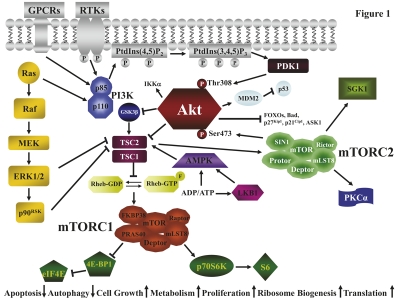
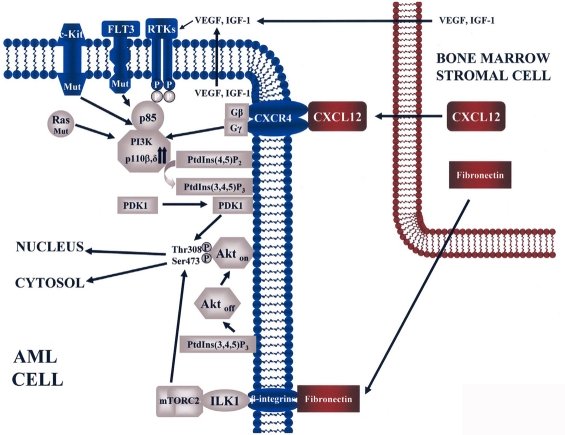
The phosphatidylinositol 3-kinase (PI3K)/Akt/mammalian target of rapamycin (mTOR) signaling axis plays a central role in cell proliferation, growth, and survival under physiological conditions. However, aberrant PI3K/Akt/mTOR signaling has been implicated in many human cancers, including acute myelogenous leukemia (AML). Therefore, the PI3K/Akt/mTOR network is considered as a validated target for innovative cancer therapy. The limit of acceptable toxicity for standard polychemotherapy has been reached in AML. Novel therapeutic strategies are therefore needed. This review highlights how the PI3K/Akt/mTOR signaling axis is constitutively active in AML patients, where it affects survival, proliferation, and drug-resistance of leukemic cells including leukemic stem cells. Effective targeting of this pathway with small molecule kinase inhibitors, employed alone or in combination with other drugs, could result in the suppression of leukemic cell growth. Furthermore, targeting the PI3K/Akt/mTOR signaling network with small pharmacological inhibitors, employed either alone or in combinations with other drugs, may result in less toxic and more efficacious treatment of AML patients. Efforts to exploit pharmacological inhibitors of the PI3K/Akt/mTOR cascade which show efficacy and safety in the clinical setting are now underway.
磷脂酰肌醇3激酶(PI3K)/蛋白激酶B(Akt)/雷帕霉素哺乳动物靶蛋白(mTOR)信号轴在生理条件下的细胞增殖、生长和存活中起着核心作用。然而,PI3K/Akt/mTOR信号异常与包括急性髓性白血病(AML)在内的许多人类癌症有关。因此,PI3K/Akt/mTOR网络被认为是创新癌症治疗的一个经过验证的靶点。AML中标准多药化疗可接受毒性的极限已经达到。因此需要新的治疗策略。本综述强调了PI3K/Akt/mTOR信号轴在AML患者中如何持续激活,在这些患者中它影响白血病细胞包括白血病干细胞的存活、增殖和耐药性。单独或与其他药物联合使用小分子激酶抑制剂有效靶向该途径,可能会抑制白血病细胞生长。此外,单独或与其他药物联合使用小的药理抑制剂靶向PI3K/Akt/mTOR信号网络,可能会使AML患者的治疗毒性更小、疗效更高。目前正在努力开发在临床环境中显示出疗效和安全性的PI3K/Akt/mTOR级联的药理抑制剂。