• 文献检索
  • 文档翻译
  • 深度研究
  • 学术资讯
  • Suppr Zotero 插件Zotero 插件
  • 邀请有礼
  • 套餐&价格
  • 历史记录
应用&插件
Suppr Zotero 插件Zotero 插件浏览器插件Mac 客户端Windows 客户端微信小程序
定价
高级版会员购买积分包购买API积分包
服务
文献检索文档翻译深度研究API 文档MCP 服务
关于我们
关于 Suppr公司介绍联系我们用户协议隐私条款
关注我们

Suppr 超能文献

核心技术专利:CN118964589B侵权必究
粤ICP备2023148730 号-1Suppr @ 2026

文献检索

告别复杂PubMed语法,用中文像聊天一样搜索,搜遍4000万医学文献。AI智能推荐,让科研检索更轻松。

立即免费搜索

文件翻译

保留排版,准确专业,支持PDF/Word/PPT等文件格式,支持 12+语言互译。

免费翻译文档

深度研究

AI帮你快速写综述,25分钟生成高质量综述,智能提取关键信息,辅助科研写作。

立即免费体验

巴基斯坦使用避孕药具的意向:对行为改变运动的启示。

Intentions to use contraceptives in Pakistan: implications for behavior change campaigns.

机构信息

Population Services International, 1120 19th Street, NW, Suite 600, Washington, DC 20036, USA.

出版信息

BMC Public Health. 2010 Aug 2;10:450. doi: 10.1186/1471-2458-10-450.

DOI:10.1186/1471-2458-10-450
PMID:20673374
原文链接:https://pmc.ncbi.nlm.nih.gov/articles/PMC2920282/
Abstract

BACKGROUND

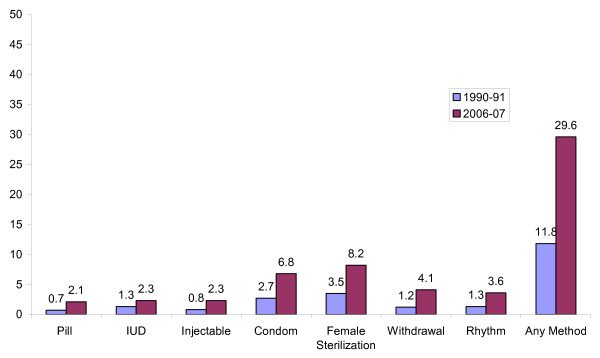
Since 1990-91, traditional method use has increased at a faster rate in Pakistan than modern method use. The importance of hormonal methods or the IUD has diminished and that of traditional methods has increased in the method mix. There is a need to identify factors motivating and deterring the adoption of specific family planning methods among married men and women in Pakistan.

METHODS

In addition to social and demographic characteristics of respondents, a representative household survey collected information on psychological correlates of family planning behavior from 1,788 non-pregnant wives and 1,805 husbands with not-pregnant wives. Males and females were from separate households. Principal components analysis was conducted to identify the underlying constructs that were important for each gender. Multinomial logistic regression analysis was conducted to determine the correlates of male and female intentions to use contraceptive methods.

RESULTS

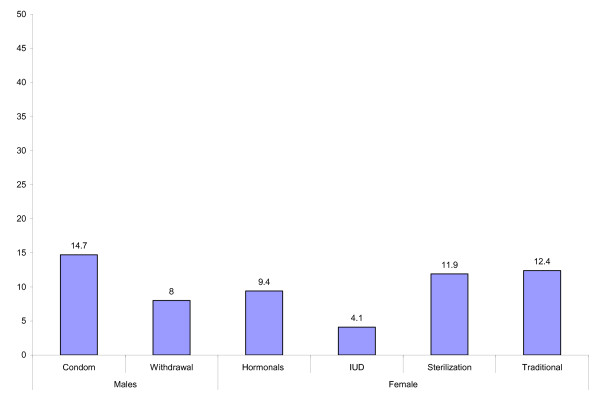
Amongst women, the perception that her in-laws support family planning use was the strongest determinant of her intentions to use contraceptive methods. A woman's belief in the importance of spacing children and her perception that a choice of methods and facilities with competent staff were available were also powerful drivers of her intentions to use contraceptive methods. The strongest obstacle to a woman's forming an intention to use contraceptive methods was her belief that family planning decisions were made by the husband and fertility was determined by God's will. Fears that family planning would harm a woman's womb lowered a woman's intentions to use methods requiring procedures, such as the IUD and female sterilization.The perception that a responsible, caring, husband uses family planning to improve the standard of living of his family and to protect his wife's health was the most important determinant of a man's intention to use condoms. A husband's lack of self-efficacy in being able to discuss family planning with his wife was the strongest driver of the intention to use withdrawal. A man's fear that contraceptives would make a woman sterile and harm her womb lowered his intention to use modern contraceptive methods.

CONCLUSIONS

These findings highlight the importance of having secondary target audiences such as mothers-in-law and husbands in family planning behavior change campaigns implemented in Pakistan. Campaigns that stress the importance of child spacing are likely to have an impact. Client perceptions of the quality of care are important determinants of intentions to use contraceptive methods in Pakistan. Client concerns that the IUD and sterilization procedures might harm a woman's womb and cause sterility should be addressed. The findings suggest that there is a need to assess the actual quality of service delivery in Pakistan.
https://cdn.ncbi.nlm.nih.gov/pmc/blobs/aa2f/2920282/c592273eafd0/1471-2458-10-450-2.jpg
https://cdn.ncbi.nlm.nih.gov/pmc/blobs/aa2f/2920282/c9a6894c314e/1471-2458-10-450-1.jpg
https://cdn.ncbi.nlm.nih.gov/pmc/blobs/aa2f/2920282/c592273eafd0/1471-2458-10-450-2.jpg
https://cdn.ncbi.nlm.nih.gov/pmc/blobs/aa2f/2920282/c9a6894c314e/1471-2458-10-450-1.jpg
https://cdn.ncbi.nlm.nih.gov/pmc/blobs/aa2f/2920282/c592273eafd0/1471-2458-10-450-2.jpg
摘要

背景

自 1990-91 年以来,巴基斯坦传统方法的使用率增长速度快于现代方法。激素方法或宫内节育器的重要性降低,而传统方法在方法组合中的重要性增加。有必要确定激励和阻止已婚男女采用特定计划生育方法的因素。

方法

除了受访者的社会和人口特征外,一项代表性的家庭调查还从 1788 名未怀孕的妻子和 1805 名与未怀孕妻子同住的丈夫那里收集了计划生育行为的心理相关信息。男性和女性来自不同的家庭。进行主成分分析以确定对每个性别重要的潜在结构。进行多项逻辑回归分析以确定男性和女性使用避孕方法的意图的相关性。

结果

在女性中,公婆支持计划生育使用的看法是决定其使用避孕方法意图的最强决定因素。女性对孩子间隔重要性的信念以及她认为方法的选择和有能力的工作人员的设施可用的看法也是她使用避孕方法意图的强大驱动力。女性形成使用避孕方法意图的最大障碍是她认为计划生育决策由丈夫做出,生育由上帝的旨意决定。担心计划生育会损害女性的子宫,降低了女性使用需要手术的方法(如宫内节育器和女性绝育)的意愿。丈夫有责任,关心,使用计划生育来提高家庭的生活水平并保护妻子的健康,这是决定丈夫使用避孕套的意图的最重要决定因素。丈夫缺乏与妻子讨论计划生育的自我效能感是使用撤回的最强驱动力。男性担心避孕药会使女性不育并损害她的子宫,从而降低了他使用现代避孕方法的意愿。

结论

这些发现强调了在巴基斯坦实施计划生育行为改变运动时,将次要目标受众(如婆婆和丈夫)作为次要目标受众的重要性。强调孩子间隔重要性的运动可能会产生影响。客户对护理质量的看法是决定在巴基斯坦使用避孕方法意图的重要决定因素。客户担心宫内节育器和绝育手术可能会损害女性的子宫并导致不育,应该解决这些问题。调查结果表明,有必要评估巴基斯坦实际的服务提供质量。

相似文献

1
Intentions to use contraceptives in Pakistan: implications for behavior change campaigns.巴基斯坦使用避孕药具的意向:对行为改变运动的启示。
BMC Public Health. 2010 Aug 2;10:450. doi: 10.1186/1471-2458-10-450.
2
Influence of a husband's healthcare decision making role on a woman's intention to use contraceptives among Mozambican women.丈夫的医疗保健决策角色对莫桑比克女性使用避孕药具意愿的影响。
Reprod Health. 2015 Apr 23;12:36. doi: 10.1186/s12978-015-0010-2.
3
Assessing predictors of contraceptive use and demand for family planning services in underserved areas of Punjab province in Pakistan: results of a cross-sectional baseline survey.评估巴基斯坦旁遮普省服务欠缺地区避孕措施使用情况及计划生育服务需求的预测因素:一项横断面基线调查结果
Reprod Health. 2015 Mar 28;12:25. doi: 10.1186/s12978-015-0016-9.
4
Demographic and sociocultural factors influencing contraceptive use in Uganda.影响乌干达避孕措施使用的人口统计学和社会文化因素。
J Biosoc Sci. 1995 Jan;27(1):47-60. doi: 10.1017/s0021932000006994.
5
Women's fears and men's anxieties: the impact of family planning on gender relations in northern Ghana.女性的恐惧与男性的焦虑:计划生育对加纳北部性别关系的影响。
Stud Fam Plann. 1999 Mar;30(1):54-66. doi: 10.1111/j.1728-4465.1999.00054.x.
6
Determinants of current contraceptive use among Ghanaian women at the highest risk of pregnancy.加纳怀孕风险最高的女性当前避孕措施使用情况的决定因素。
J Biosoc Sci. 1992 Oct;24(4):463-75. doi: 10.1017/s0021932000020022.
7
The use of modern and traditional methods of fertility control in Bangladesh: a multivariate analysis.孟加拉国现代与传统生育控制方法的使用:一项多变量分析
Contraception. 1994 Oct;50(4):363-72. doi: 10.1016/0010-7824(94)90023-x.
8
Preventing unplanned pregnancies among married couples: are services for only the wife sufficient?预防已婚夫妇意外怀孕:仅为妻子提供服务是否足够?
Res Nurs Health. 1995 Apr;18(2):133-42. doi: 10.1002/nur.4770180207.
9
Communication key for family planning.计划生育的沟通关键。
Netw Res Triangle Park N C. 1992 Aug;13(1):13.
10
The influence of husbands on contraceptive use by Bangladeshi women.丈夫对孟加拉国妇女避孕措施使用情况的影响。
Health Policy Plan. 2000 Mar;15(1):43-51. doi: 10.1093/heapol/15.1.43.

引用本文的文献

1
Who actualizes postpartum contraceptive intentions? A trajectory cluster analysis.谁能实现产后避孕意愿?轨迹聚类分析。
Reprod Health. 2024 Nov 21;21(1):169. doi: 10.1186/s12978-024-01899-7.
2
Assessment of intention to use modern contraceptives among women of reproductive age in Benin: evidence from a national population-based survey.贝宁育龄妇女使用现代避孕方法的意愿评估:基于全国人口调查的证据
Contracept Reprod Med. 2024 Aug 30;9(1):43. doi: 10.1186/s40834-024-00294-8.
3
Factors influencing contraceptive utilisation among postpartum adolescent mothers: a cross sectional study at China-Uganda friendship hospital.

本文引用的文献

1
Do mothers-in-law matter? Family dynamics and fertility decision-making in urban squatter settlements of Karachi, Pakistan.岳母/婆婆重要吗?巴基斯坦卡拉奇城市棚户区的家庭动态与生育决策
J Biosoc Sci. 2003 Oct;35(4):545-58. doi: 10.1017/s0021932003005984.
2
Factors affecting contraceptive use in Pakistan.影响巴基斯坦避孕药具使用的因素。
Pak Dev Rev. 1996 Spring;35(1):1-22.
3
Obstacles to contraceptive use in Pakistan: a study in Punjab.巴基斯坦避孕措施使用的障碍:旁遮普省的一项研究
影响产后青少年母亲避孕措施使用情况的因素:在中国-乌干达友谊医院开展的一项横断面研究
Contracept Reprod Med. 2024 Jul 30;9(1):37. doi: 10.1186/s40834-024-00297-5.
4
Examining contraceptive utilization behavior in Pakistani women.考察巴基斯坦女性的避孕措施利用行为。
Reprod Health. 2024 Jul 3;21(1):100. doi: 10.1186/s12978-024-01815-z.
5
Predictors of voluntary uptake of modern contraceptive methods in rural Sindh, Pakistan.巴基斯坦信德省农村地区现代避孕方法自愿采用情况的预测因素
PLOS Glob Public Health. 2024 Apr 4;4(4):e0002419. doi: 10.1371/journal.pgph.0002419. eCollection 2024.
6
Patterns and correlates of intention to use contraceptives among fecund sexually active women in developing countries.发展中国家生育活跃的有性妇女使用避孕药具的意愿模式和相关因素。
Glob Health Action. 2023 Dec 31;16(1):2255043. doi: 10.1080/16549716.2023.2255043.
7
Effects of continuum of care for maternal health service utilisation on intention to use family planning among pastoralist women of Ethiopia: a robust regression analysis and propensity score matching modelling.连续护理对埃塞俄比亚牧民妇女利用孕产妇健康服务的影响:稳健回归分析和倾向评分匹配建模对计划生育的影响。
BMJ Open. 2023 Jul 12;13(7):e072179. doi: 10.1136/bmjopen-2023-072179.
8
'The wife should do as her husband advises': Understanding factors influencing contraceptive use decision making among married Pakistani couples-Qualitative study.“妻子应该听从丈夫的建议”:理解影响已婚巴基斯坦夫妇避孕决策的因素——定性研究。
PLoS One. 2023 Feb 16;18(2):e0277173. doi: 10.1371/journal.pone.0277173. eCollection 2023.
9
Intention to use contraceptives and its correlates among reproductive age women in selected high fertility sub-saharan Africa countries: a multilevel mixed effects analysis.选定的高生育率撒哈拉以南非洲国家中育龄妇女使用避孕药具的意愿及其相关因素:多层次混合效应分析。
BMC Public Health. 2023 Feb 6;23(1):257. doi: 10.1186/s12889-023-15187-9.
10
Intention to use contraceptives among married and cohabiting women in sub-Saharan Africa: a multilevel analysis of cross-sectional data.撒哈拉以南非洲已婚和同居女性使用避孕药具的意愿:对横截面数据的多层次分析。
BMJ Open. 2022 Nov 24;12(11):e060073. doi: 10.1136/bmjopen-2021-060073.
Stud Fam Plann. 2001 Jun;32(2):95-110. doi: 10.1111/j.1728-4465.2001.00095.x.
4
Is low income a constraint to contraceptive use among the Pakistani poor?低收入是否限制了巴基斯坦贫困人口使用避孕药具?
J Biosoc Sci. 2000 Apr;32(2):161-75. doi: 10.1017/s0021932000001619.
5
Intention to use contraceptives and subsequent contraceptive behavior in Morocco.摩洛哥的避孕意愿及后续避孕行为
Stud Fam Plann. 1996 Sep-Oct;27(5):239-50.
6
Contraceptive intentions and subsequent behavior in rural Bangladesh.孟加拉国农村地区的避孕意愿及后续行为
Stud Fam Plann. 1982 Jan;13(1):24-31.
7
An economic framework for fertility analysis.生育力分析的经济框架。
Stud Fam Plann. 1975 Mar;6(3):54-63.
8
Family planning in Pakistan: an analysis of some factors constraining use.巴基斯坦的计划生育:对一些制约使用因素的分析
Stud Fam Plann. 1976 May;7(5):144-54.