Faculty of Dentistry, McGill University, Montreal, Quebec H3A 1A4, Canada.
J Biol Chem. 2010 Oct 8;285(41):31427-34. doi: 10.1074/jbc.M110.114496. Epub 2010 Aug 2.
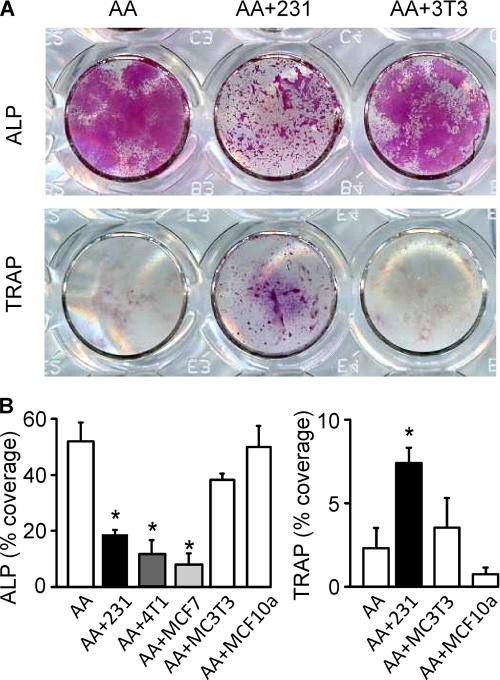
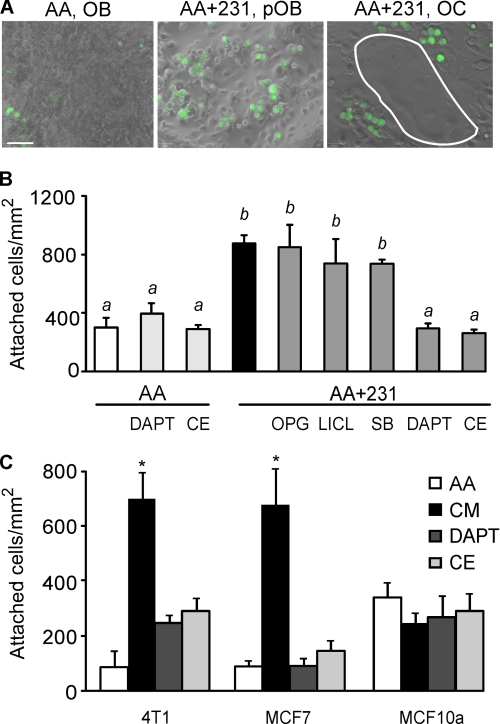
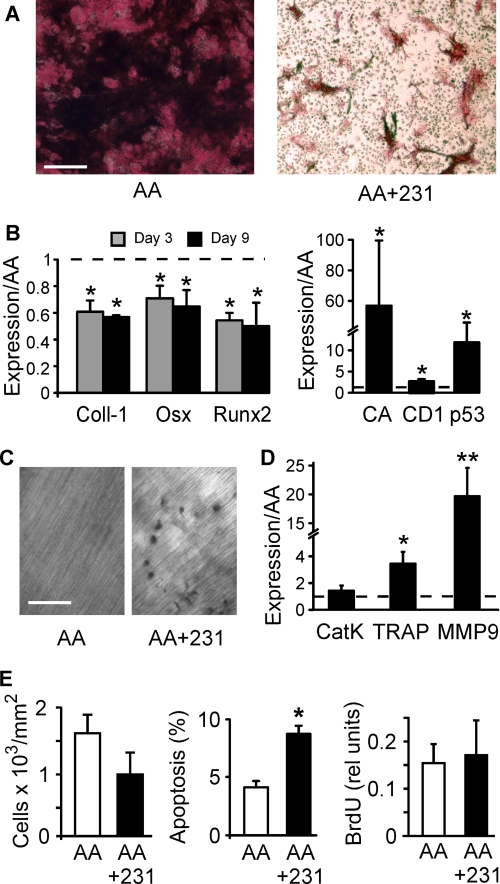
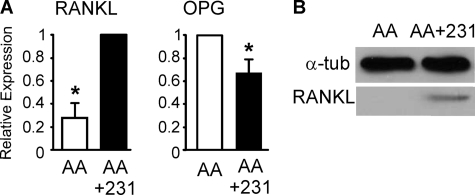
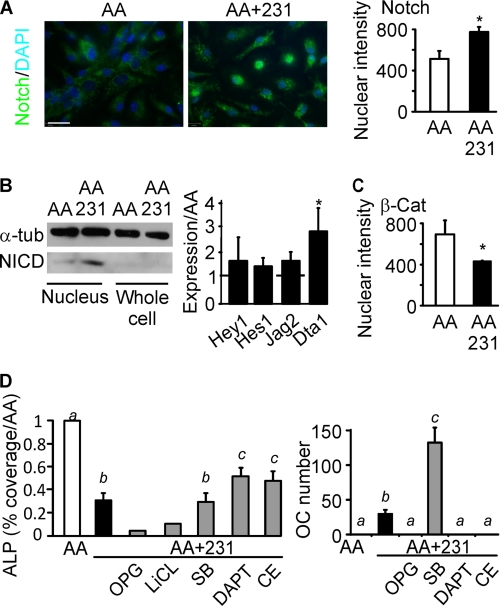
During breast cancer metastasis to bone, tumor cells home to bone marrow, likely targeting the stem cell niche, and stimulate osteoclasts, which mediate osteolysis required for tumor expansion. Although osteoblasts contribute to the regulation of the hematopoietic stem cell niche and control osteoclastogenesis through production of proresorptive cytokine RANKL (receptor activator of NF-κB ligand), their role in cancer metastases to bone is not fully understood. C57BL/6J mouse bone marrow cells were treated for 3-12 days with ascorbic acid (50 μg/ml) in the presence or absence of 10% medium conditioned by breast carcinoma cells MDA-MB-231, 4T1, or MCF7. Treatment with cancer-derived factors resulted in a sustained 40-60% decrease in osteoblast differentiation markers, compared with treatment with ascorbic acid alone, and induced an osteoclastogenic change in the RANKL/osteoprotegerin ratio. Importantly, exposure of bone cells to breast cancer-derived factors stimulated the subsequent attachment of cancer cells to immature osteoblasts. Inhibition of γ-secretase using pharmacological inhibitors DAPT and Compound E completely reversed cancer-induced osteoclastogenesis as well as cancer-induced enhancement of cancer cell attachment, identifying γ-secretase activity as a key mediator of these effects. Thus, we have uncovered osteoblasts as critical intermediary of premetastatic signaling by breast cancer cells and pinpointed γ-secretase as a robust target for developing therapeutics potentially capable of reducing both homing and progression of cancer metastases to bone.
在乳腺癌转移到骨骼的过程中,肿瘤细胞归巢到骨髓,可能靶向干细胞龛,并刺激破骨细胞,破骨细胞介导肿瘤扩张所需的溶骨作用。虽然成骨细胞通过产生促分解代谢细胞因子 RANKL(核因子-κB 配体受体激活剂)来调节造血干细胞龛并控制破骨细胞生成,但它们在癌症转移到骨骼中的作用尚未完全了解。用含有或不含有乳腺癌细胞 MDA-MB-231、4T1 或 MCF7 条件培养基的 50μg/ml 抗坏血酸处理 C57BL/6J 小鼠骨髓细胞 3-12 天。与单独用抗坏血酸处理相比,用癌症衍生因子处理导致成骨细胞分化标志物持续减少 40-60%,并诱导 RANKL/骨保护素比率的破骨细胞生成变化。重要的是,骨细胞暴露于乳腺癌衍生因子刺激随后的癌细胞附着到未成熟的成骨细胞上。使用药理学抑制剂 DAPT 和化合物 E 抑制 γ-分泌酶完全逆转了癌症诱导的破骨细胞生成以及癌症诱导的增强的癌细胞附着,确定 γ-分泌酶活性是这些效应的关键介质。因此,我们发现成骨细胞是乳腺癌细胞前转移信号的关键中介,并确定 γ-分泌酶是开发治疗药物的有力靶点,这些治疗药物有可能减少癌症转移到骨骼的归巢和进展。