Lee Jiyoung, Kemper Jongsook Kim
Department of Molecular and Integrative Physiology, University of Illinois, Urbana-Champaign, IL 61801, USA.
Aging (Albany NY). 2010 Aug;2(8):527-34. doi: 10.18632/aging.100184.
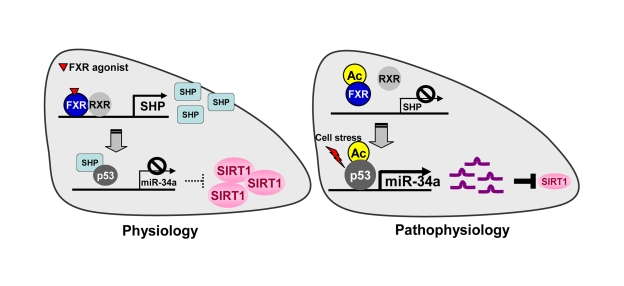
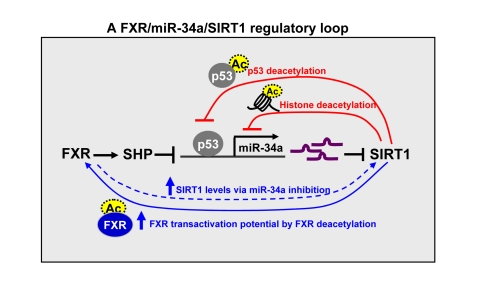
SIRT1 is a NAD+-dependent deacetylase implicated in longevity and diverse physiological processes. SIRT1, as a key mediator of beneficial effects of caloric restriction, regulates lipid and glucose metabolism by deacetylating metabolic regulators, as well as histones, in response to nutritional deprivation. Here we discuss how SIRT1 levels are regulated by microRNAs (miRs) which are emerging as important metabolic regulators; the recently identified nuclear receptor FXR/SHP cascade pathway that controls the expression of miR-34a and its target SIRT1; and a FXR/SIRT1 positive feedback regulatory loop, which is deregulated in metabolic disease states. The FXR/miR-34a pathway and other miRs controlling SIRT1 may be useful therapeutic targets for age-related diseases, including metabolic disorders.
沉默信息调节因子1(SIRT1)是一种依赖烟酰胺腺嘌呤二核苷酸(NAD+)的去乙酰化酶,与寿命及多种生理过程相关。作为热量限制有益作用的关键介质,SIRT1通过使代谢调节因子以及组蛋白去乙酰化,以应对营养剥夺,从而调节脂质和葡萄糖代谢。在此,我们将讨论微小RNA(miR)如何调节SIRT1水平,miR正逐渐成为重要的代谢调节因子;最近发现的核受体法尼醇X受体(FXR)/小异二聚体伴侣(SHP)级联途径可控制miR-34a及其靶标SIRT1的表达;以及FXR/SIRT1正反馈调节环,该调节环在代谢疾病状态下失调。FXR/miR-34a途径以及其他控制SIRT1的miR可能是包括代谢紊乱在内的与年龄相关疾病的有用治疗靶点。