Tian Xiao-Feng, Ji Fu-Jian, Zang Hong-Liang, Cao Hong
Department of General Surgery, the China-Japan Union Hospital, Jilin University, Changchun 130021, China.
PLoS One. 2016 Jul 7;11(7):e0158657. doi: 10.1371/journal.pone.0158657. eCollection 2016.
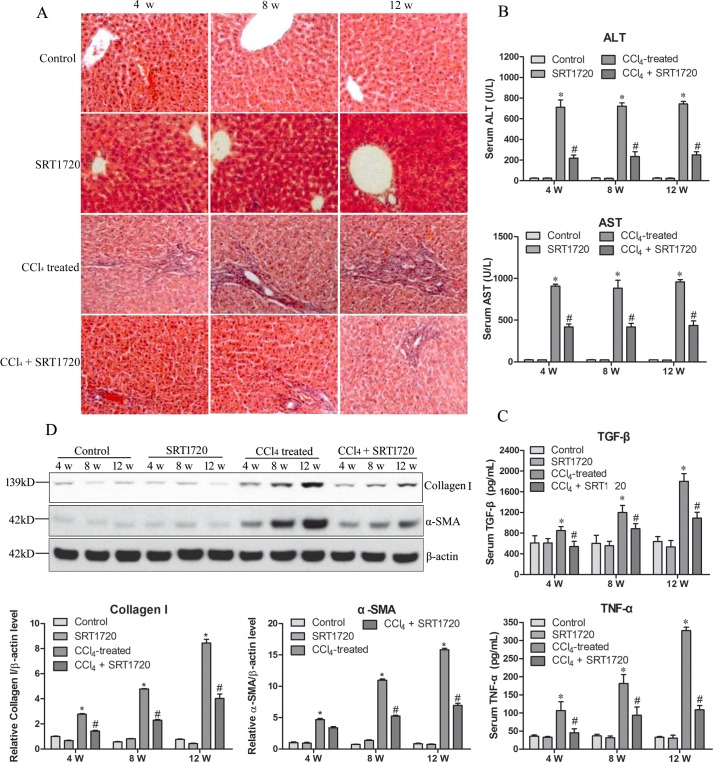
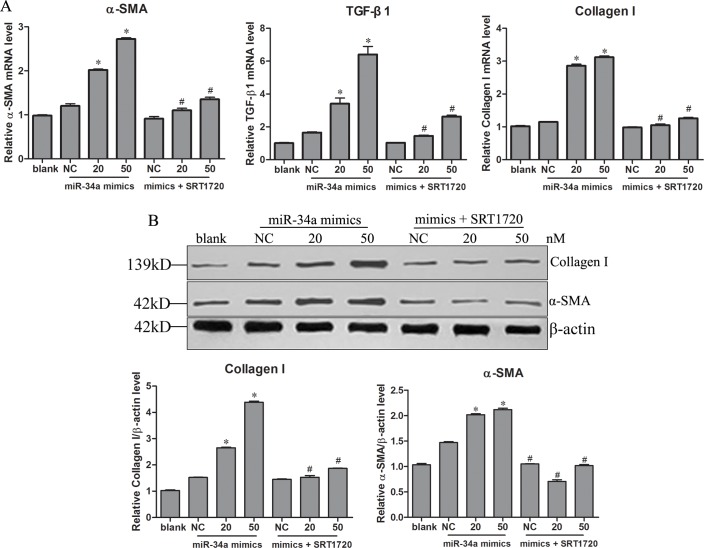
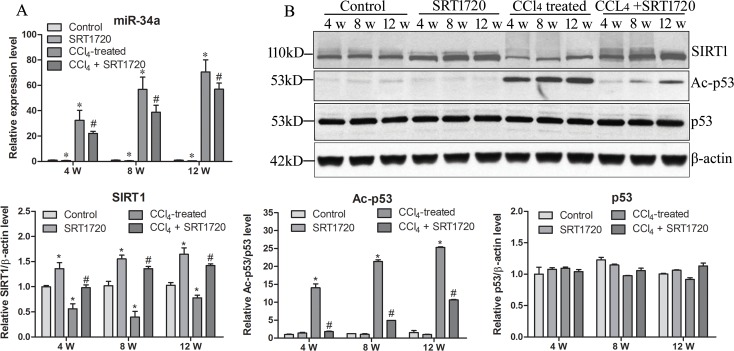
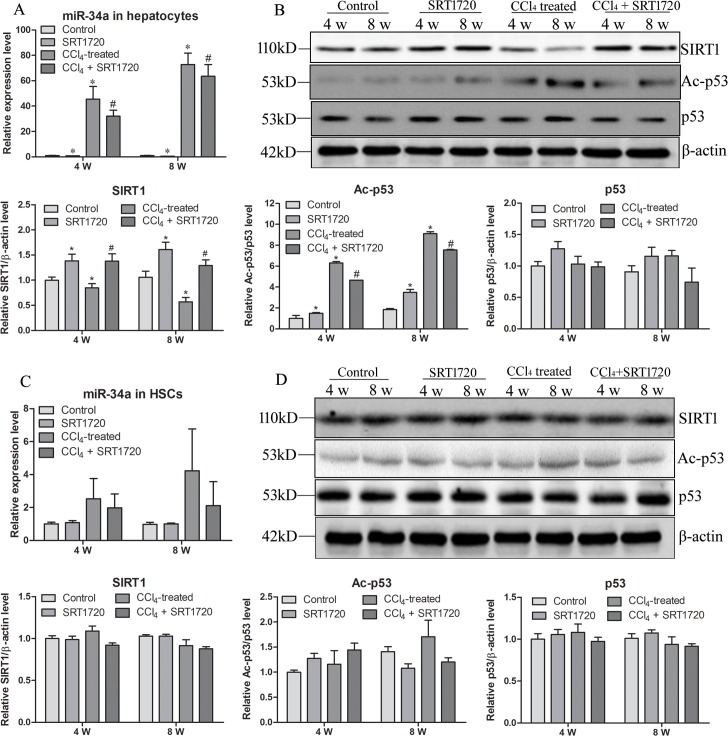
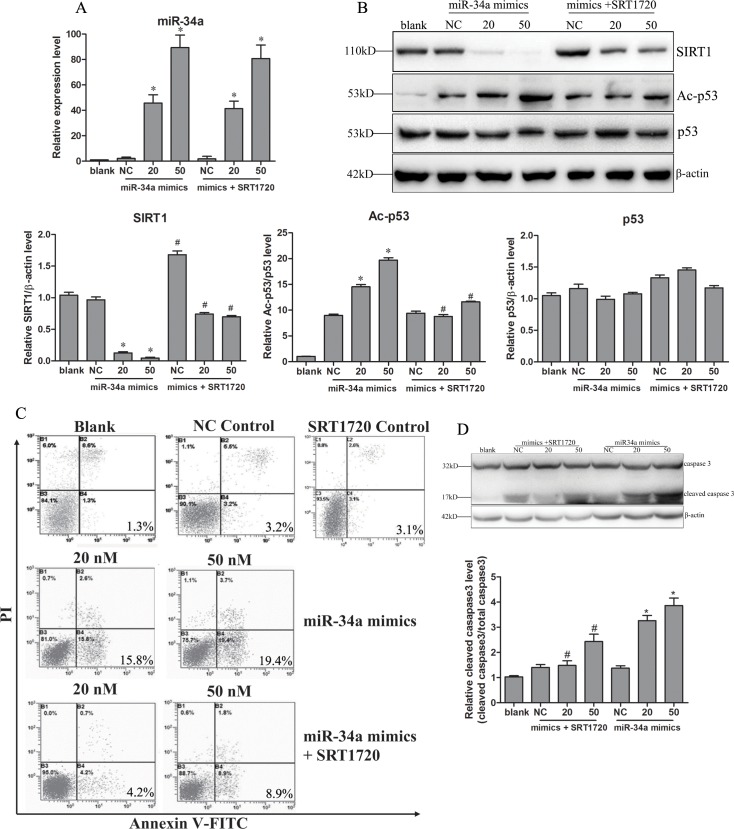
Liver fibrosis results from a sustained wound healing response to chronic liver injury, and the activation of nonparenchymal hepatic stellate cells (HSCs) is the pivotal process. MicroRNA-34a (miR-34a) is the direct target gene of p53 and activates p53 through sirtuin 1 (SIRT1) simultaneously. The miR-34a/SIRT1/p53 signaling pathway thus forms a positive feedback loop wherein p53 induces miR-34a and miR-34a activates p53 by inhibiting SIRT1, playing an important role in cell proliferation and apoptosis. miR-34a expression has been found to be increased in animal models or in human patients with different liver diseases, including liver fibrosis. However, the exact role of this classical miR-34a/SIRT1/p53 signaling pathway in liver fibrosis remains unclear. In the present study, using a CCl4-induced rat liver fibrosis model, we found that the miR-34a/SIRT1/p53 signaling pathway was activated and could be inhibited by SIRT1 activator SRT1720. Further studies showed that the miR-34a/SIRT1/p53 signaling pathway was activated in hepatocytes but not in HSCs. The activation of this pathway in hepatocytes resulted in the apoptosis of hepatocytes and thus activated HSCs. Our data indicate that the miR-34a/SIRT1/p53 signaling pathway might be a promising therapeutic target for liver fibrosis.
肝纤维化是对慢性肝损伤的持续伤口愈合反应的结果,而非实质肝星状细胞(HSCs)的激活是关键过程。微小RNA-34a(miR-34a)是p53的直接靶基因,并同时通过沉默调节蛋白1(SIRT1)激活p53。因此,miR-34a/SIRT1/p53信号通路形成一个正反馈环,其中p53诱导miR-34a,而miR-34a通过抑制SIRT1激活p53,在细胞增殖和凋亡中起重要作用。已发现在包括肝纤维化在内的不同肝病的动物模型或人类患者中,miR-34a表达增加。然而,这条经典的miR-34a/SIRT1/p53信号通路在肝纤维化中的确切作用仍不清楚。在本研究中,我们使用四氯化碳诱导的大鼠肝纤维化模型,发现miR-34a/SIRT1/p53信号通路被激活,且可被SIRT1激活剂SRT1720抑制。进一步研究表明,miR-34a/SIRT1/p53信号通路在肝细胞中被激活,而在肝星状细胞中未被激活。该通路在肝细胞中的激活导致肝细胞凋亡,从而激活肝星状细胞。我们的数据表明,miR-34a/SIRT1/p53信号通路可能是肝纤维化一个有前景的治疗靶点。