Institute of Social and Preventive Medicine IUMSP, University Hospital Centre and University of Lausanne, Rue du Bugnon 17, 1005 Lausanne, Switzerland.
BMC Public Health. 2010 Aug 9;10:467. doi: 10.1186/1471-2458-10-467.
Few studies have examined the association between weight perception and socioeconomic status (SES) in sub-Saharan Africa, and none made this association based on education, occupation and income simultaneously.
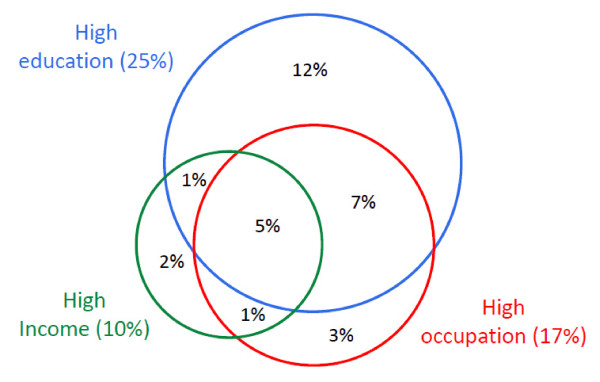
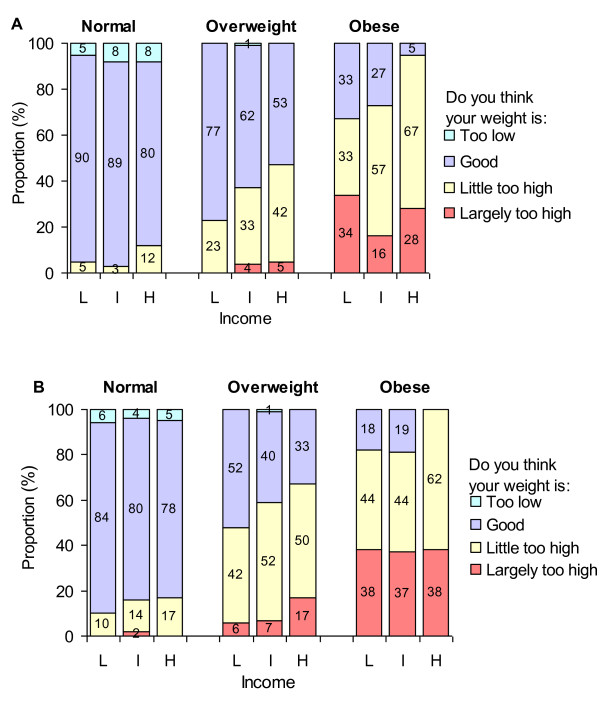
Based on a population-based survey (n = 1255) in the Seychelles, weight and height were measured and self-perception of one's own body weight, education, occupation, and income were assessed by a questionnaire. Individuals were considered to have appropriate weight perception when their self-perceived weight matched their actual body weight.
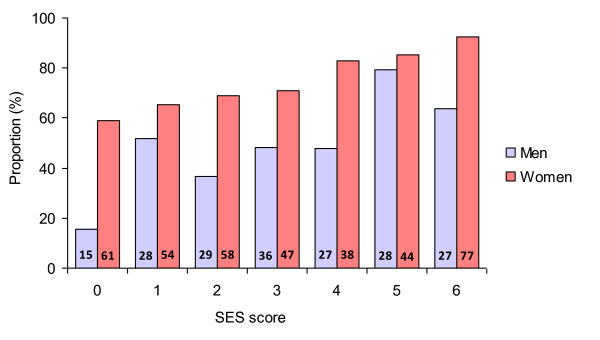
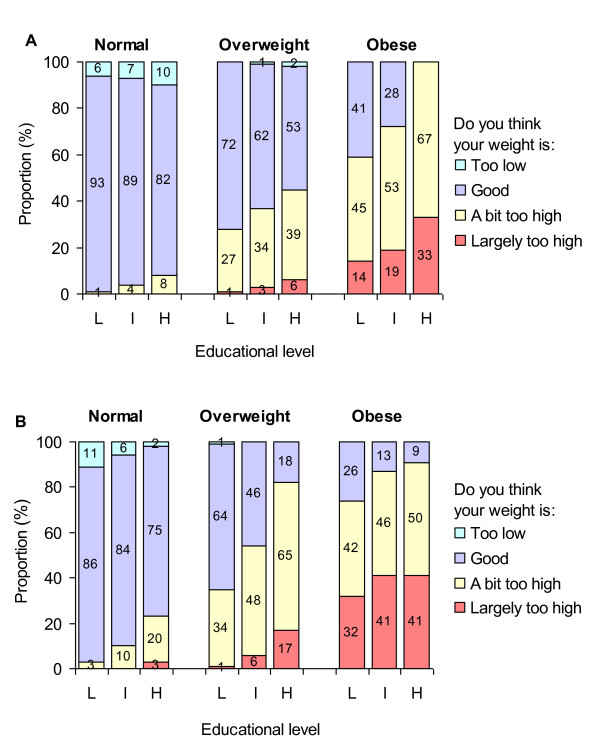
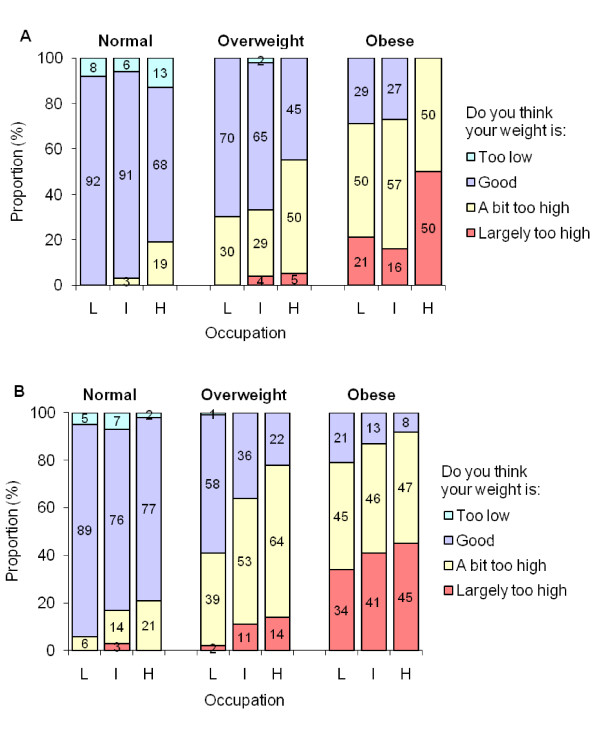
The prevalence of overweight and obesity was 35% and 28%, respectively. Multivariate analysis among overweight/obese persons showed that appropriate weight perception was directly associated with actual weight, education, occupation and income, and that it was more frequent among women than among men. In a model using all three SES indicators together, only education (OR = 2.5; 95% CI: 1.3-4.8) and occupation (OR = 2.3; 95% CI: 1.2-4.5) were independently associated with appropriate perception of being overweight. The OR reached 6.9 [95% CI: 3.4-14.1] when comparing the highest vs. lowest categories of SES based on a score including all SES indicators and 6.1 [95% CI: 3.0-12.1] for a score based on education and occupation.
Appropriately perceiving one's weight as too high was associated with different SES indicators, female sex and being actually overweight. These findings suggest means and targets for clinical and population-based interventions for weight control. Further studies should examine whether these differences in weight perception underlie differences in cognitive skills, healthy weight norms, or body size ideals.
在撒哈拉以南非洲地区,很少有研究调查体重感知与社会经济地位(SES)之间的关系,而且没有一项研究是基于教育、职业和收入同时进行的。
基于塞舌尔的一项基于人群的调查(n=1255),测量了体重和身高,并通过问卷评估了自我感知的体重、教育、职业和收入。当个体的自我感知体重与实际体重相匹配时,就认为他们具有适当的体重感知。
超重和肥胖的患病率分别为 35%和 28%。在超重/肥胖个体的多变量分析中,适当的体重感知与实际体重、教育、职业和收入直接相关,且女性比男性更常见。在一个同时使用三个 SES 指标的模型中,只有教育(OR=2.5;95%CI:1.3-4.8)和职业(OR=2.3;95%CI:1.2-4.5)与超重的适当感知独立相关。当根据包含所有 SES 指标的评分将 SES 分为最高和最低两组时,OR 达到 6.9 [95%CI:3.4-14.1],而当根据教育和职业评分时,OR 为 6.1 [95%CI:3.0-12.1]。
将自己的体重过高地视为适当,与不同的 SES 指标、女性性别和实际超重有关。这些发现为基于临床和人群的体重控制干预措施提供了手段和目标。进一步的研究应检验这些体重感知差异是否是认知技能、健康体重标准或身体尺寸理想的基础。