Cell Biology and Metabolism Program, Eunice Kennedy Shriver National Institute of Child Health and Human Development, Bethesda, Maryland 20892-5430, USA.
Annu Rev Genet. 2010;44:167-88. doi: 10.1146/annurev-genet-102209-163523.
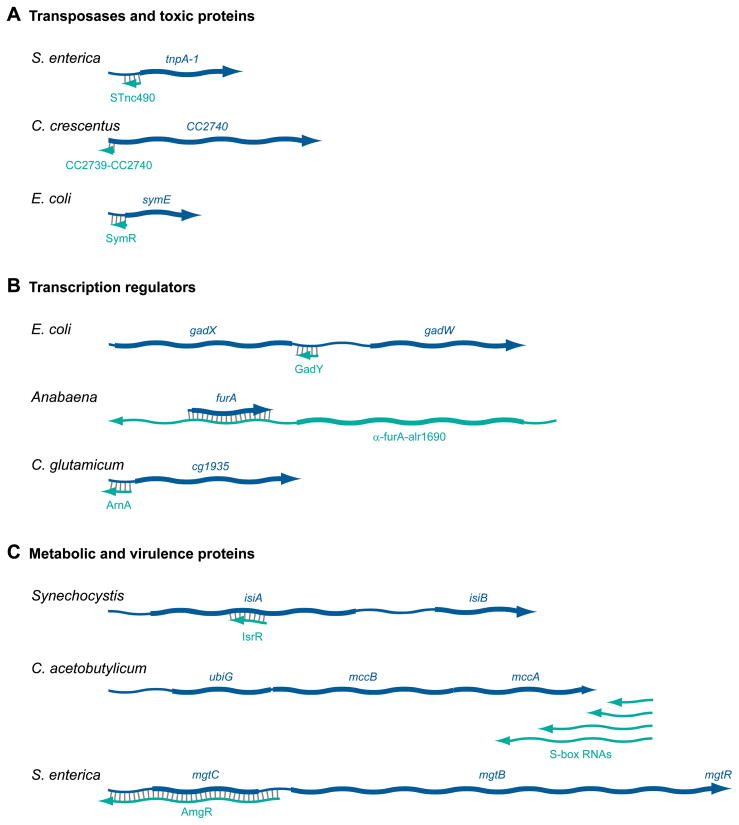
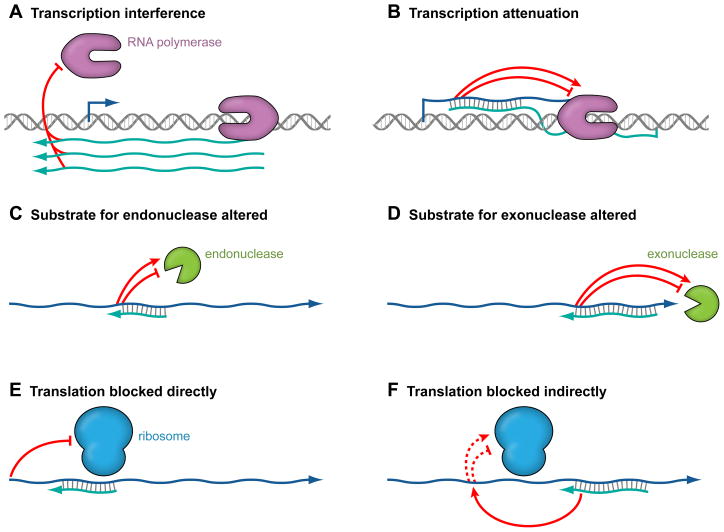
Antisense RNAs encoded on the DNA strand opposite another gene have the potential to form extensive base-pairing interactions with the corresponding sense RNA. Unlike other smaller regulatory RNAs in bacteria, antisense RNAs range in size from tens to thousands of nucleotides. The numbers of antisense RNAs reported for different bacteria vary extensively, but hundreds have been suggested in some species. If all of these reported antisense RNAs are expressed at levels sufficient to regulate the genes encoded opposite them, antisense RNAs could significantly impact gene expression in bacteria. Here, we review the evidence for these RNA regulators and describe what is known about the functions and mechanisms of action for some of these RNAs. Important considerations for future research as well as potential applications are also discussed.
与另一个基因 DNA 链上编码的反义 RNA 有可能与相应的正义 RNA 形成广泛的碱基配对相互作用。与细菌中其他较小的调控 RNA 不同,反义 RNA 的大小从数十到数千个核苷酸不等。不同细菌的反义 RNA 数量差异很大,但在某些物种中已提出数百种。如果所有这些报道的反义 RNA 的表达水平足以调节其对面编码的基因,那么反义 RNA 可能会对细菌中的基因表达产生重大影响。在这里,我们回顾了这些 RNA 调节剂的证据,并描述了其中一些 RNA 的功能和作用机制。还讨论了未来研究的重要考虑因素以及潜在的应用。