IFEVA, Facultad de Agronomía, Universidad de Buenos Aires y Consejo Nacional de Investigaciones Científicas y Técnicas, Av. San Martín 4453, C1417DSE, Ciudad de Buenos Aires, Argentina.
J Exp Bot. 2011 Jan;62(1):167-76. doi: 10.1093/jxb/erq253. Epub 2010 Aug 16.
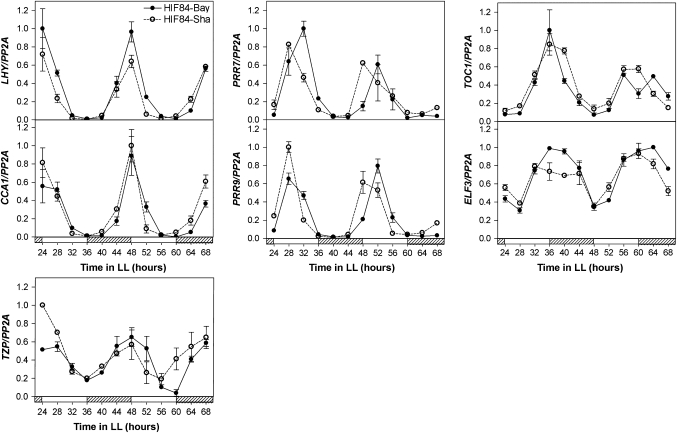
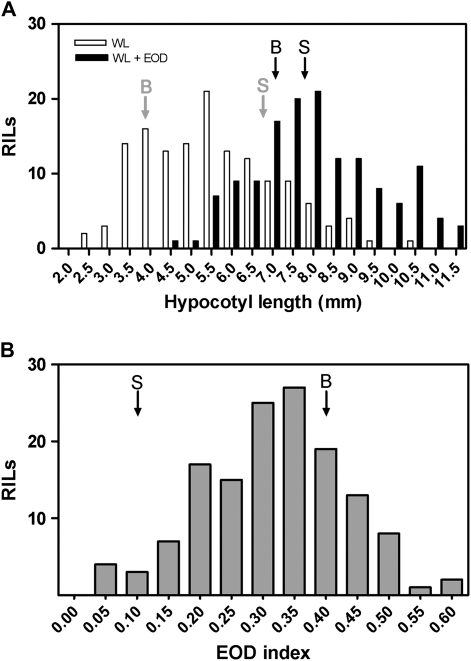
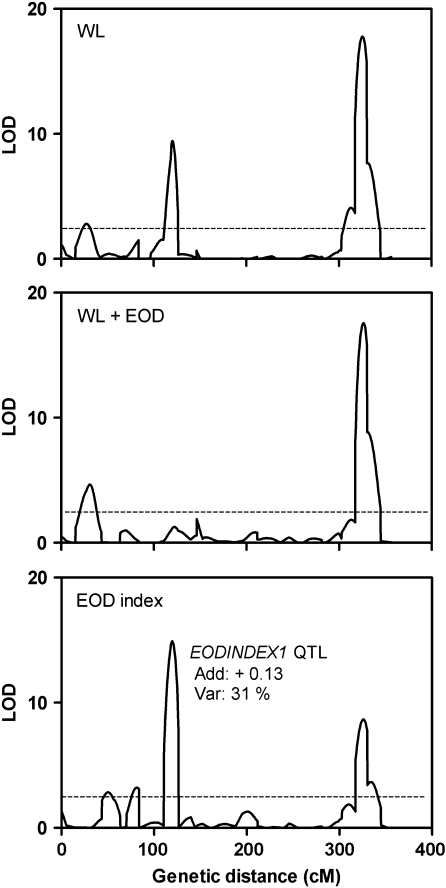
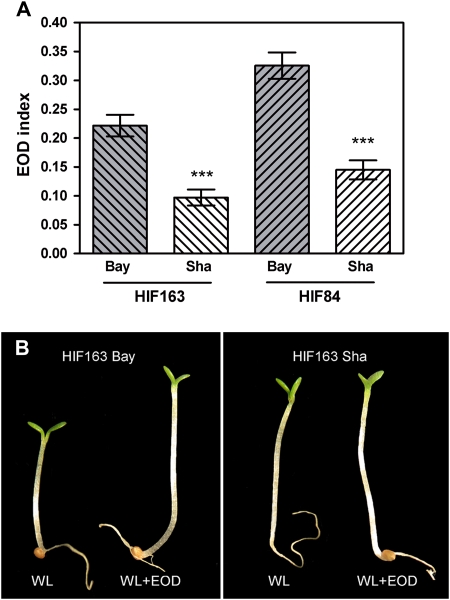
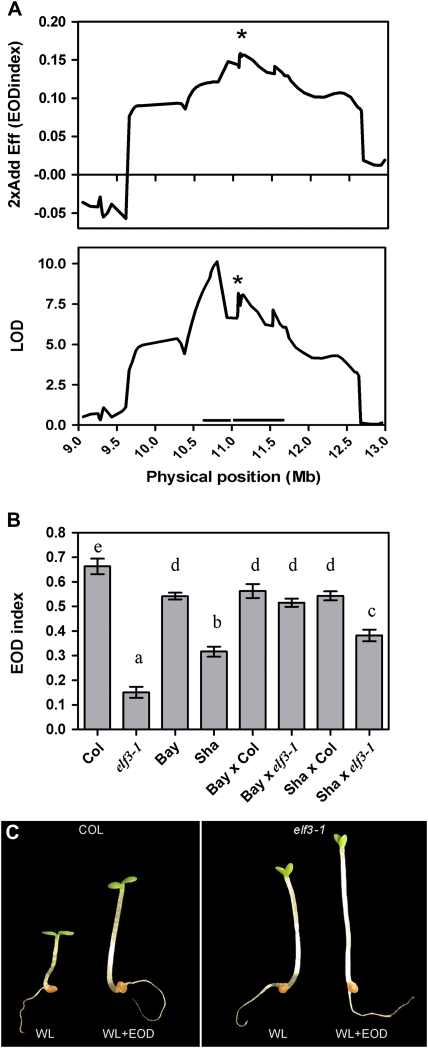
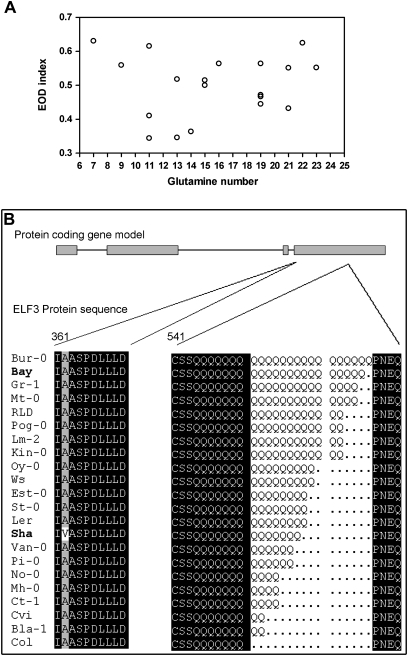
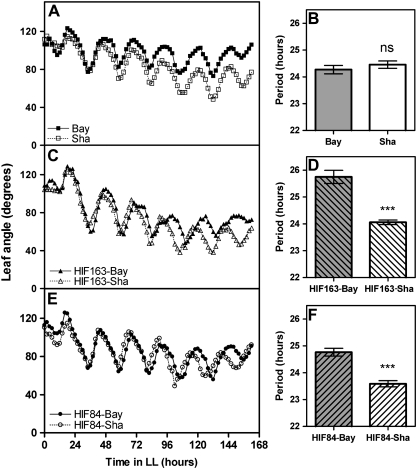
When plants become shaded by neighbouring plants, they perceive a decrease in the red/far-red (R/FR) ratio of the light environment, which provides an early and unambiguous warning of the presence of competing vegetation. The mechanistic bases of the natural genetic variation in response to shade signals remain largely unknown. This study demonstrates that a wide range of genetic variation for hypocotyl elongation in response to an FR pulse at the end of day (EOD), a light signal that simulates natural shade, exists between Arabidopsis accessions. A quantitative trait locus (QTL) mapping analysis was done in the Bayreuth×Shahdara recombinant inbred line population. EODINDEX1 is the most significant QTL identified in response to EOD. The Shahdara alleles at EODINDEX1 caused a reduced response to shade as a consequence of an impaired hypocotyl inhibition under white light, and an accelerated leaf movement rhythm, which correlated positively with the pattern of circadian expression of clock genes such as PRR7 and PRR9. Genetic and quantitative complementation analyses demonstrated that ELF3 is the most likely candidate gene underlying natural variation at EODINDEX1. In conclusion, ELF3 is proposed as a component of the shade avoidance signalling pathway responsible for the phenotypic differences between Arabidopsis populations in relation to adaptation in a changing light environment.
当植物被邻近的植物遮挡时,它们会感知到光照环境中红光/远红光(R/FR)比值的降低,这为存在竞争植被提供了早期且明确的警告。植物对遮荫信号的自然遗传变异的机制基础在很大程度上仍然未知。本研究表明,拟南芥品系之间存在广泛的对终日照(EOD)期间的 FR 脉冲(模拟自然遮荫的光信号)反应的下胚轴伸长的遗传变异。在 Bayreuth×Shahdara 重组自交系群体中进行了数量性状位点(QTL)映射分析。EODINDEX1 是响应 EOD 鉴定的最重要的 QTL。EODINDEX1 处的 Shahdara 等位基因导致对遮荫的反应降低,这是由于在白光下下胚轴抑制受损,以及叶片运动节律加速的结果,这与时钟基因(如 PRR7 和 PRR9)的昼夜节律表达模式呈正相关。遗传和定量互补分析表明,ELF3 是 EODINDEX1 自然变异的最可能候选基因。总之,ELF3 被提出作为遮荫回避信号通路的一个组成部分,负责与不断变化的光照环境中的适应相关的拟南芥种群之间的表型差异。