Department of Biology, University of Bergen, Pb 7800, N-5020 Bergen, Norway.
Virol J. 2010 Aug 21;7:198. doi: 10.1186/1743-422X-7-198.
For more than three decades, diseases caused by salmonid alphaviruses (SAV) have become a major problem of increasing economic importance in the European fish-farming industry. However, experimental infection trials with SAV result in low or no mortality i.e very different from most field outbreaks of pancreas disease (PD). This probably reflects the difficulties in reproducing complex biotic and abiotic field conditions in the laboratory. In this study we looked at the relationship between SAV-infection in salmon and sub-lethal environmental hypoxia as a result of reduced flow-through in tank systems.
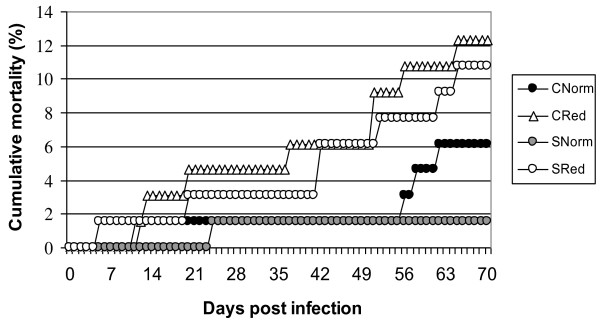
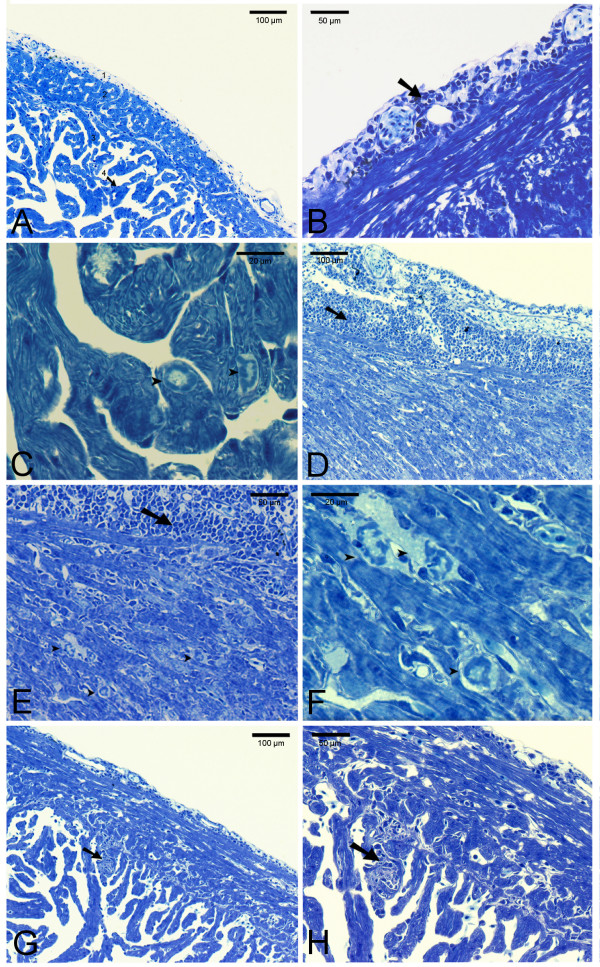
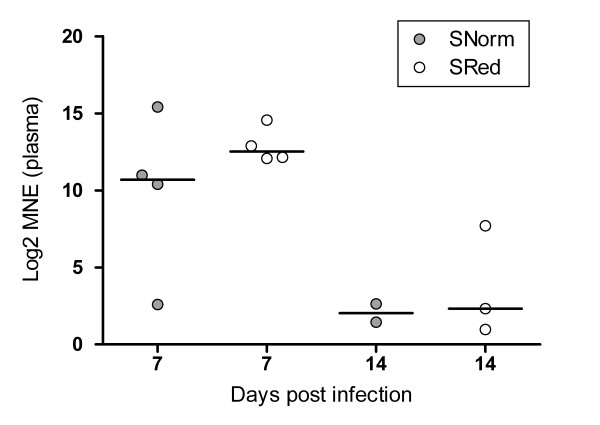
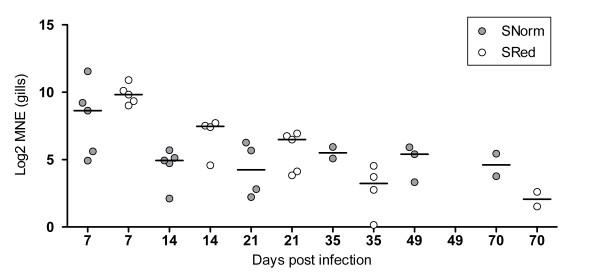
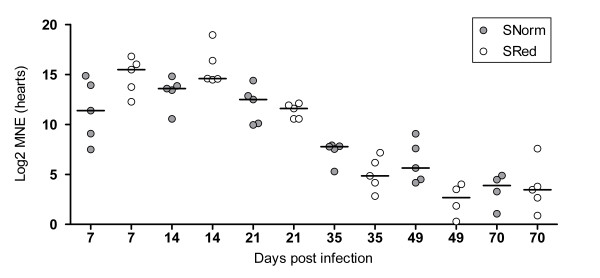
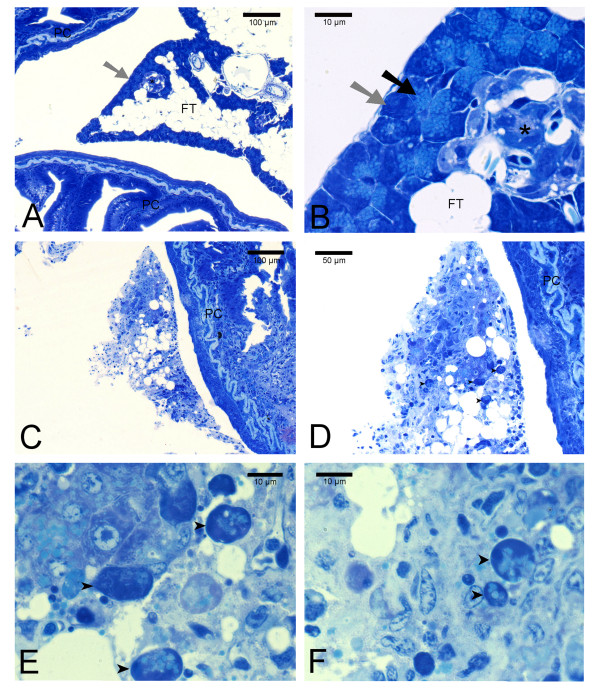
The experiment demonstrated that constant reduced oxygen levels (60-65% oxygen saturation: 6.5-7.0 mg/L) did not significantly increase the severity or the progress of pancreas disease (PD). These conclusions are based upon assessments of a semi-quantitative histopathological lesion score system, morbidities/mortalities, and levels of SAV RNA in tissues and water (measured by 1 MDS electropositive virus filters and downstream real-time RT-PCR). Furthermore, we demonstrate that the fish population shed detectable levels of the virus into the surrounding water during viraemia; 4-13 days after i.p. infection, and prior to appearance of severe lesions in heart (21-35 dpi). After this period, viral RNA from SAV could not be detected in water samples although still present in tissues (gills and hearts) at lasting low levels. Lesions could be seen in exocrine pancreas at 7-21 days post infection, but no muscle lesions were seen.
In our study, experimentally induced hypoxia failed to explain the discrepancy between the severities reported from field outbreaks of SAV-disease and experimental infections. Reduction of oxygen levels to constant suboptimal levels had no effect on the severity of lesions caused by SAV-infection or the progress of the disease. Furthermore, we present a modified VIRADEL method which can be used to detect virus in water and to supplement experimental infection trials with information related to viral shedding. By using this method, we were able to demonstrate for the first time that shedding of SAV from the fish population into the surrounding water coincides with viraemia.
三十多年来,鲑鱼甲病毒(SAV)引起的疾病已成为欧洲鱼类养殖产业中日益严重的经济问题。然而,用 SAV 进行实验性感染试验的结果是死亡率低甚至为零,这与大多数胰腺疾病(PD)的现场爆发非常不同。这可能反映了在实验室中重现复杂的生物和非生物现场条件的困难。在这项研究中,我们研究了鲑鱼感染 SAV 与由于水箱系统中流量减少而导致的亚致死环境缺氧之间的关系。
该实验表明,恒定的低氧水平(60-65%氧气饱和度:6.5-7.0mg/L)不会显著增加胰腺疾病(PD)的严重程度或进展。这些结论是基于对半定量组织病理学病变评分系统、发病率/死亡率以及组织和水中 SAV RNA 水平(通过 1 MDS 正电病毒过滤器和下游实时 RT-PCR 测量)的评估得出的。此外,我们证明在感染后第 4-13 天,即出现心脏严重病变之前(21-35dpi),感染鱼群将可检测水平的病毒排入周围水中。在此期间,尽管仍在持续低水平存在于组织(鳃和心脏)中,但在水样中无法检测到来自 SAV 的病毒 RNA。在感染后 7-21 天可以在胰腺外分泌部看到病变,但未观察到肌肉病变。
在我们的研究中,实验性诱导的缺氧未能解释 SAV 疾病的现场爆发与实验感染报告的严重程度之间的差异。将氧水平降低到恒定的亚最佳水平对 SAV 感染引起的病变严重程度或疾病进展没有影响。此外,我们提出了一种改良的 VIRADEL 方法,可用于检测水样中的病毒,并为实验性感染试验提供与病毒排放相关的信息。通过使用这种方法,我们首次证明了从鱼群中排出 SAV 进入周围水与病毒血症同时发生。