Småge Sverre Bang, Brevik Øyvind Jakobsen, Frisch Kathleen, Watanabe Kuninori, Duesund Henrik, Nylund Are
Cermaq Group AS, Dronning Eufemiasgate 16, Oslo, Norway.
Fish Disease Research Group, Department of Biology, University of Bergen, Thormøhlensgate 55, Bergen, Norway.
PLoS One. 2017 Nov 2;12(11):e0187476. doi: 10.1371/journal.pone.0187476. eCollection 2017.
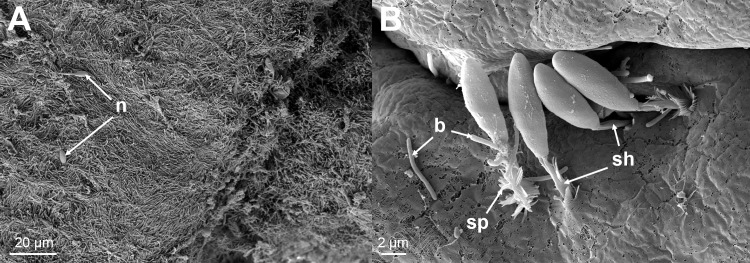
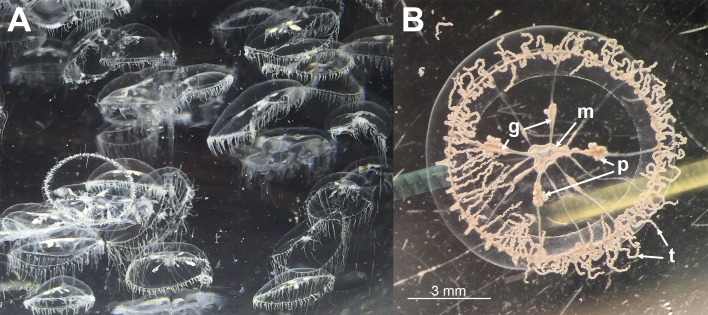
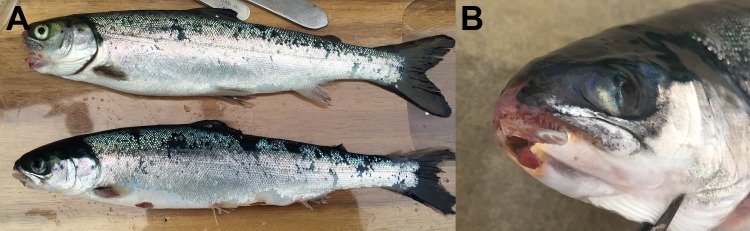
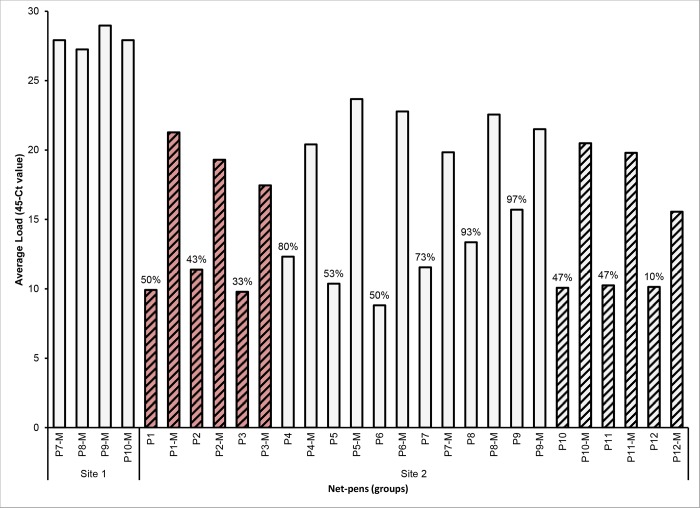
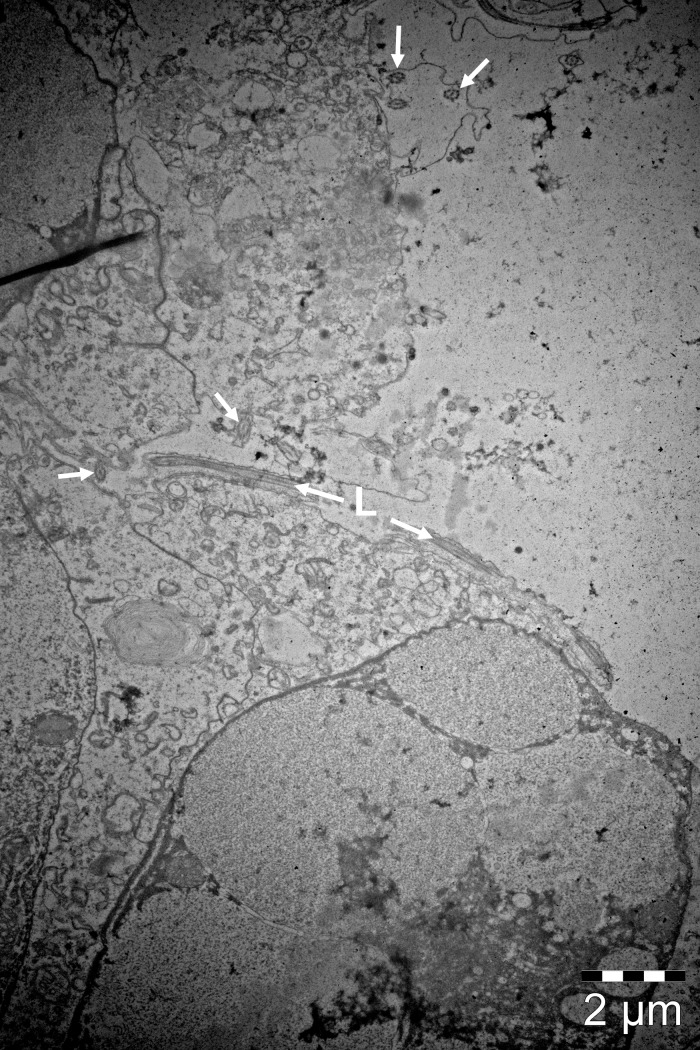
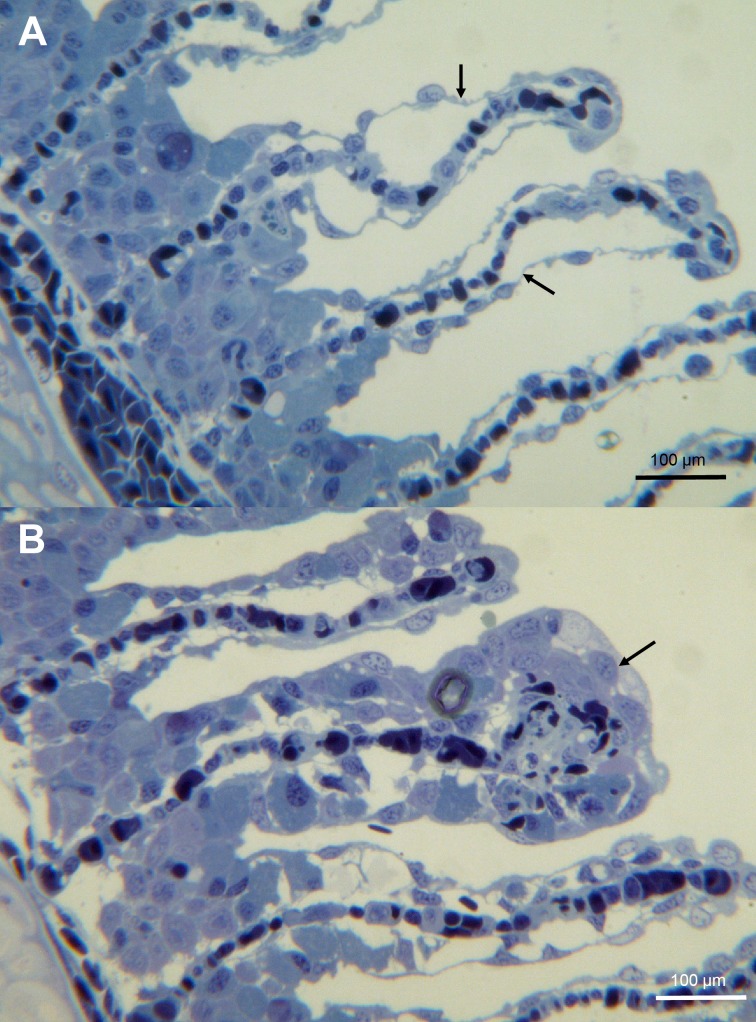
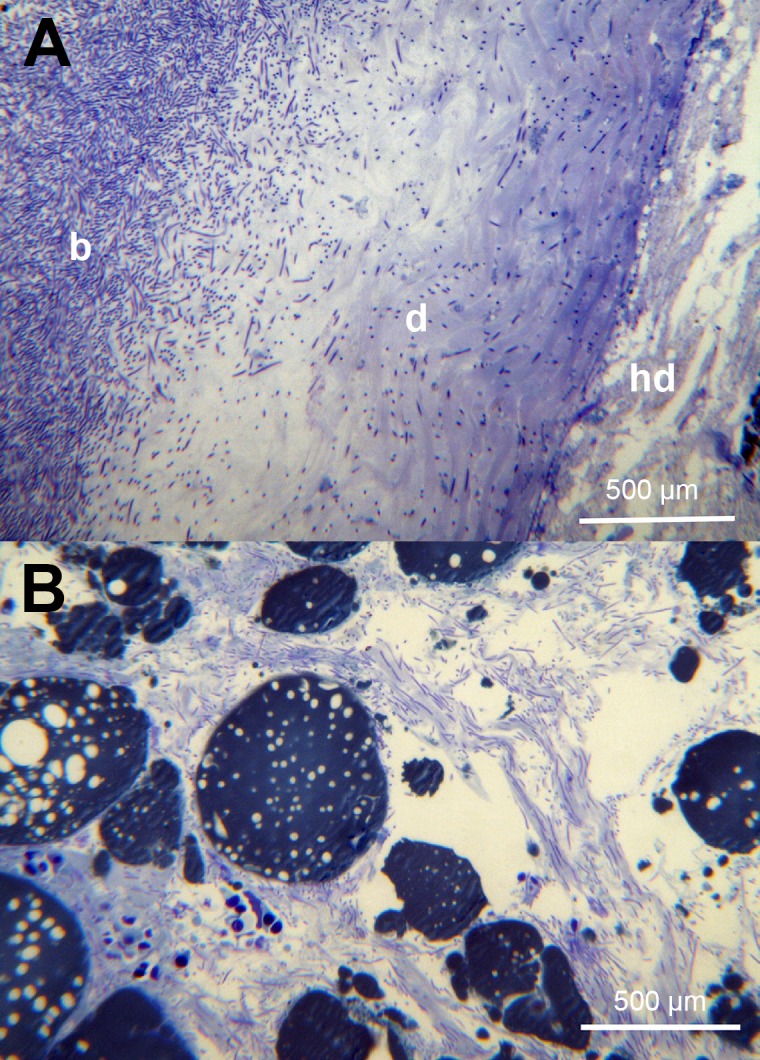
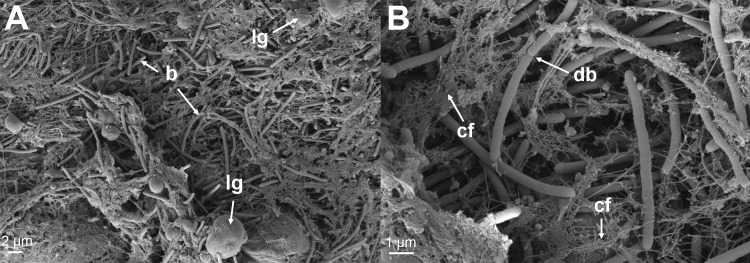
Tenacibaculosis is an increasing problem in the Norwegian Atlantic salmon aquaculture industry causing significant economic losses. In September 2015, two separate outbreaks of suspected tenacibaculosis occurred at two Atlantic salmon farms in Finnmark County in Northern Norway. The events resulted in major losses of smolts newly transferred into seawater. Prior to, and during the outbreaks, large numbers of small jellyfish, identified as Dipleurosoma typicum (Boeck) were observed in the vicinity of the farms and inside the net-pens. This study investigates the possible link between the jellyfish, Tenacibaculum spp. and the tenacibaculosis outbreaks. Bacteriology, histology, scanning and transmission electron microscopy, and real-time RT-PCR screening were performed on both fish and jellyfish samples. Based on the findings, Tenacibaculum finnmarkense was found to be the dominant bacteria associated with the tenacibaculosis outbreaks at both sites and that D. typicum is unlikely to be a vector for this fish pathogenic bacterium. However, results do show that the jellyfish caused direct damage to the fish's skin and may have exacerbated the bacterial infection by allowing an entry point for bacteria.
鱼溃疡病在挪威大西洋鲑鱼养殖业中是一个日益严重的问题,造成了重大经济损失。2015年9月,挪威北部芬马克郡的两个大西洋鲑鱼养殖场分别爆发了两起疑似鱼溃疡病疫情。这些事件导致新转入海水的幼鲑大量损失。在疫情爆发之前及期间,在养殖场附近和网箱内观察到大量被鉴定为典型双盘水母(Boeck)的小型水母。本研究调查了水母、海杆菌属与鱼溃疡病爆发之间的可能联系。对鱼类和水母样本进行了细菌学、组织学、扫描和透射电子显微镜检查以及实时RT-PCR筛查。基于这些发现,发现芬马克海杆菌是与这两个地点的鱼溃疡病爆发相关的主要细菌,并且典型双盘水母不太可能是这种鱼类致病细菌的载体。然而,结果确实表明,水母对鱼的皮肤造成了直接损害,并且可能通过为细菌提供进入途径而加剧了细菌感染。