Fundamental Science Division and Environmental Molecular Science Laboratory, Pacific Northwest National Laboratory, Richland, Washington 99352, USA.
Mol Cell Proteomics. 2010 Dec;9(12):2760-71. doi: 10.1074/mcp.M110.001875. Epub 2010 Aug 24.
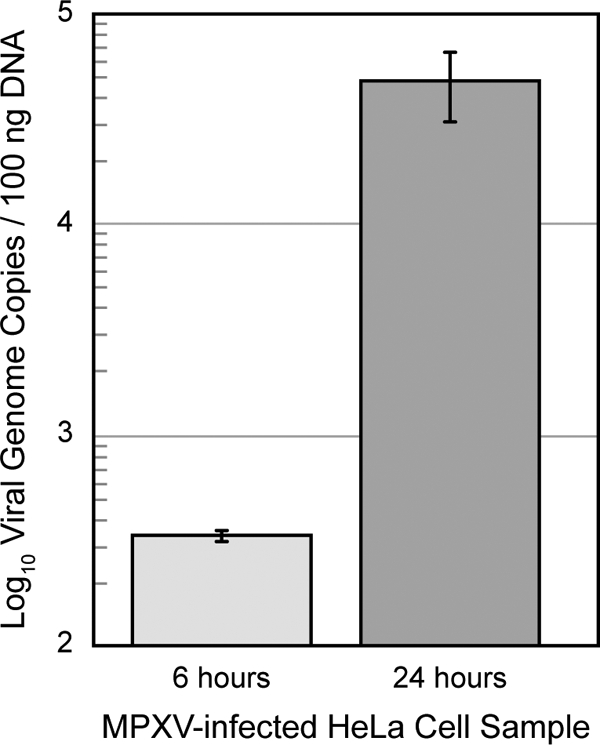
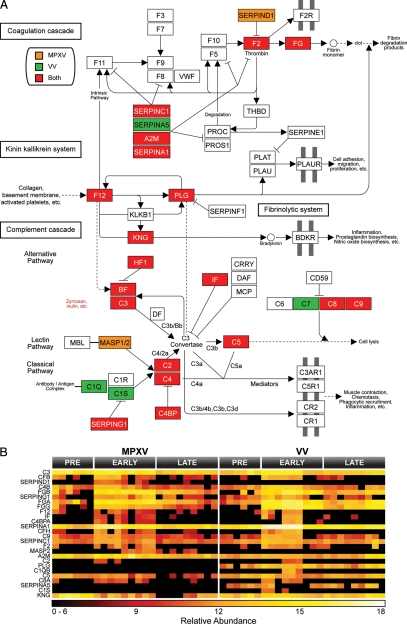
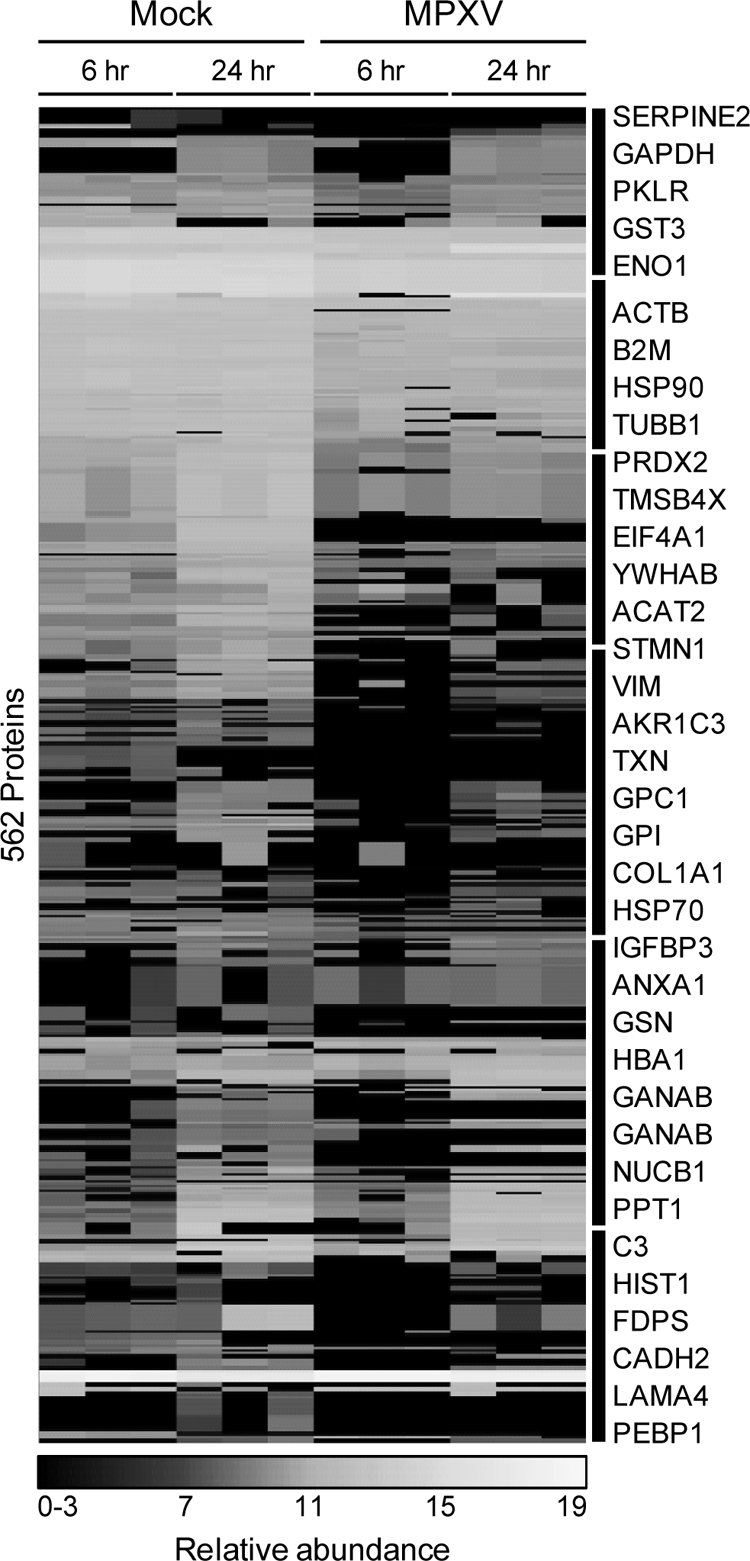
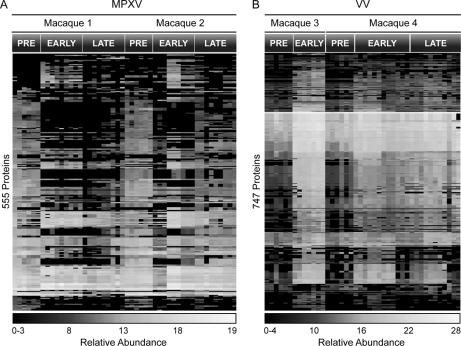
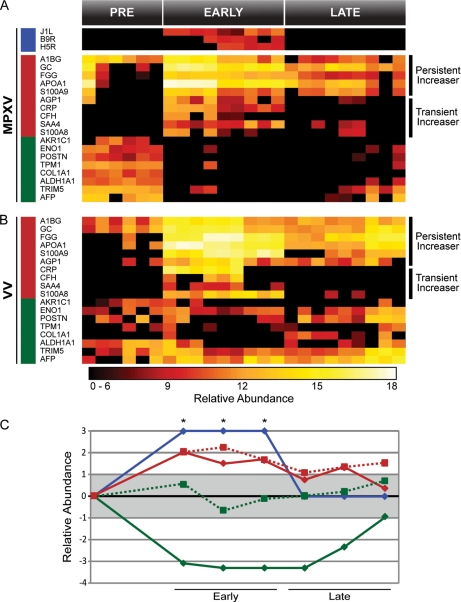
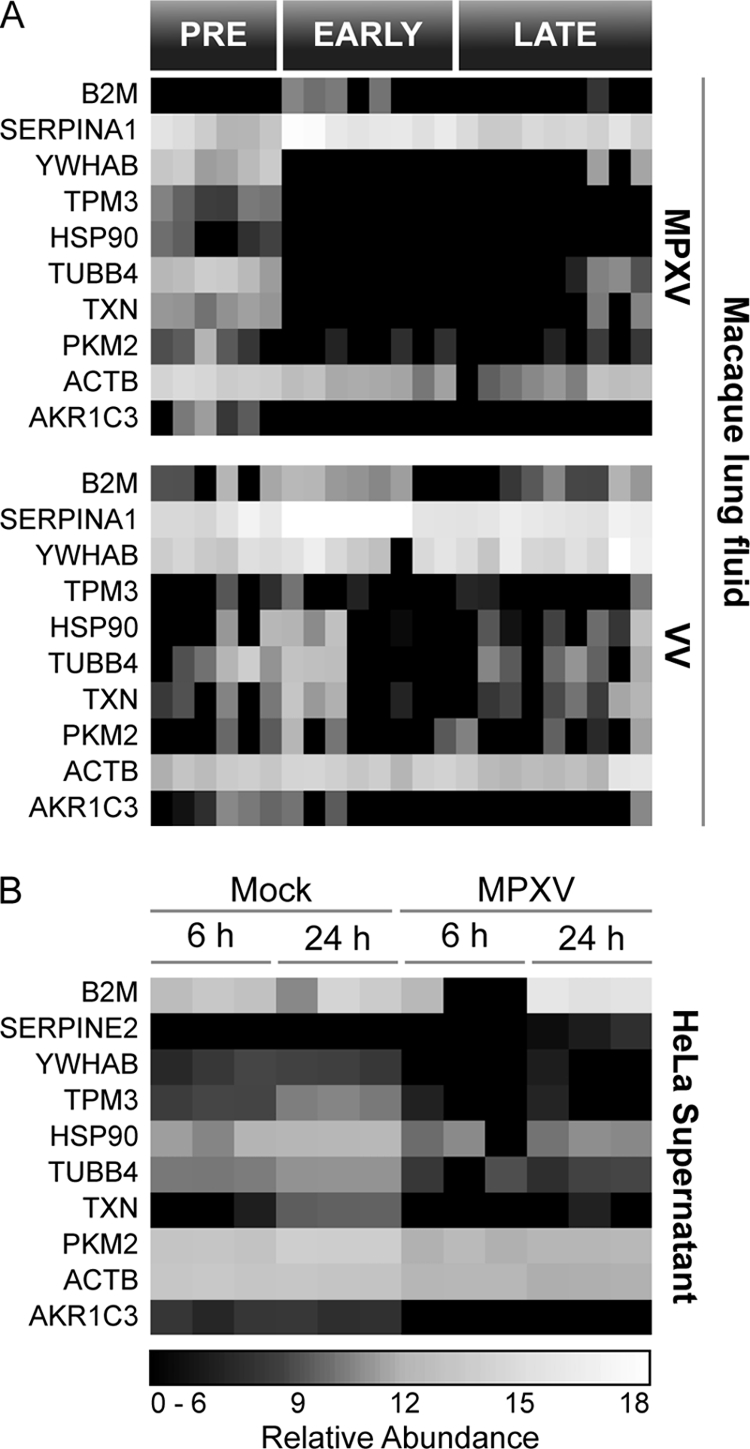
Understanding viral pathogenesis is challenging because of confounding factors, including nonabrasive access to infected tissues and high abundance of inflammatory mediators that may mask mechanistic details. In diseases such as influenza and smallpox where the primary cause of mortality results from complications in the lung, the characterization of lung fluid offers a unique opportunity to study host-pathogen interactions with minimal effect on infected animals. This investigation characterizes the global proteome response in the pulmonary fluid, bronchoalveolar lavage fluid, of macaques during upper respiratory infection by monkeypox virus (MPXV), a close relative of the causative agent of smallpox, variola virus. These results are compared and contrasted against infections by vaccinia virus (VV), a low pathogenic relative of MPXV, and with extracellular fluid from MPXV-infected HeLa cells. To identify changes in the pulmonary protein compartment, macaque lung fluid was sampled twice prior to infection, serving as base line, and up to six times following intrabronchial infection with either MPXV or VV. Increased expression of inflammatory proteins was observed in response to both viruses. Although the increased expression resolved for a subset of proteins, such as C-reactive protein, S100A8, and S100A9, high expression levels persisted for other proteins, including vitamin D-binding protein and fibrinogen γ. Structural and metabolic proteins were substantially decreased in lung fluid exclusively during MPXV and not VV infection. Decreases in structural and metabolic proteins were similarly observed in the extracellular fluid of MPXV-infected HeLa cells. Results from this study suggest that the host inflammatory response may not be the only facilitator of viral pathogenesis, but rather maintaining pulmonary structural integrity could be a key factor influencing disease progression and mortality.
了解病毒发病机制具有挑战性,因为存在混杂因素,包括无法直接接触感染组织以及大量炎症介质,这可能掩盖了发病机制的细节。在流感和天花等疾病中,导致死亡率的主要原因是肺部并发症,因此对肺部液体的特征分析为研究宿主-病原体相互作用提供了一个独特的机会,对受感染动物的影响最小。本研究对感染猴痘病毒(MPXV)后肺部液体(支气管肺泡灌洗液)的全球蛋白质组反应进行了特征分析,MPXV 是天花病原体天花病毒的近亲。将这些结果与牛痘病毒(VV)感染进行了比较和对比,VV 是 MPXV 的低致病性近亲,并且与感染 MPXV 的 HeLa 细胞的细胞外液进行了比较。为了鉴定肺部蛋白质组的变化,在感染前两次采集猴肺液作为基线,然后在感染 MPXV 或 VV 后最多进行六次采样。观察到针对两种病毒均有炎症蛋白表达增加。尽管炎症蛋白的表达增加在一部分蛋白(如 C 反应蛋白、S100A8 和 S100A9)中得到解决,但其他蛋白(如维生素 D 结合蛋白和纤维蛋白原 γ)的高表达水平持续存在。结构蛋白和代谢蛋白在肺部液体中仅在 MPXV 感染期间而非 VV 感染期间大量减少。在感染 MPXV 的 HeLa 细胞的细胞外液中也观察到结构蛋白和代谢蛋白的减少。本研究结果表明,宿主炎症反应可能不是病毒发病机制的唯一促进因素,而是维持肺部结构完整性可能是影响疾病进展和死亡率的关键因素。