Department of Biological Sciences, University of Alaska Anchorage, Anchorage, AK 99508, USA.
Department of Molecular & Medical Pharmacology, David Geffen School of Medicine, University of California, Los Angeles, CA 90095, USA.
Viruses. 2018 Nov 27;10(12):670. doi: 10.3390/v10120670.
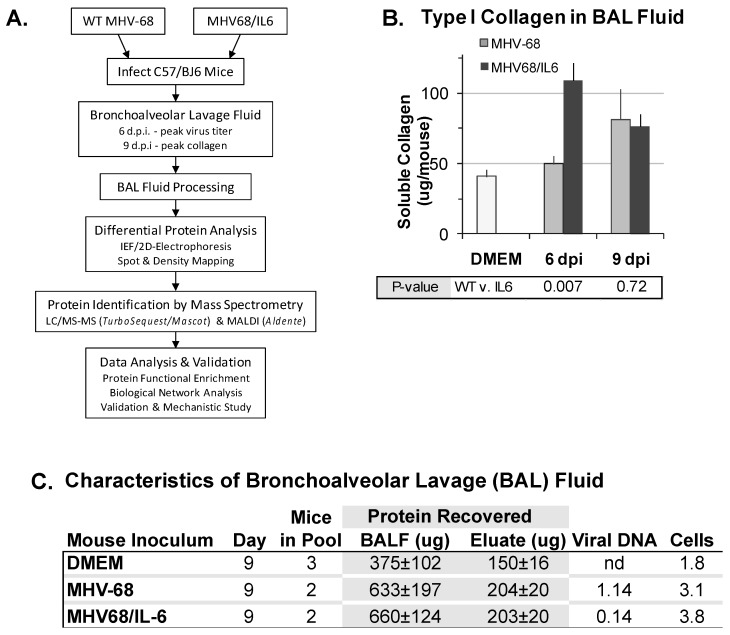
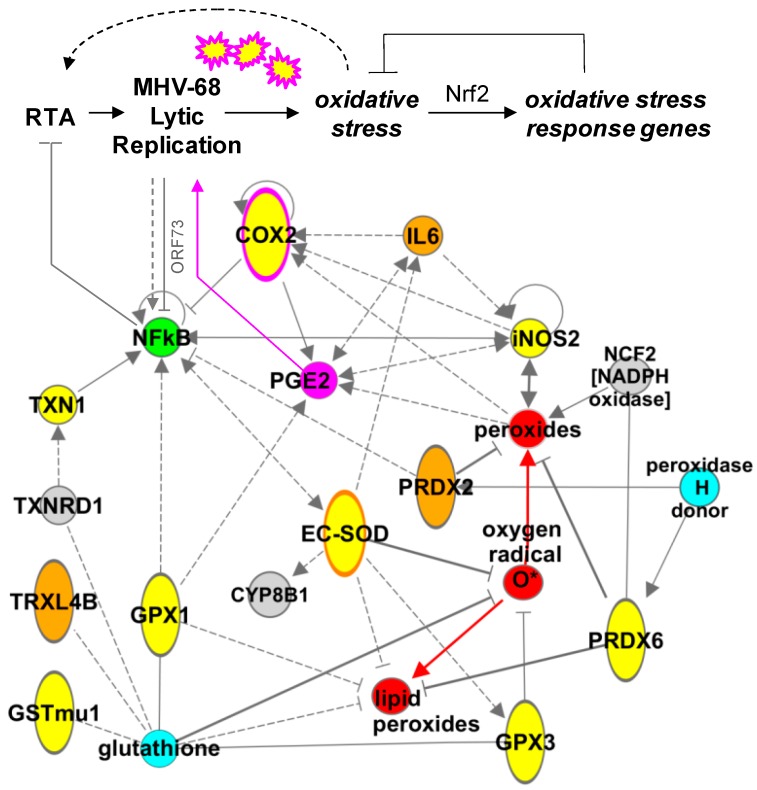
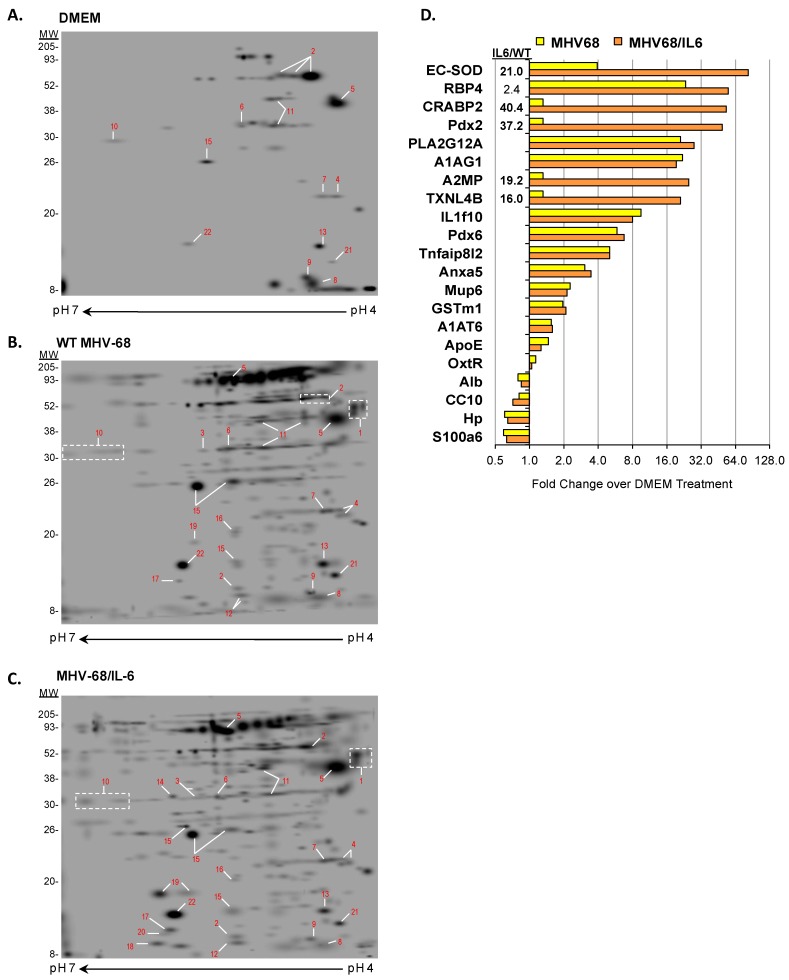
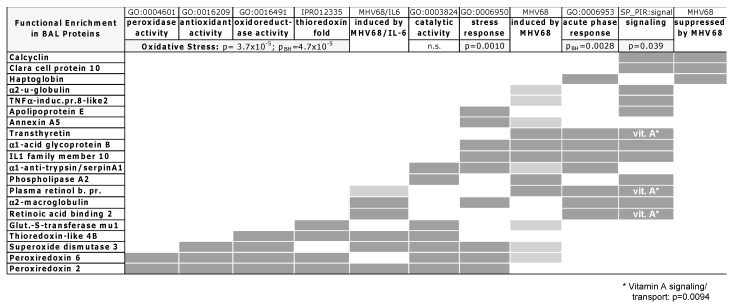
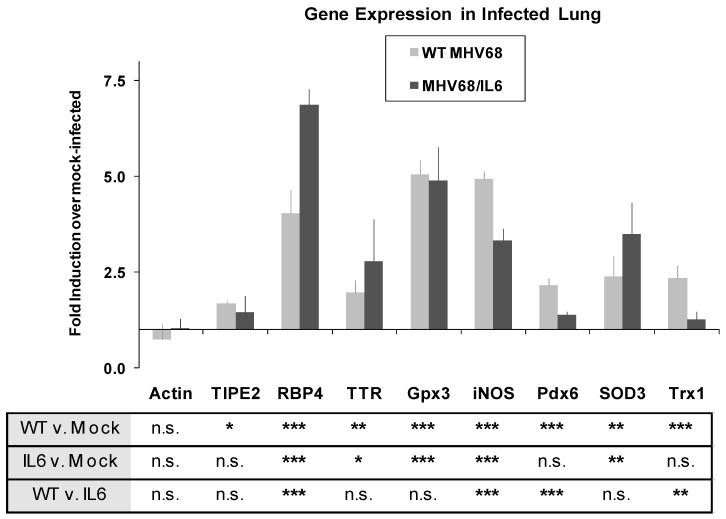
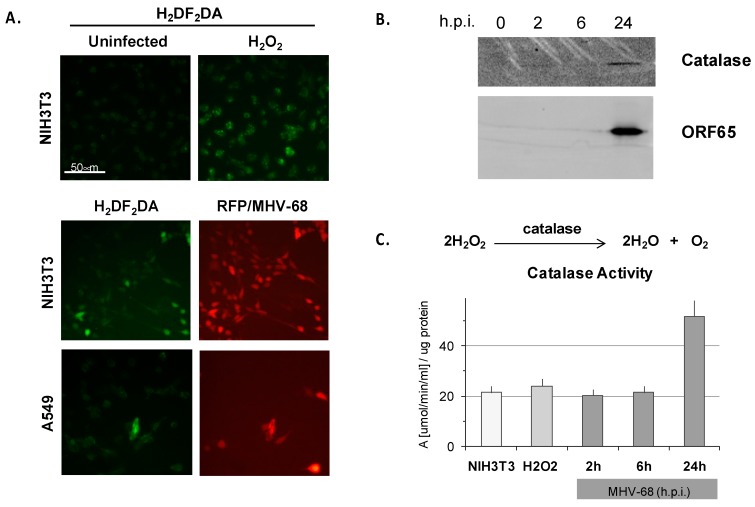
Murine herpesvirus-68 (MHV-68) productively infects mouse lungs, exhibiting a complex pathology characteristic of both acute viral infections and chronic respiratory diseases. We sought to discover proteins differentially expressed in bronchoalveolar lavage (BAL) from mice infected with MHV-68. Mice were infected intranasally with MHV-68. After nine days, as the lytic phase of infection resolved, differential BAL proteins were identified by two-dimensional (2D) electrophoresis and mass spectrometry. Of 23 unique proteins, acute phase proteins, vitamin A transport, and oxidative stress response factors Pdx6 and EC-SOD (Sod3) were enriched. Correspondingly, iNOS2 was induced in lung tissue by seven days post-infection. Oxidative stress was partly a direct result of MHV-68 infection, as reactive oxygen species (ROS) were induced in cultured murine NIH3T3 fibroblasts and human lung A549 cells infected with MHV-68. Finally, mice infected with a recombinant MHV-68 co-expressing inflammatory cytokine murine interleukin 6 (IL6) showed exacerbated oxidative stress and soluble type I collagen characteristic of tissue recovery. Thus, oxidative stress appears to be a salient feature of MHV-68 pathogenesis, in part caused by lytic replication of the virus and IL6. Proteins and small molecules in lung oxidative stress networks therefore may provide new therapeutic targets to ameliorate respiratory virus infections.
鼠疱疹病毒 68(MHV-68)可有效感染小鼠肺部,表现出急性病毒感染和慢性呼吸道疾病的复杂病理学特征。我们试图发现感染 MHV-68 的小鼠支气管肺泡灌洗液(BAL)中差异表达的蛋白。用 MHV-68 对小鼠进行鼻腔感染。在九天后,感染的裂解期结束时,通过二维电泳和质谱鉴定差异 BAL 蛋白。在 23 种独特蛋白中,急性相蛋白、维生素 A 转运和氧化应激反应因子 Pdx6 和 EC-SOD(Sod3)得到了富集。相应地,iNOS2 在感染后七天在肺组织中被诱导。氧化应激部分是 MHV-68 感染的直接结果,因为在感染 MHV-68 的培养鼠 NIH3T3 成纤维细胞和人肺 A549 细胞中诱导了活性氧(ROS)。最后,感染共表达炎症细胞因子鼠白细胞介素 6(IL6)的重组 MHV-68 的小鼠表现出加剧的氧化应激和组织恢复特征的可溶性 I 型胶原。因此,氧化应激似乎是 MHV-68 发病机制的一个显著特征,部分原因是病毒的裂解复制和 IL6。因此,肺氧化应激网络中的蛋白和小分子可能为改善呼吸道病毒感染提供新的治疗靶点。