Department of Public Health, University of Oxford, Old Road Campus, Headington, Oxford, OX3 7LF, UK.
BMC Public Health. 2010 Sep 8;10:539. doi: 10.1186/1471-2458-10-539.
There is considerable geographic variation in stroke mortality around the United Kingdom (UK). Whether this is due to geographical differences in incidence or case-fatality is unclear. We conducted a systematic review of high-quality studies documenting the incidence of any stroke and stroke subtypes, between 1985 and 2008 in the UK. We aimed to study geographic and temporal trends in relation to equivalent mortality trends.
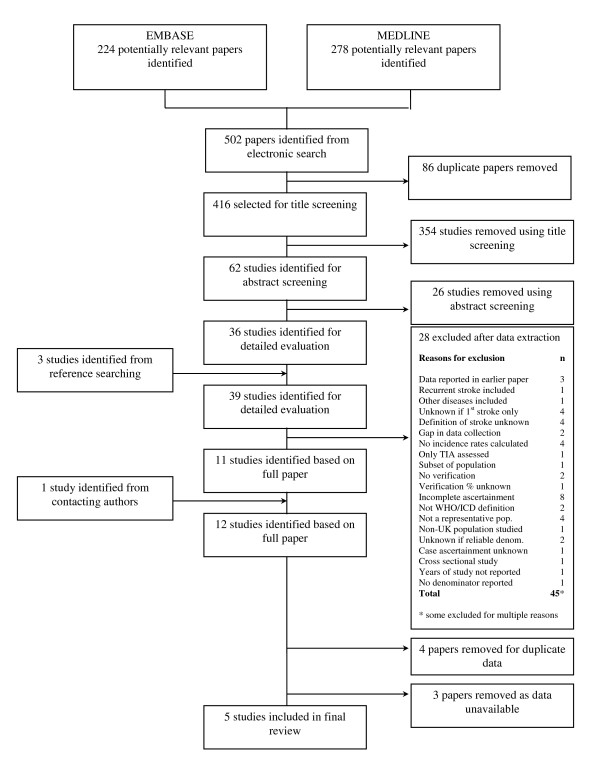
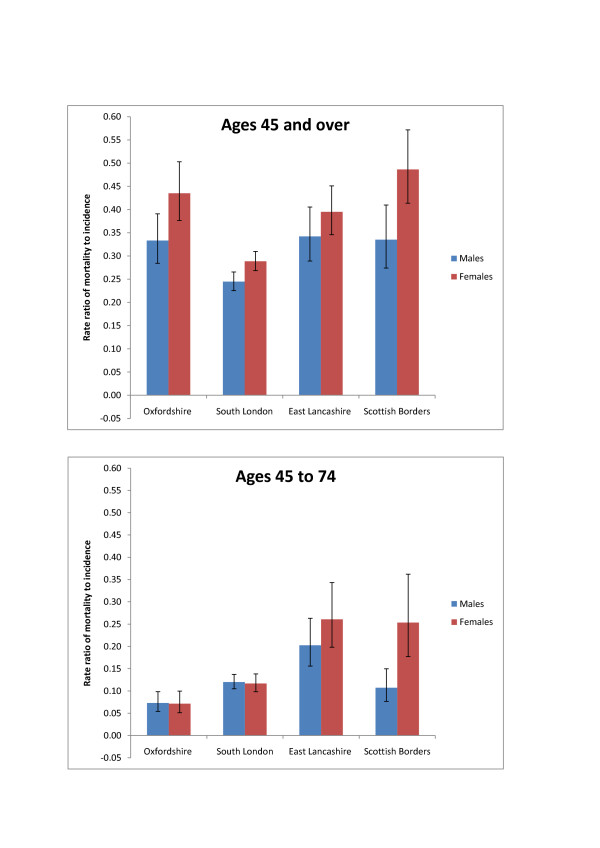
MEDLINE and EMBASE were searched, reference lists inspected and authors of included papers were contacted. All rates were standardised to the European Standard Population for those over 45, and between 45 and 74 years. Stroke mortality rates for the included areas were then calculated to produce rate ratios of stroke mortality to incidence for each location.
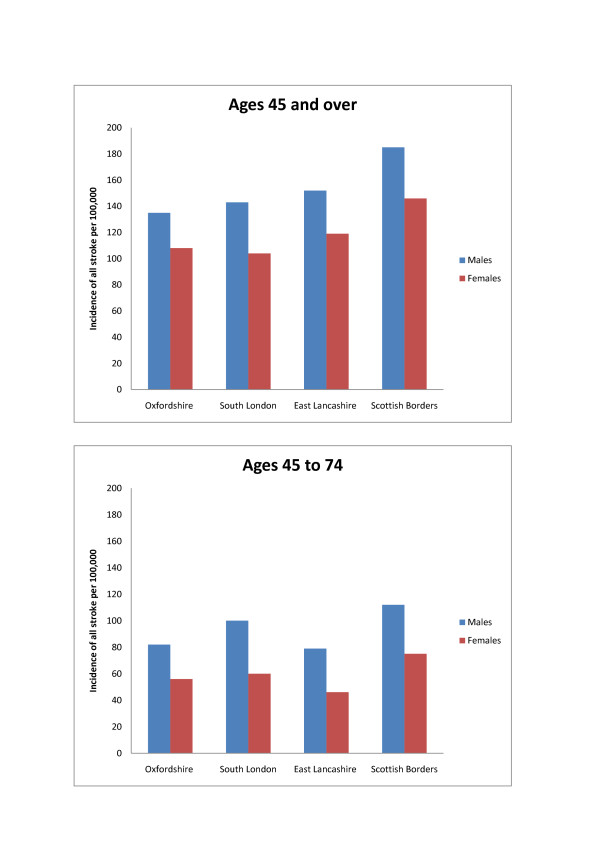
Five papers were included in this review. Geographic variation was narrow but incidence appeared to largely mirror mortality rates for all stroke. For men over 45, incidence (and confidence intervals) per 100,000 ranged from 124 (109-141) in South London, to 185 (164-208) in Scotland. For men, premature (45-74 years) stroke incidence per 100,000 ranged from 79 (67-94) in the North West, to 112 (95-132) in Scotland. Stroke subtype data was more geographically restricted, but did suggest there is no sizeable variation in incidence by subtype around the country. Only one paper, based in South London, had data on temporal trends. This showed that there has been a decline in stroke incidence since the mid 1990 s. This could not be compared to any other locations in this review.
Geographic variations in stroke incidence appear to mirror variations in mortality rates. This suggests policies to reduce inequalities in stroke mortality should be directed at risk factor profiles rather than treatment after a first incident event. More high quality stroke incidence data from around the UK are needed before this can be confirmed.
在英国(UK),中风死亡率存在相当大的地域差异。这种差异是由于发病率还是病死率的不同尚不清楚。我们对英国 1985 年至 2008 年间记录任何中风和中风亚型发病率的高质量研究进行了系统回顾。我们旨在研究与等效死亡率趋势相关的地理和时间趋势。
我们检索了 MEDLINE 和 EMBASE,并查阅了参考文献列表,还联系了纳入研究的作者。对于 45 岁以上和 45-74 岁的人群,所有的发病率都按照欧洲标准人口进行了标准化。然后,计算出纳入地区的中风死亡率,以产生每个地点中风死亡率与发病率的比率。
本综述纳入了五篇论文。地域差异虽然较小,但发病率似乎在很大程度上反映了所有中风的死亡率。对于 45 岁以上的男性,伦敦南部每 10 万人的发病率(置信区间)为 124(109-141),苏格兰为 185(164-208)。对于 45-74 岁的男性,每 10 万人的早发性(45-74 岁)中风发病率为西北区 79(67-94),苏格兰为 112(95-132)。中风亚型数据的地域限制更为严格,但也表明全国范围内亚型的发病率没有明显差异。只有一篇基于伦敦南部的论文有关于时间趋势的数据。这表明自 20 世纪 90 年代中期以来,中风发病率有所下降。这无法与本综述中的其他地点进行比较。
中风发病率的地域差异似乎与死亡率的变化相吻合。这表明,减少中风死亡率不平等的政策应针对危险因素的特征,而不是针对首次发病事件后的治疗。在确认这一点之前,英国各地需要更多高质量的中风发病率数据。