Telethon Institute of Genetics and Medicine CNR, Naples, Italy.
Stem Cells. 2010 Nov;28(11):1940-9. doi: 10.1002/stem.515.
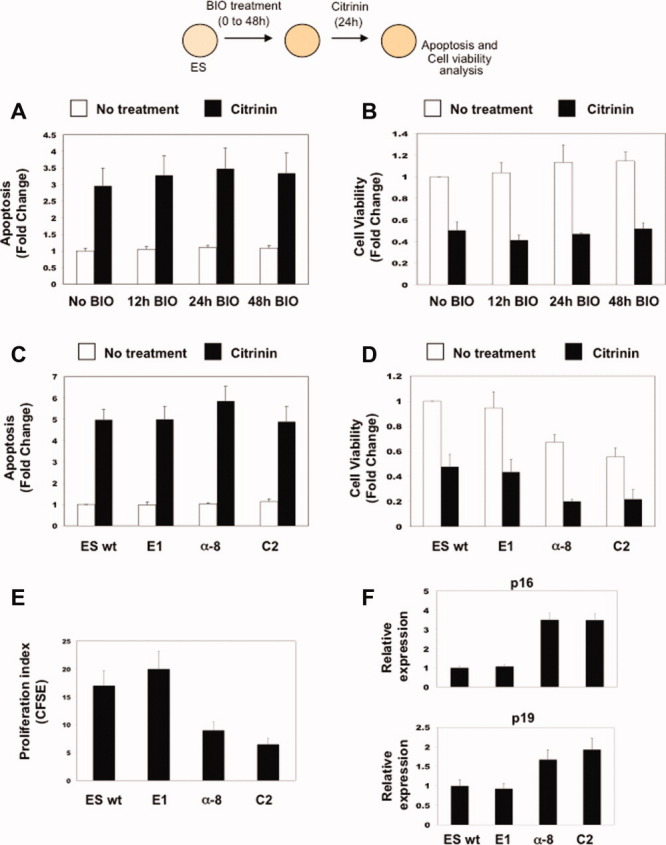
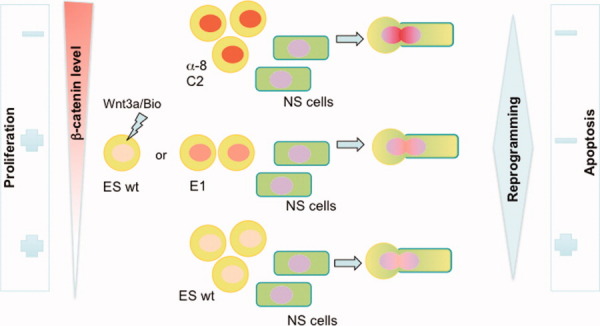
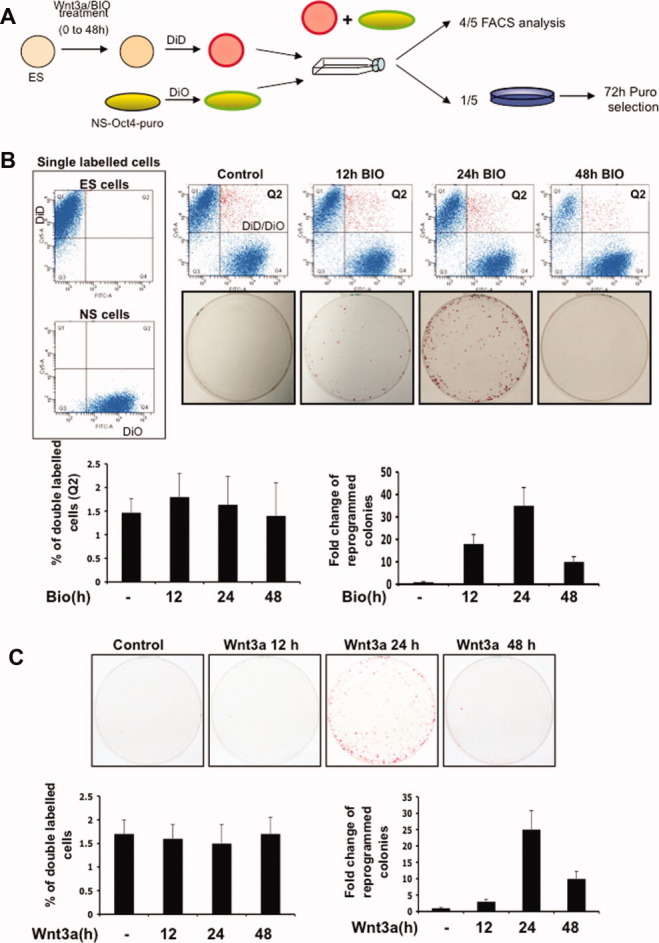
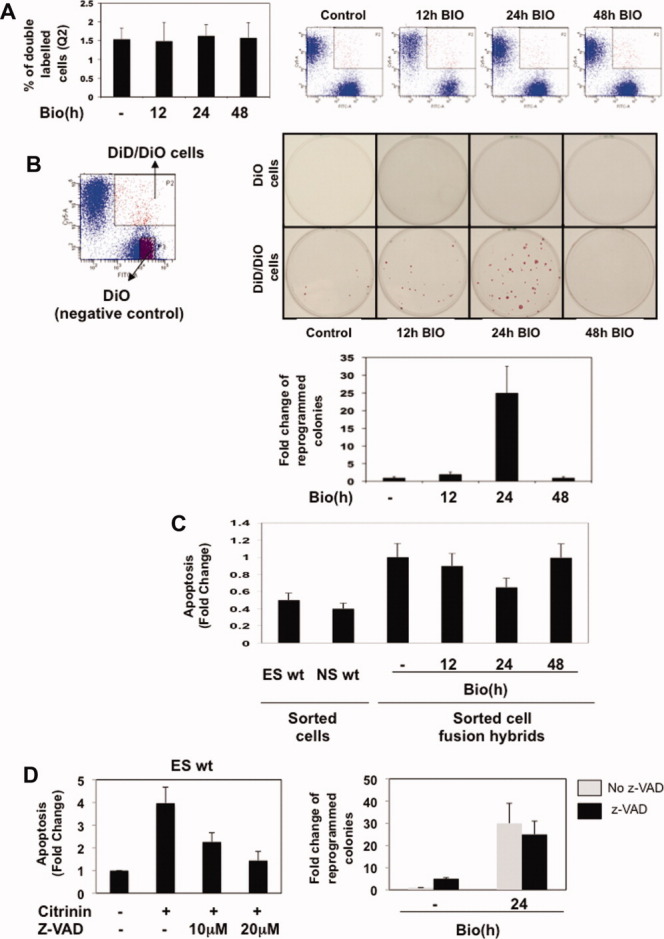
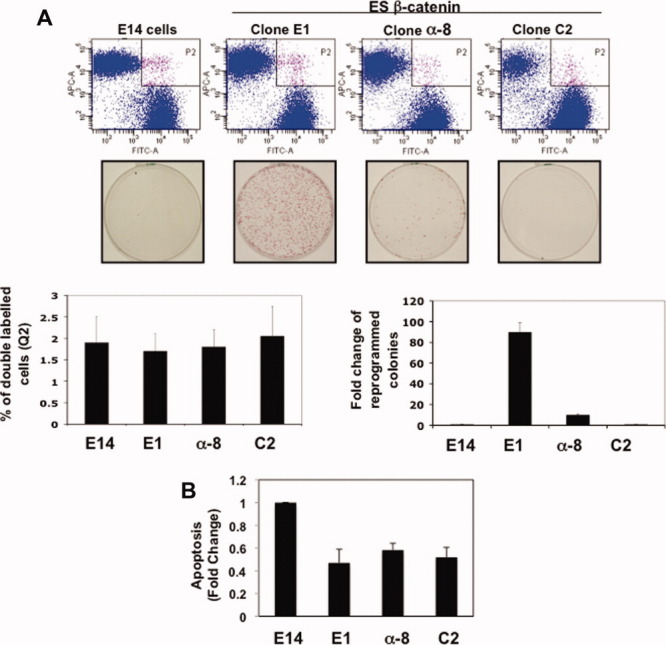
Cell-cell fusion contributes to cell differentiation and developmental processes. We have previously showed that activation of Wnt/β-catenin enhances somatic cell reprograming after polyethylene glycol (PEG)-mediated fusion. Here, we show that neural stem cells and ESCs can fuse spontaneously in cocultures, although with very low efficiency (about 2%), as the hybrids undergo apoptosis. In contrast, when Wnt/β-catenin signaling is activated in ESCs and leads to accumulation of low amounts of β-catenin in the nucleus, activated ESCs can reprogram somatic cells with very high efficiency after spontaneous fusion. Furthermore, we also show that different levels of β-catenin accumulation in the ESC nuclei can modulate cell proliferation, although in our experimental setting, cell proliferation does not modulate the reprograming efficiency per se. Overall, the present study provides evidence that spontaneous fusion occurs, while the survival of the reprogramed clones is strictly dependent on induction of a Wnt-mediated reprograming pathway.
细胞融合有助于细胞分化和发育过程。我们之前已经表明,聚乙二醇(PEG)介导的融合后,Wnt/β-catenin 的激活增强了体细胞核重编程。在这里,我们表明神经干细胞和胚胎干细胞可以在共培养中自发融合,尽管效率非常低(约 2%),因为杂种细胞会发生凋亡。相比之下,当 Wnt/β-catenin 信号在胚胎干细胞中被激活,并导致核内β-catenin 的低量积累时,经过自发融合,激活的胚胎干细胞可以非常高效地重编程体细胞。此外,我们还表明,胚胎干细胞核内β-catenin 积累的不同水平可以调节细胞增殖,尽管在我们的实验设置中,细胞增殖本身不会调节重编程效率。总体而言,本研究提供的证据表明,自发融合确实会发生,而重编程克隆的存活严格依赖于诱导 Wnt 介导的重编程途径。