Chronic Viral Diseases Branch, National Center for Emerging and Zoonotic Infectious Diseases (proposed), Centers for Disease Control and Prevention, Atlanta GA 30333, USA.
BMC Genomics. 2010 Sep 14;11:496. doi: 10.1186/1471-2164-11-496.
The contribution of alternative splicing and isoform expression to cellular response is emerging as an area of considerable interest, and the newly developed exon arrays allow for systematic study of these processes. We use this pilot study to report on the feasibility of exon array implementation looking to replace the 3' in vitro transcription expression arrays in our laboratory.One of the most widely studied models of cellular response is T-cell activation from exogenous stimulation. Microarray studies have contributed to our understanding of key pathways activated during T-cell stimulation. We use this system to examine whole genome transcription and alternate exon usage events that are regulated during lymphocyte proliferation in an attempt to evaluate the exon arrays.
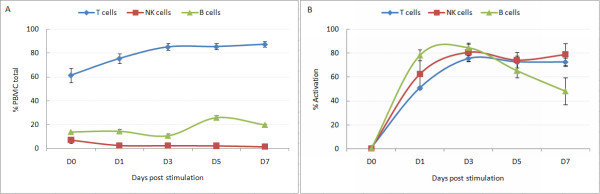
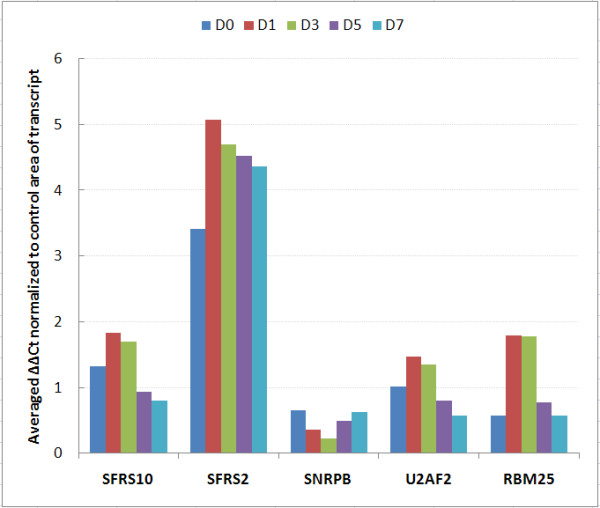
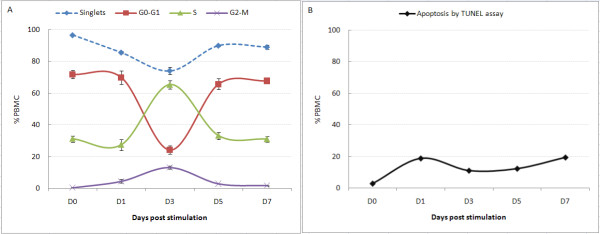
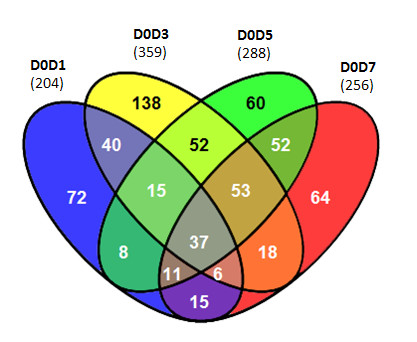
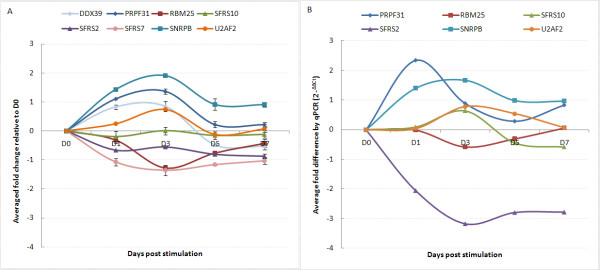
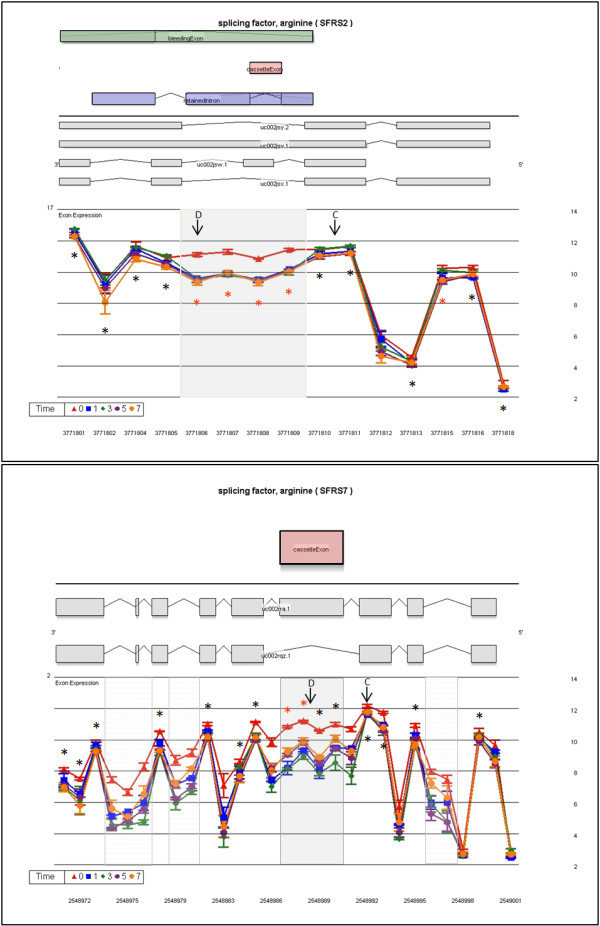
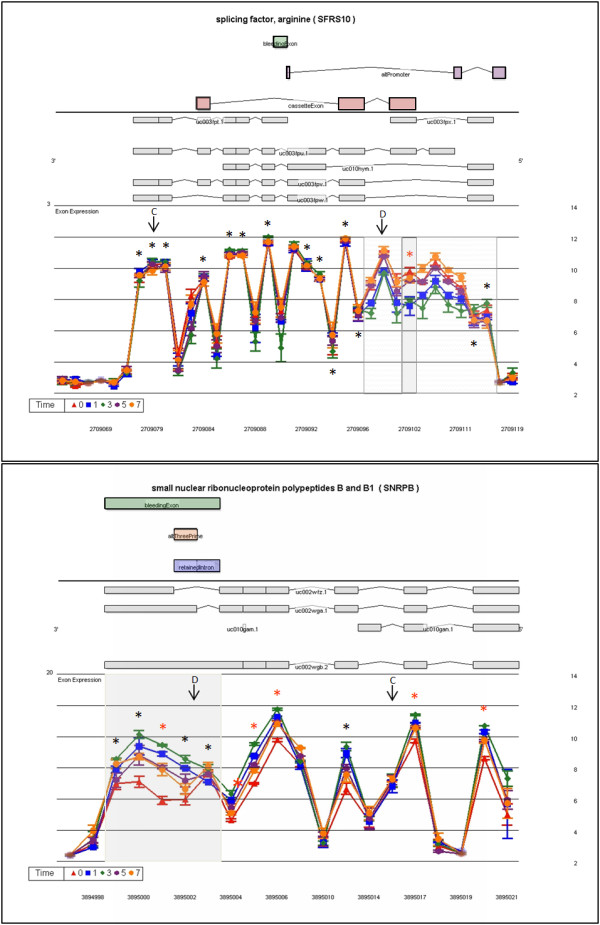
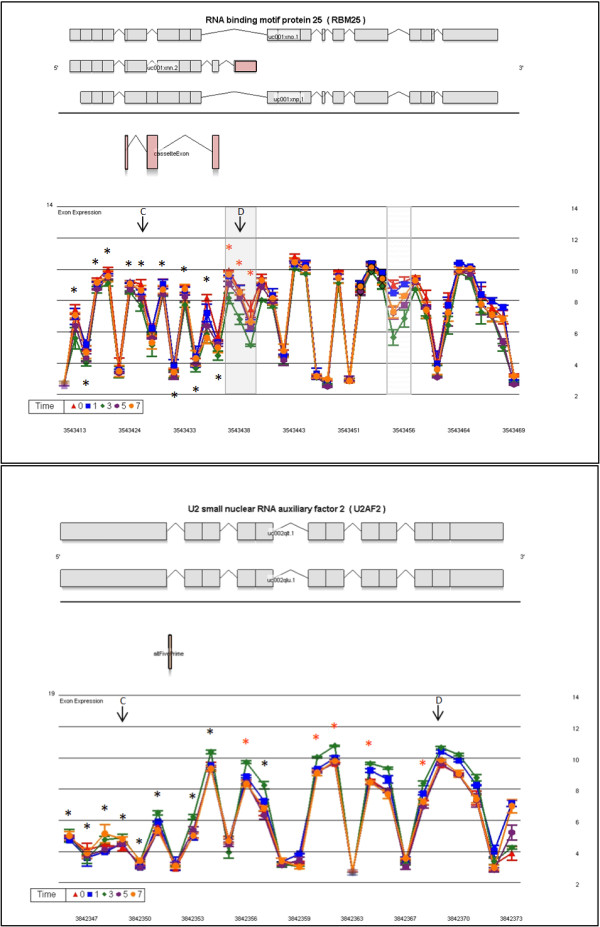
Peripheral blood mononuclear cells form healthy donors were activated using phytohemagglutinin, IL2 and ionomycin and harvested at 5 points over a 7 day period. Flow cytometry measured cell cycle events and the Affymetrix exon array platform was used to identify the gene expression and alternate exon usage changes. Gene expression changes were noted in a total of 2105 transcripts, and alternate exon usage identified in 472 transcript clusters. There was an overlap of 263 transcripts which showed both differential expression and alternate exon usage over time. Gene ontology enrichment analysis showed a broader range of biological changes in biological processes for the differentially expressed genes, which include cell cycle, cell division, cell proliferation, chromosome segregation, cell death, component organization and biogenesis and metabolic process ontologies. The alternate exon usage ontological enrichments are in metabolism and component organization and biogenesis. We focus on alternate exon usage changes in the transcripts of the spliceosome complex. The real-time PCR validation rates were 86% for transcript expression and 71% for alternate exon usage.
This study illustrates that the Exon array technology has the potential to provide information on both transcript expression and isoform usage, with very little increase in expense.
选择性剪接和异构体表达对细胞反应的贡献正成为一个相当有趣的研究领域,新开发的外显子芯片允许对这些过程进行系统研究。我们使用这项初步研究来报告外显子芯片实施的可行性,以期取代我们实验室中的 3'体外转录表达芯片。
细胞反应最广泛研究的模型之一是来自外源刺激的 T 细胞激活。微阵列研究有助于我们理解 T 细胞刺激过程中激活的关键途径。我们使用该系统来研究整个基因组转录和调节淋巴细胞增殖过程中使用的替代外显子事件,试图评估外显子芯片。
来自健康供体的外周血单核细胞使用植物血凝素、IL2 和离子霉素激活,并在 7 天的 5 个时间点收获。流式细胞术测量细胞周期事件,使用 Affymetrix 外显子芯片平台来识别基因表达和替代外显子使用的变化。在总共 2105 个转录本中观察到基因表达变化,在 472 个转录本簇中鉴定出替代外显子使用。有 263 个转录本重叠,它们随着时间的推移表现出差异表达和替代外显子使用。基因本体富集分析显示,差异表达基因的生物学过程中的生物变化范围更广,包括细胞周期、细胞分裂、细胞增殖、染色体分离、细胞死亡、组件组织和生物发生以及代谢过程本体论。替代外显子使用本体论的丰富度在于代谢和组件组织和生物发生。我们专注于剪接体复合物转录本中外显子使用的变化。实时 PCR 验证率分别为 86%的转录本表达和 71%的替代外显子使用。
这项研究表明,外显子芯片技术有可能提供有关转录本表达和异构体使用的信息,而费用增加很少。