Byrd Alzheimer's Institute, Department of Molecular Pharmacology and Physiology, University of South Florida, Tampa, Fl 33612, USA.
J Neuroinflammation. 2010 Sep 16;7:56. doi: 10.1186/1742-2094-7-56.
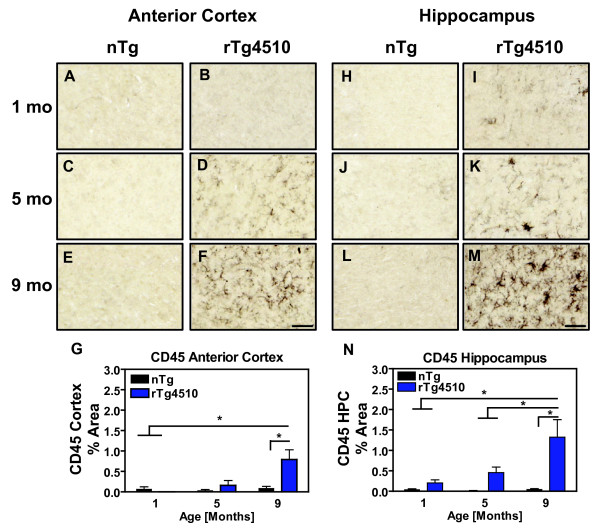
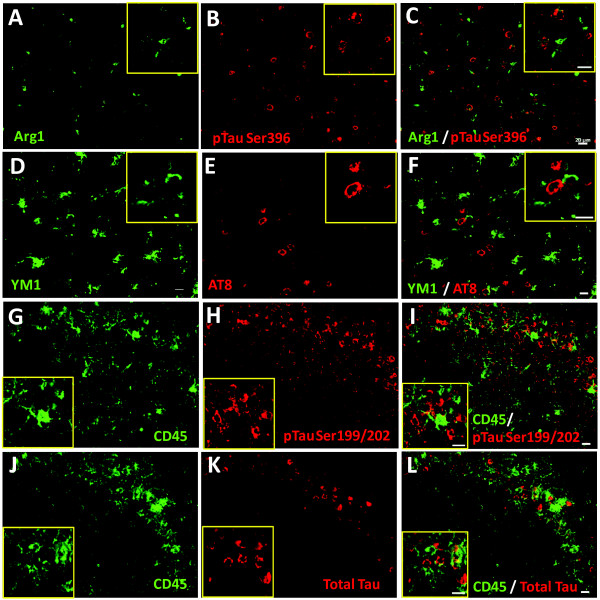
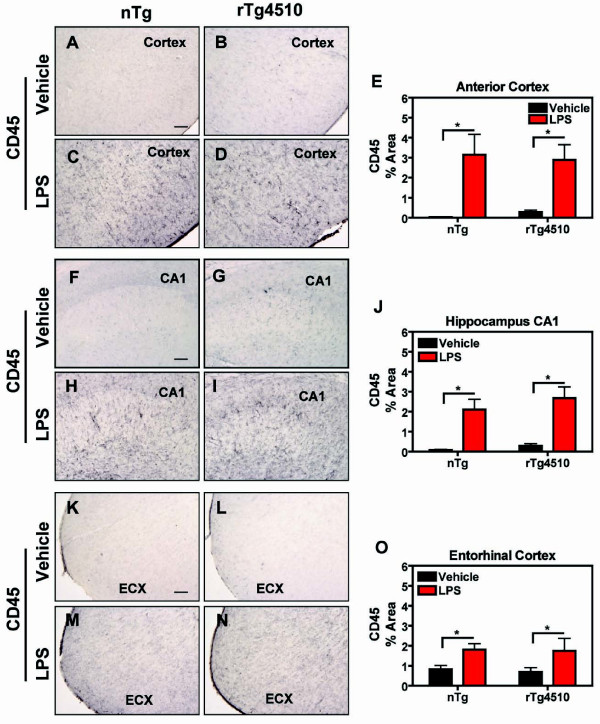
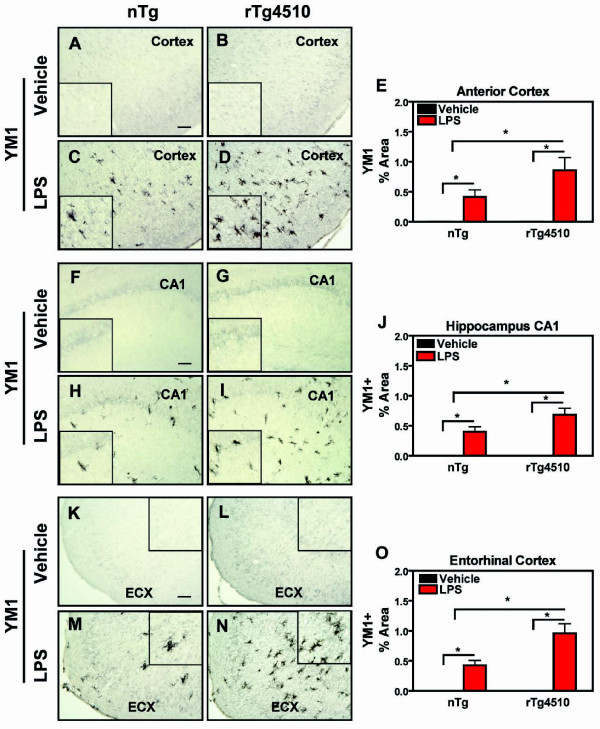
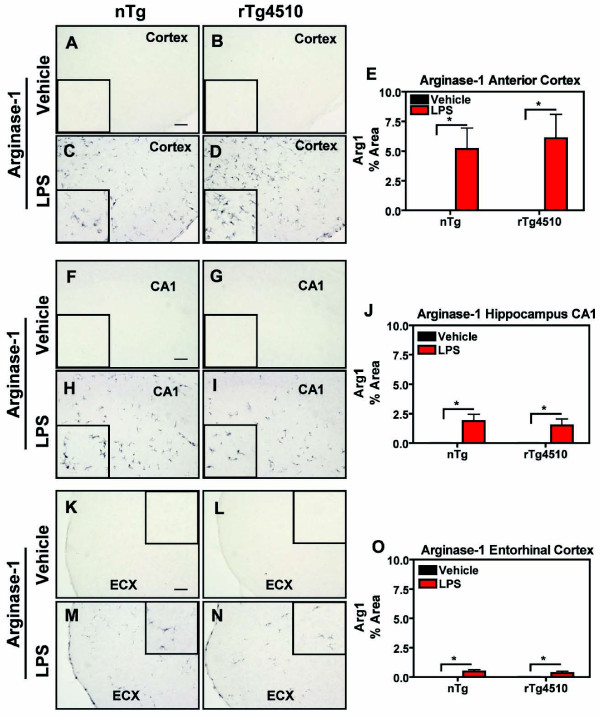
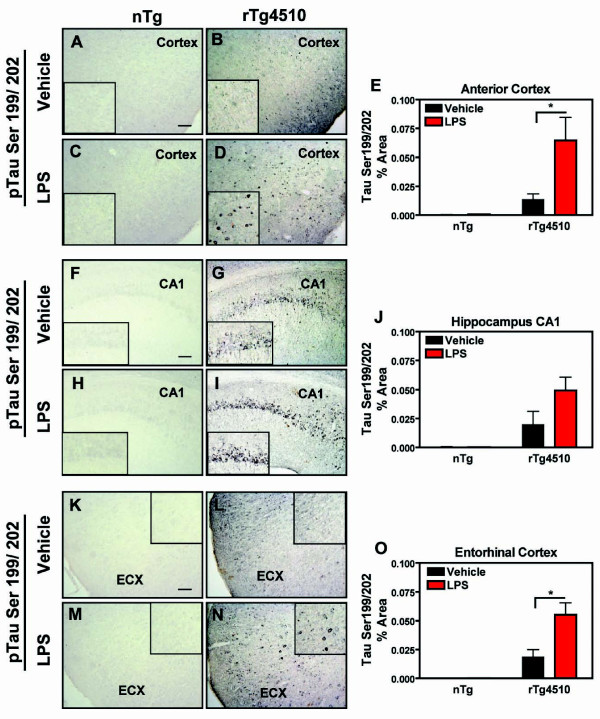
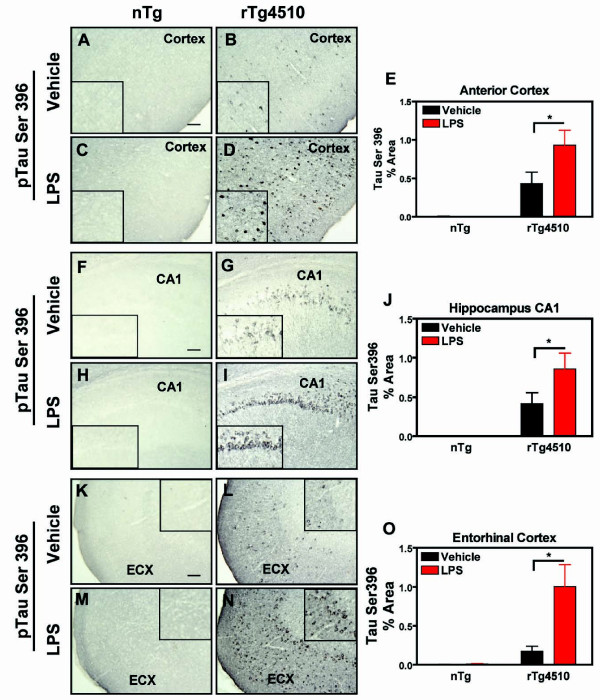
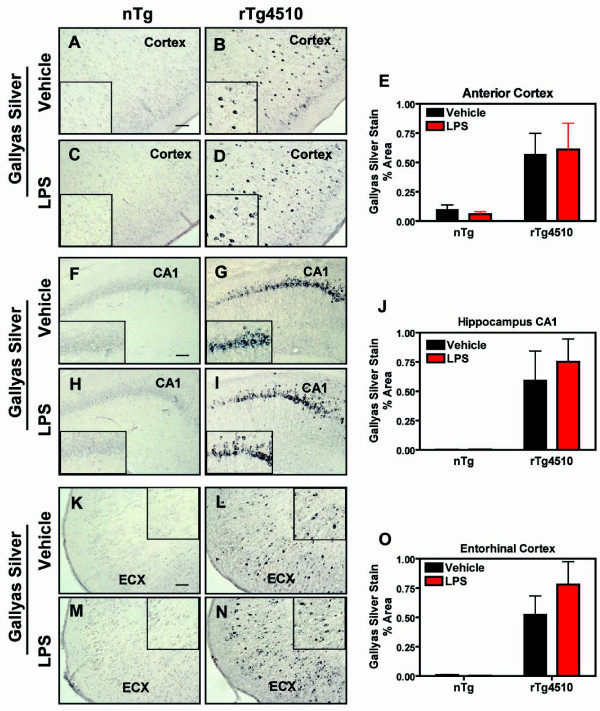
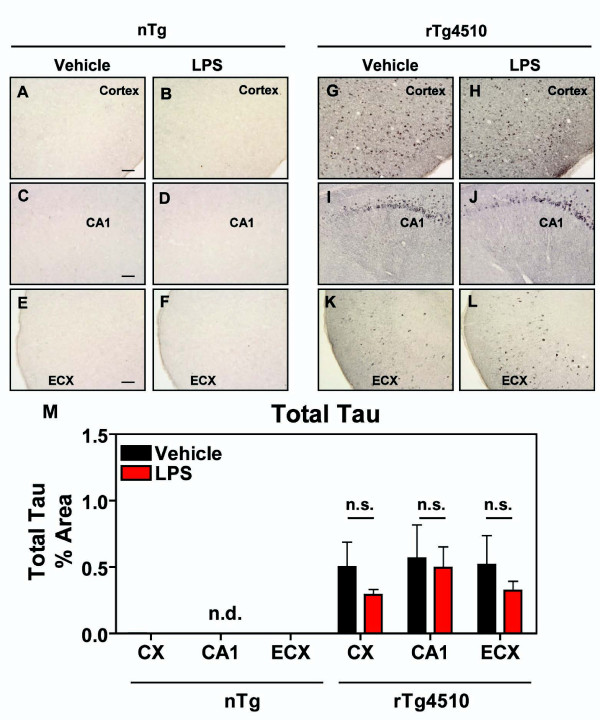
Inflammation and microglial activation are associated with Alzheimer's disease (AD) pathology. Somewhat surprisingly, injection of a prototypical inflammatory agent, lipopolysaccharide (LPS) into brains of amyloid precursor protein (APP) transgenic mice clears some of the pre-existing amyloid deposits. It is less well understood how brain inflammation modulates tau pathology in the absence of Aβ. These studies examined the role of LPS-induced inflammation on tau pathology. We used transgenic rTg4510 mice, which express the P301L mutation (4R0N TauP301L) and initiate tau pathology between 3-5 months of age. First, we found an age-dependent increase in several markers of microglial activation as these rTg4510 mice aged and tau tangles accumulated. LPS injections into the frontal cortex and hippocampus induced significant activation of CD45 and arginase 1 in rTg4510 and non-transgenic mice. In addition, activation of YM1 by LPS was exaggerated in transgenic mice relative to non-transgenic animals. Expression of Ser199/202 and phospho-tau Ser396 was increased in rTg4510 mice that received LPS compared to vehicle injections. However, the numbers of silver-positive neurons, implying presence of more pre- and mature tangles, was not significantly affected by LPS administration. These data suggest that inflammatory stimuli can facilitate tau phosphorylation. Coupled with prior results demonstrating clearance of Aβ by similar LPS injections, these results suggest that brain inflammation may have opposing effects on amyloid and tau pathology, possibly explaining the failures (to date) of anti-inflammatory therapies in AD patients.
炎症和小胶质细胞激活与阿尔茨海默病(AD)的病理有关。有些令人惊讶的是,向淀粉样前体蛋白(APP)转基因小鼠的大脑中注射典型的炎症剂脂多糖(LPS)清除了一些先前存在的淀粉样沉积物。在没有 Aβ 的情况下,大脑炎症如何调节 tau 病理学尚不清楚。这些研究探讨了 LPS 诱导的炎症对 tau 病理学的作用。我们使用表达 P301L 突变(4R0N TauP301L)的转基因 rTg4510 小鼠,这些突变在 3-5 个月大时开始出现 tau 病理学。首先,我们发现随着 rTg4510 小鼠年龄的增长和 tau 缠结的积累,几种小胶质细胞激活标志物出现了年龄依赖性增加。LPS 注射到额叶皮层和海马体中,导致 rTg4510 和非转基因小鼠的 CD45 和精氨酸酶 1 显著激活。此外,与非转基因动物相比,LPS 对 YM1 的激活在转基因小鼠中更为明显。与载体注射相比,接受 LPS 的 rTg4510 小鼠中 Ser199/202 和磷酸化 tau Ser396 的表达增加。然而,LPS 给药并没有显著影响银阳性神经元的数量,这意味着存在更多的预成熟缠结。这些数据表明炎症刺激可以促进 tau 磷酸化。结合先前证明类似 LPS 注射可清除 Aβ 的结果,这些结果表明大脑炎症可能对淀粉样蛋白和 tau 病理学有相反的影响,这可能解释了抗炎症疗法在 AD 患者中迄今为止的失败。