Department of Preventive and Social Medicine, Dunedin School of Medicine, University of Otago, Dunedin, New Zealand.
Clin Interv Aging. 2010 Sep 7;5:259-70. doi: 10.2147/cia.s6920.
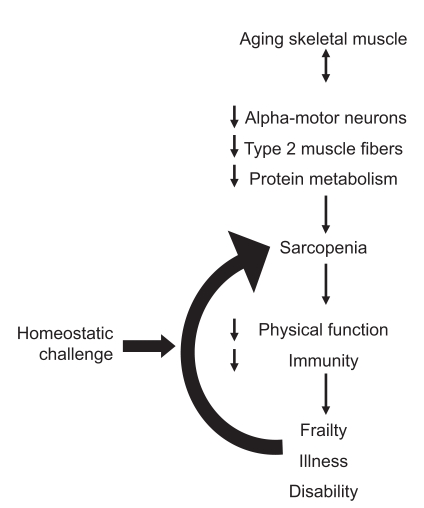
Sarcopenia is the loss of skeletal muscle mass and function with aging. Although the term sarcopenia was first coined in 1989, its etiology is still poorly understood. Moreover, a consensus for defining sarcopenia continues to elude us. Sarcopenic changes in the muscle include losses in muscle fiber quantity and quality, alpha-motor neurons, protein synthesis rates, and anabolic and sex hormone production. Other factors include basal metabolic rate, increased protein dietary requirements, and chronic inflammation secondary to age-related changes in cytokines and oxidative stress. These changes lead to decreased overall physical functioning, increased frailty, falls risk, and ultimately the loss of independent living. Because the intertwining relationships of these factors are complex, effective treatment options are still under investigation. The published data on sarcopenia are vast, and this review is not intended to be exhaustive. The aim of this review is to provide an update on the current knowledge of the definition, etiology, consequences, and current clinical trials that may help address this pressing public health problem for our aging populations.
肌肉减少症是随着年龄增长而发生的骨骼肌质量和功能的丧失。尽管肌肉减少症一词于 1989 年首次提出,但其病因仍知之甚少。此外,对于肌肉减少症的定义仍未达成共识。肌肉的肌肉减少症变化包括肌肉纤维数量和质量、α运动神经元、蛋白质合成率以及合成代谢和性激素产生的减少。其他因素包括基础代谢率、蛋白质膳食需求增加以及与年龄相关的细胞因子和氧化应激变化引起的慢性炎症。这些变化导致整体身体机能下降、虚弱增加、跌倒风险增加,最终导致丧失独立生活能力。由于这些因素的交织关系复杂,有效的治疗选择仍在研究中。关于肌肉减少症的已发表数据很多,因此本综述并非详尽无遗。本综述的目的是提供对肌肉减少症的定义、病因、后果以及当前临床试验的最新知识的更新,这些知识可能有助于解决我们老龄化人口面临的这一紧迫的公共卫生问题。