Department of Molecular Microbiology and Immunology, University of Southern California, Los Angeles, CA, USA.
Cell Death Differ. 2010 Dec;17(12):1807-15. doi: 10.1038/cdd.2010.115. Epub 2010 Sep 24.
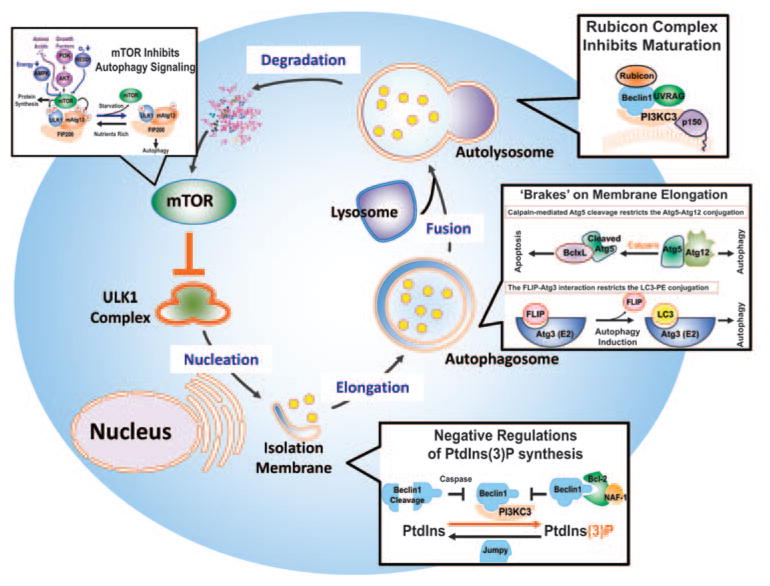
Autophagy is an evolutionarily conserved catabolic process that involves the invagination and degradation of cytoplasmic components through an autophagosomelysosome track. Autophagy functions as a quality control of cellular milieu and is implicated in a wide variety of pathological conditions. However, excessive or imbalanced autophagic flux may also be associated with cellular toxicity and may potentially contribute to the development of pathological conditions. Just as all membrane trafficking systems need to constantly strike a balance in their level of activation and inhibition to ensure proper spatial and temporal delivery of their cargo, autophagy must also be tightly regulated. Here, we provide an overview of the current knowledge regarding the negative regulation of mammalian autophagy in an effort to understand its physiological relevance and potential clinical importance.
自噬是一种进化上保守的分解代谢过程,涉及通过自噬溶酶体途径对细胞质成分进行内陷和降解。自噬作为细胞环境的质量控制发挥作用,并与多种病理状况有关。然而,过度或不平衡的自噬通量也可能与细胞毒性有关,并可能有助于病理状况的发展。正如所有的膜运输系统都需要在其激活和抑制水平上保持平衡,以确保其货物的适当空间和时间传递一样,自噬也必须受到严格的调控。在这里,我们提供了一个关于哺乳动物自噬负调控的综述,以努力了解其生理相关性和潜在的临床重要性。