Institute for Genomic Biology, University of Illinois, Urbana, Illinois, USA.
PLoS One. 2010 Aug 26;5(8):e12411. doi: 10.1371/journal.pone.0012411.
Gardnerella vaginalis is described as a common vaginal bacterial species whose presence correlates strongly with bacterial vaginosis (BV). Here we report the genome sequencing and comparative analyses of three strains of G. vaginalis. Strains 317 (ATCC 14019) and 594 (ATCC 14018) were isolated from the vaginal tracts of women with symptomatic BV, while Strain 409-05 was isolated from a healthy, asymptomatic individual with a Nugent score of 9.
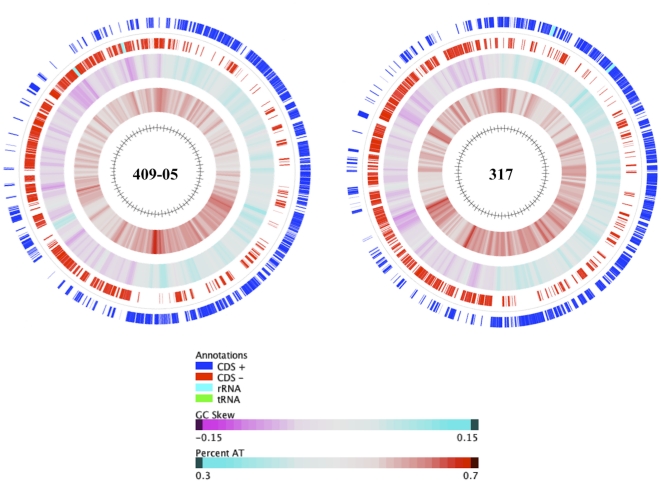
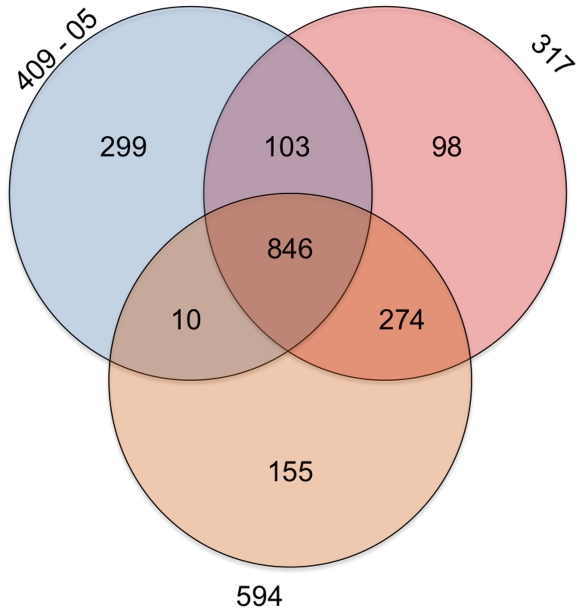
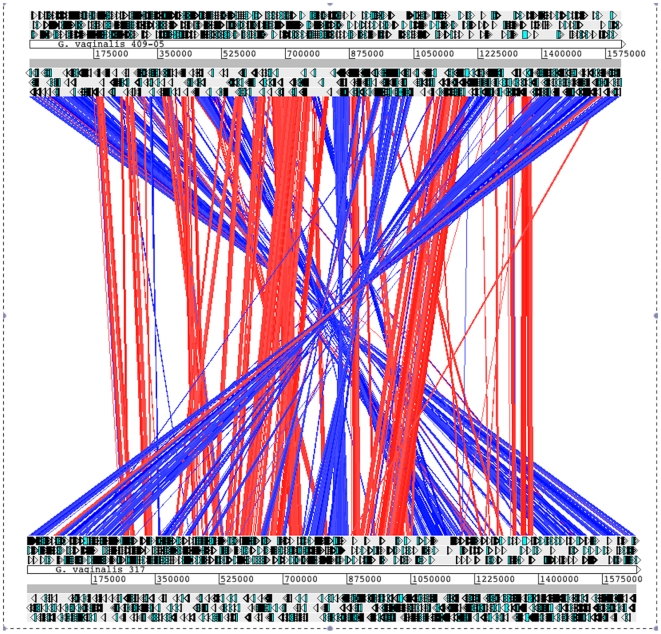
Substantial genomic rearrangement and heterogeneity were observed that appeared to have resulted from both mobile elements and substantial lateral gene transfer. These genomic differences translated to differences in metabolic potential. All strains are equipped with significant virulence potential, including genes encoding the previously described vaginolysin, pili for cytoadhesion, EPS biosynthetic genes for biofilm formation, and antimicrobial resistance systems, We also observed systems promoting multi-drug and lantibiotic extrusion. All G. vaginalis strains possess a large number of genes that may enhance their ability to compete with and exclude other vaginal colonists. These include up to six toxin-antitoxin systems and up to nine additional antitoxins lacking cognate toxins, several of which are clustered within each genome. All strains encode bacteriocidal toxins, including two lysozyme-like toxins produced uniquely by strain 409-05. Interestingly, the BV isolates encode numerous proteins not found in strain 409-05 that likely increase their pathogenic potential. These include enzymes enabling mucin degradation, a trait previously described to strongly correlate with BV, although commonly attributed to non-G. vaginalis species.
Collectively, our results indicate that all three strains are able to thrive in vaginal environments, and therein the BV isolates are capable of occupying a niche that is unique from 409-05. Each strain has significant virulence potential, although genomic and metabolic differences, such as the ability to degrade mucin, indicate that the detection of G. vaginalis in the vaginal tract provides only partial information on the physiological potential of the organism.
加德纳菌被描述为一种常见的阴道细菌,其存在与细菌性阴道病(BV)密切相关。在这里,我们报告了三种加德纳菌菌株的基因组测序和比较分析。菌株 317(ATCC 14019)和 594(ATCC 14018)从患有症状性 BV 的女性阴道中分离出来,而菌株 409-05 则从一名无症状的健康个体中分离出来,其阴道 Nugent 评分为 9 分。
观察到大量的基因组重排和异质性,这些似乎是由移动元件和大量水平基因转移引起的。这些基因组差异转化为代谢潜力的差异。所有菌株都具有显著的毒力潜力,包括编码先前描述的阴道溶菌素、细胞黏附的菌毛、生物膜形成的 EPS 生物合成基因以及抗微生物系统的基因。我们还观察到促进多药和类细菌素外排的系统。所有加德纳菌菌株都拥有大量可能增强其与其他阴道定植菌竞争和排斥能力的基因。其中包括多达六个毒素-抗毒素系统和多达九个没有同源毒素的额外抗毒素,其中几个在每个基因组内聚类。所有菌株都编码杀菌毒素,包括由菌株 409-05 独特产生的两种溶菌酶样毒素。有趣的是,BV 分离株编码了许多在菌株 409-05 中未发现的蛋白质,这些蛋白质可能增加了它们的致病潜力。其中包括能够降解粘蛋白的酶,这一特性以前被描述为与 BV 强烈相关,尽管通常归因于非加德纳菌物种。
总的来说,我们的结果表明,所有三种菌株都能够在阴道环境中茁壮成长,而在其中,BV 分离株能够占据一个与 409-05 不同的生态位。每个菌株都具有显著的毒力潜力,尽管基因组和代谢差异,如降解粘蛋白的能力,表明在阴道道中检测到加德纳菌只能提供关于该生物体生理潜力的部分信息。