Department of Bioengineering, School of Engineering and Applied Science, University of Pennsylvania, Philadelphia, PA 19104, USA.
Exp Neurol. 2011 Jan;227(1):79-88. doi: 10.1016/j.expneurol.2010.09.015. Epub 2010 Sep 25.
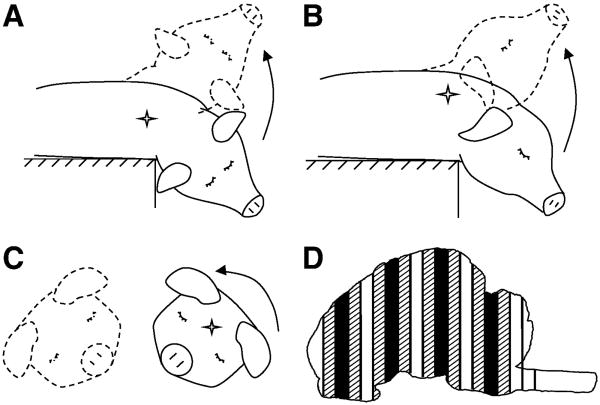
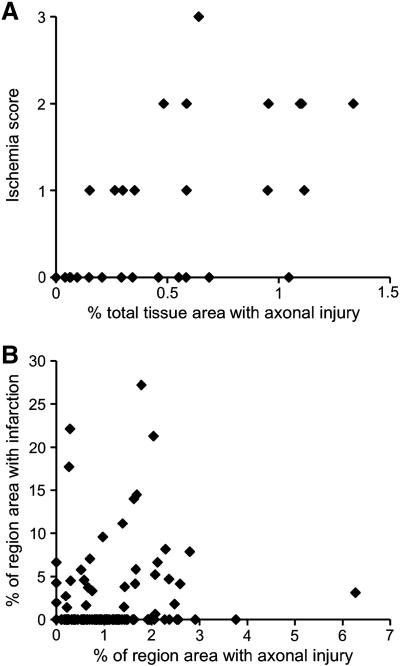
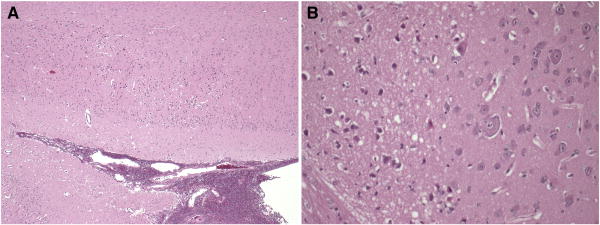
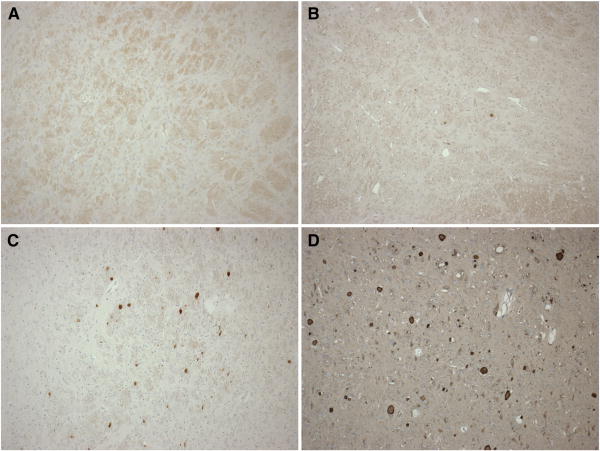
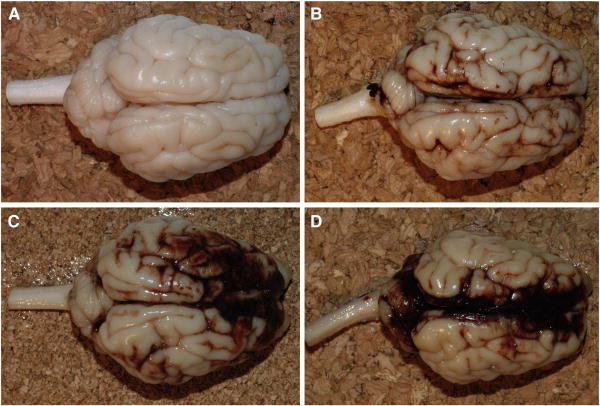
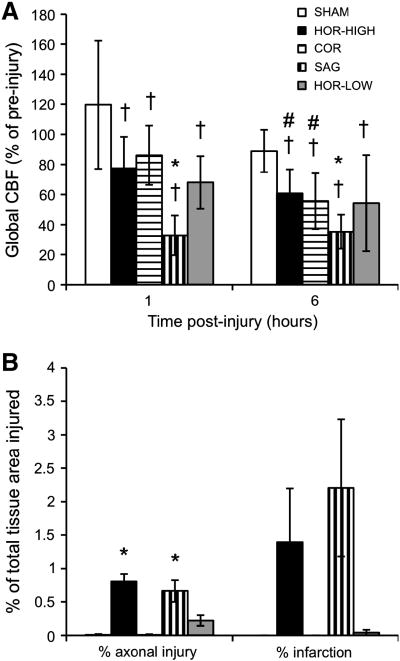
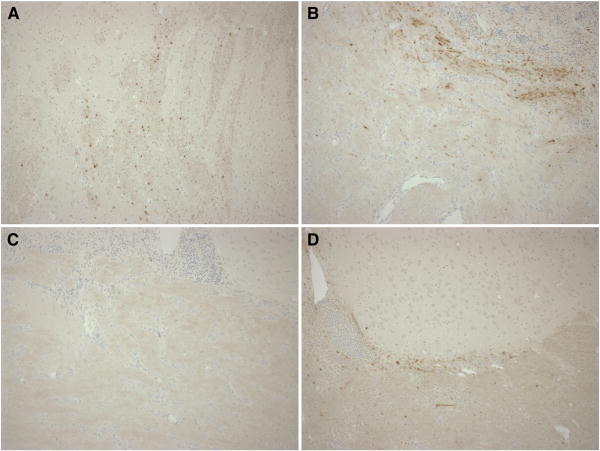
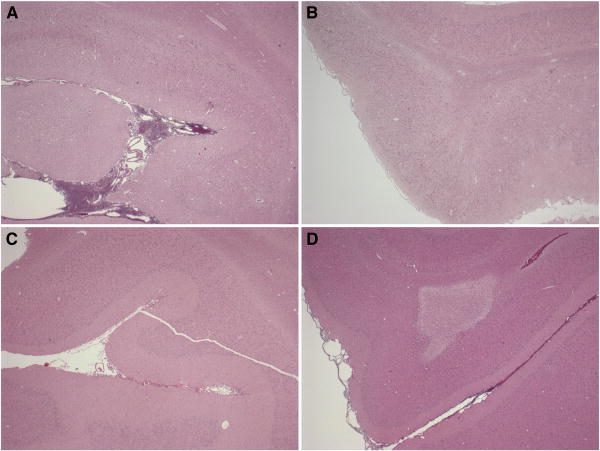
Rotational inertial forces are thought to be the underlying mechanism for most severe brain injuries. However, little is known about the effect of head rotation direction on injury outcomes, particularly in the pediatric population. Neonatal piglets were subjected to a single non-impact head rotation in the horizontal, coronal, or sagittal direction, and physiological and histopathological responses were observed. Sagittal rotation produced the longest duration of unconsciousness, highest incidence of apnea, and largest intracranial pressure increase, while coronal rotation produced little change, and horizontal rotation produced intermediate and variable derangements. Significant cerebral blood flow reductions were observed following sagittal but not coronal or horizontal injury compared to sham. Subarachnoid hemorrhage, ischemia, and brainstem pathology were observed in the sagittal and horizontal groups but not in a single coronal animal. Significant axonal injury occurred following both horizontal and sagittal rotations. For both groups, the distribution of injury was greater in the frontal and parietotemporal lobes than in the occipital lobes, frequently occurred in the absence of ischemia, and did not correlate with regional cerebral blood flow reductions. We postulate that these direction-dependent differences in injury outcomes are due to differences in tissue mechanical loading produced during head rotation.
旋转惯性力被认为是大多数严重脑损伤的潜在机制。然而,对于头部旋转方向对损伤结果的影响知之甚少,特别是在儿科人群中。将新生仔猪置于水平、冠状或矢状方向的单次非撞击性头部旋转中,并观察生理和组织病理学反应。矢状旋转导致最长时间的无意识,最高的呼吸暂停发生率和最大的颅内压升高,而冠状旋转几乎没有变化,水平旋转则产生中等和可变的紊乱。与假手术相比,矢状损伤后观察到明显的脑血流减少,但冠状或水平损伤后则没有。蛛网膜下腔出血、缺血和脑干病理在矢状和水平组中观察到,但在单个冠状动物中则没有。水平和矢状旋转后均发生明显的轴突损伤。对于这两个组,损伤的分布在额顶颞叶比枕叶更广泛,经常在没有缺血的情况下发生,并且与局部脑血流减少无关。我们推测,这些与损伤结果相关的方向依赖性差异是由于头部旋转过程中产生的组织力学加载的差异所致。