Department of Biology, University of Oslo, Blindern, Oslo, Norway.
Acta Vet Scand. 2010 Oct 6;52(1):55. doi: 10.1186/1751-0147-52-55.
The incidence of bovine babesiosis, caused by Babesia divergens (Apicomplexa: Piroplasmida) has decreased markedly since the 1930 s, but may re-emerge as a consequence of climate change and changes in legislation and pasturing practices. This is a potentially serious disease, with both economical and animal welfare consequences. Therefore, there is a need to survey the distribution of B. divergens.
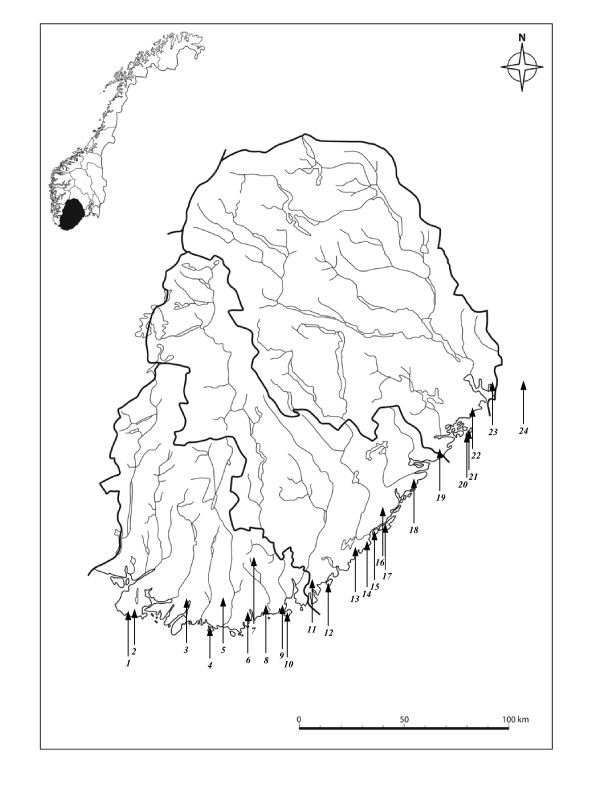
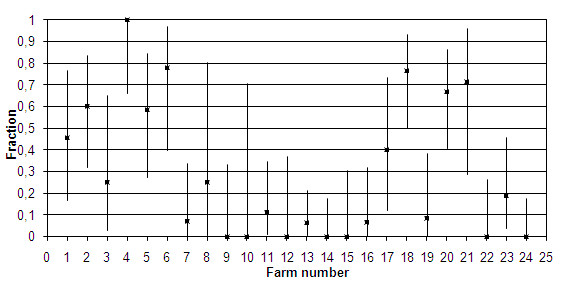
We tested sera from 306 healthy pastured cows from 24 farms along the southern Norwegian coast by using an indirect immunofluorescence IgG antibody test (IFAT). Fractions of seropositive cows were compared by calculating 95% CI.
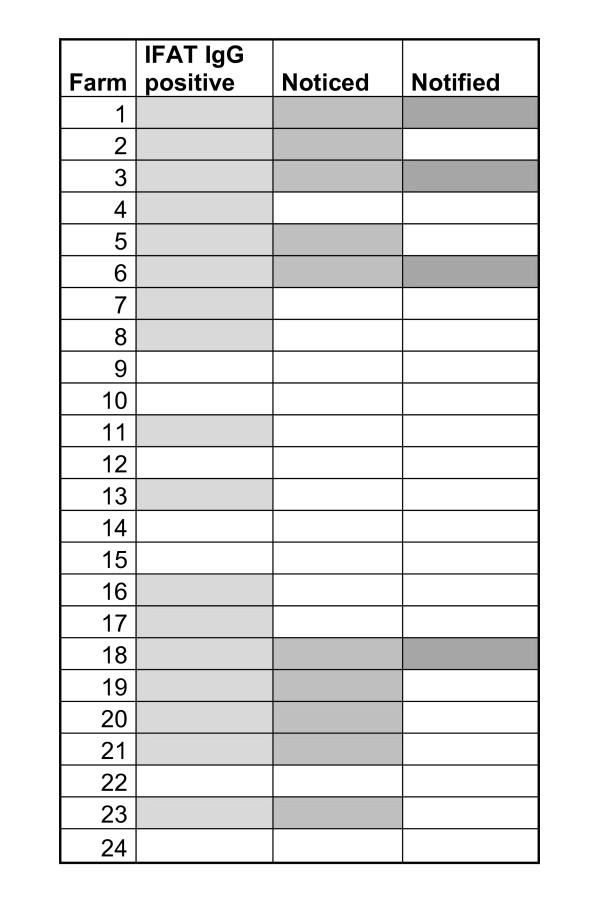
The results of this test showed that 27% of the sera were positive for B. divergens antibodies. The fraction of antibody-positive sera that we detected showed a two-humped distribution, with a high fraction of positives being found in municipalities in the western and eastern parts of the study area, while the municipalities between these areas had few or no positive serum samples.
Neither the farmers' observations nor the Norwegian Dairy Herd Recording System give an adequate picture of the distribution of bovine babesiosis. Serological testing of cows by using IFAT is a convenient way of screening for the presence of B. divergens in an area.
自 20 世纪 30 年代以来,由分歧巴贝斯虫(Apicomplexa:Piroplasmida)引起的牛巴贝斯虫病的发病率显著下降,但由于气候变化以及立法和放牧方式的改变,该病可能再次出现。这是一种潜在的严重疾病,对经济和动物福利都有影响。因此,有必要调查分歧巴贝斯虫的分布情况。
我们使用间接免疫荧光 IgG 抗体试验(IFAT)检测了来自挪威南部沿海 24 个农场的 306 头健康放牧牛的血清。通过计算 95%置信区间比较了血清阳性牛的比例。
该试验结果表明,27%的血清对分歧巴贝斯虫抗体呈阳性。我们检测到的抗体阳性血清比例呈双峰分布,在研究区域西部和东部的市有很高的阳性比例,而在这些地区之间的市几乎没有或没有阳性血清样本。
农民的观察结果和挪威奶牛 herd 记录系统都不能充分反映牛巴贝斯虫病的分布情况。使用 IFAT 对奶牛进行血清学检测是筛查该地区是否存在分歧巴贝斯虫的一种便捷方法。