Shauver Melissa S, Aravind Maya S, Chung Kevin C
Section of Plastic Surgery, Department of Surgery, The University of Michigan Health System, Ann Arbor, MI, USA.
Ann Plast Surg. 2011 Jan;66(1):73-9. doi: 10.1097/SAP.0b013e3181d50eba.
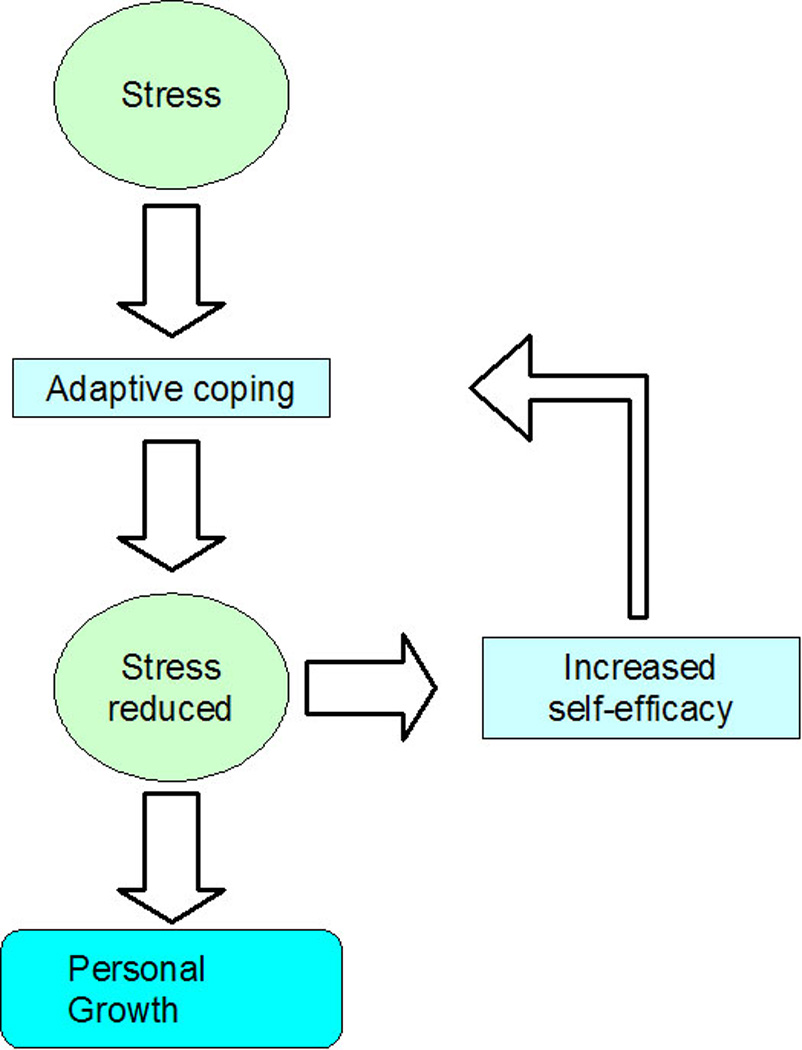
The literature has shown that long-term outcomes for both below-knee amputation and reconstruction after type III-B and III-C tibial fracture are poor. Yet, patients often report satisfaction with their treatment and outcomes. The aim of this study was to explore the relationship between patient outcomes and satisfaction after open tibial fractures via qualitative methodology. Twenty patients who were treated for open tibial fractures at one institution were selected using purposeful sampling and interviewed in-person in a semi-structured manner. Data were analyzed using grounded theory methodology. Despite reporting marked physical and psychosocial deficits, participants relayed high satisfaction. We hypothesize that the use of adaptive coping techniques successfully reduces stress, which leads to an increase in coping self-efficacy that results in the further use of adaptive coping strategies, culminating in personal growth. This stress reduction and personal growth leads to satisfaction despite poor functional and emotional outcomes.
文献表明,Ⅲ - B型和Ⅲ - C型胫骨骨折后行膝下截肢和重建的长期预后均较差。然而,患者通常对其治疗及预后表示满意。本研究旨在通过定性方法探讨开放性胫骨骨折患者的预后与满意度之间的关系。采用目的抽样法从一家机构选取了20例接受开放性胫骨骨折治疗的患者,并以半结构化方式进行了面对面访谈。使用扎根理论方法对数据进行了分析。尽管报告存在明显的身体和心理社会缺陷,但参与者仍表示高度满意。我们推测,采用适应性应对技巧可成功减轻压力,进而提高应对自我效能感,促使进一步使用适应性应对策略,最终实现个人成长。尽管功能和情绪预后不佳,但这种压力减轻和个人成长仍会带来满意度。