Dipartimento di Medicina Clinica e Sperimentale, University of Perugia, Facoltà di Medicina e Chirurgia, Perugia, Italy.
PLoS One. 2010 Oct 8;5(10):e13238. doi: 10.1371/journal.pone.0013238.
Although human immunodeficiency virus (HIV)-related morbidity and mortality rates in patients treated with a combination of high active antiretroviral therapy (HAART) have declined, significant metabolic/vascular adverse effects associated with the long term use of HIV protease inhibitors (PIs) have emerged as a significant side effect. Here we illustrate that targeting the bile acid sensor farnesoid X receptor (FXR) protects against dyslipidemia and vascular injury induced HIV-PIs in rodents.
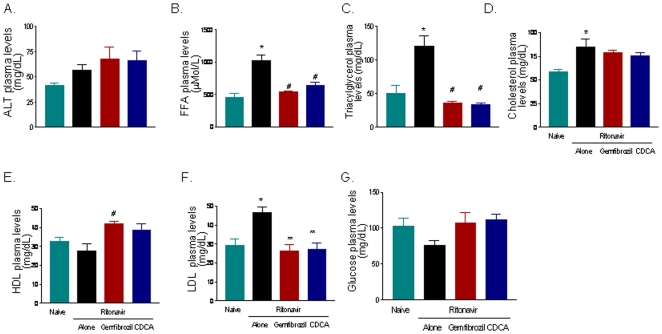
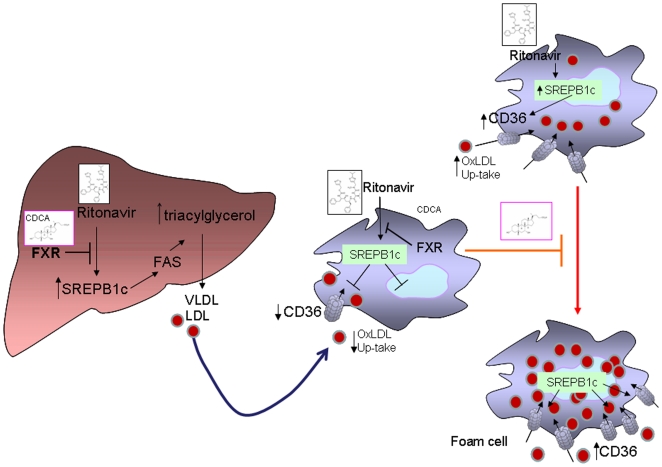
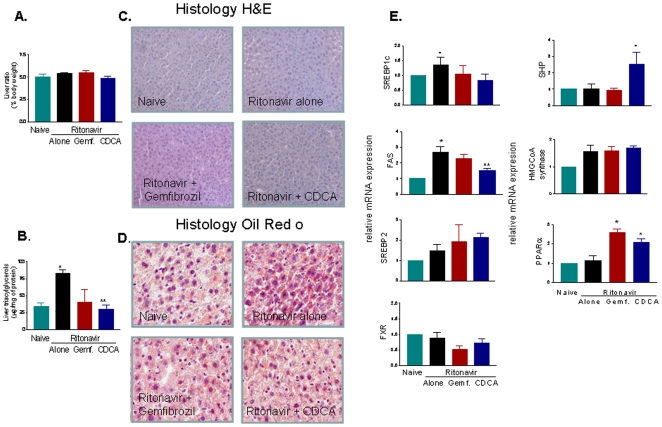
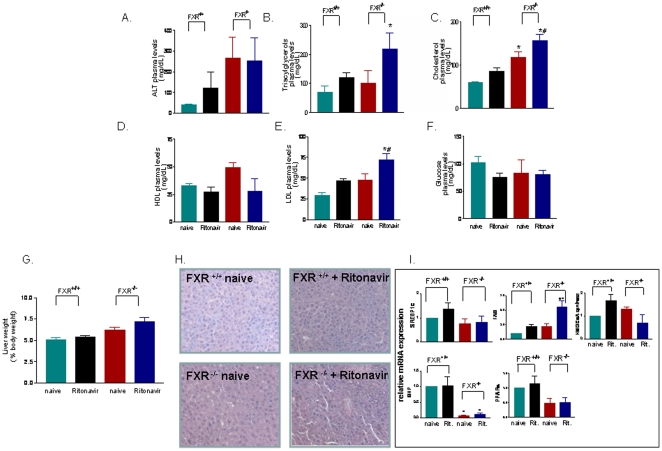
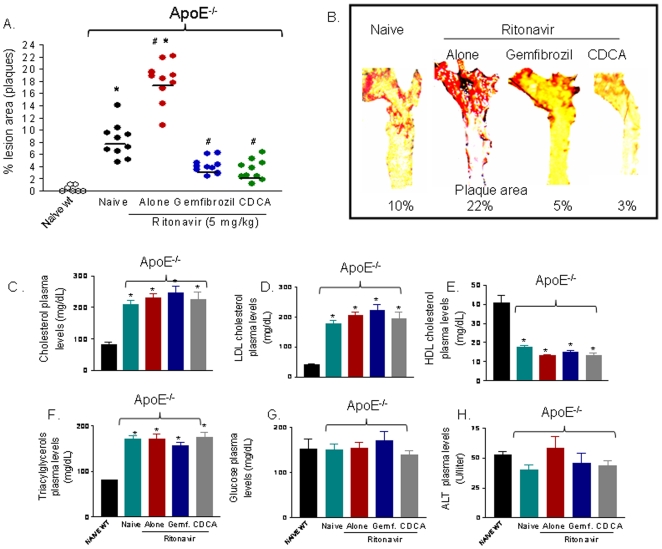
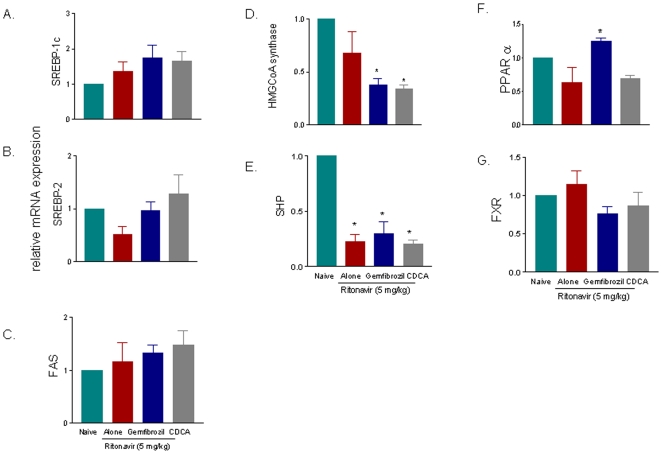
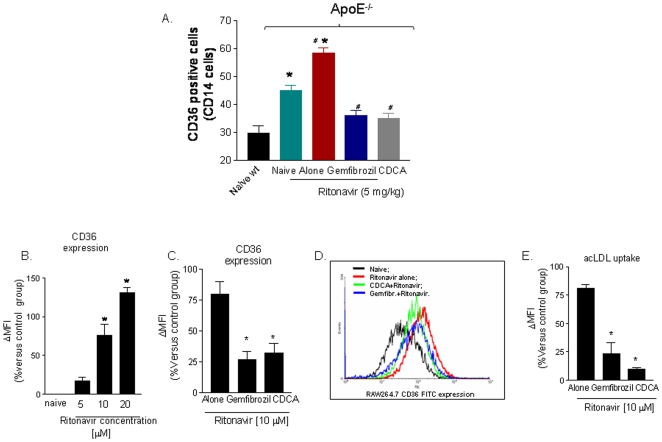
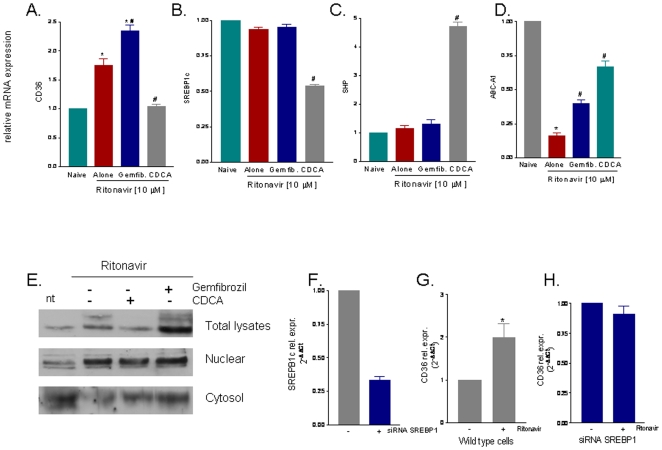
METHODOLOGY/PRINCIPAL FINDINGS: Administration of the HIV PI ritonavir to wild type mice increased plasma triacylglycerols and cholesterol levels and this effect was exacerbated by dosing ritonavir to mice harbouring a disrupted FXR. Dyslipidemia induced by ritonavir associated with a shift in the liver expression of signature genes, Sterol Regulatory Element-Binding Protein (SREBP)-1 and fatty acid synthase. Treating wild type mice with the FXR agonist (chenodeoxycholic acid, CDCA) protected against development of dyslipidemia induced by ritonavir. Administration of ritonavir to ApoE(-/-) mice, a strain that develop spontaneously atherosclerosis, increased the extent of aortic plaques without worsening the dyslipidemia. Treating these mice with CDCA reduced the extent of aortic plaques by 70% without changing plasma lipoproteins or the liver expression of signature genes. A beneficial effect on aortic plaques was also obtained by treating ApoE(-/-) mice with gemfibrozil, a PPARα agonist. FXR activation counter-regulated induction of expression/activity of CD36 caused by HIV-PIs in circulating monocytes and aortic plaques. In macrophages cell lines, CDCA attenuated CD36 induction and uptake of acetylated LDL caused by ritonavir. Natural and synthetic FXR ligands reduced the nuclear translocation of SREBP1c caused by ritonavir.
CONCLUSIONS/SIGNIFICANCE: Activation of the bile acid sensor FXR protects against dyslipidemia and atherosclerotic caused by ritonavir, a widely used HIV PI. From a mechanistic stand point it appears that besides reducing the liver expression of genes involved in fatty acid synthesis, FXR activation counter-regulates the expression/activity of CD36 on monocytes. FXR ligands might hold promise in the treatment dyslipidemia induced by ritonavir.
尽管接受高效抗逆转录病毒疗法(HAART)联合治疗的艾滋病毒(HIV)相关发病率和死亡率有所下降,但长期使用 HIV 蛋白酶抑制剂(PI)引起的显著代谢/血管不良影响已成为一个重要的副作用。在这里,我们说明了靶向胆汁酸传感器法尼醇 X 受体(FXR)可预防啮齿动物中 HIV-PI 引起的血脂异常和血管损伤。
方法/主要发现:给予野生型小鼠 HIV PI 利托那韦会增加血浆三酰甘油和胆固醇水平,而在携带 FXR 破坏的小鼠中给予利托那韦会加剧这种作用。利托那韦引起的血脂异常与肝脏特征基因固醇调节元件结合蛋白(SREBP)-1 和脂肪酸合酶的表达谱发生变化有关。用 FXR 激动剂(鹅脱氧胆酸,CDCA)治疗野生型小鼠可防止利托那韦引起的血脂异常。给予 ApoE(-/-)小鼠(一种自发发生动脉粥样硬化的品系)利托那韦会增加主动脉斑块的程度,而不会加重血脂异常。用 CDCA 治疗这些小鼠可使主动脉斑块减少 70%,而不会改变血浆脂蛋白或特征基因的肝脏表达。用 PPARα激动剂吉非贝齐治疗 ApoE(-/-)小鼠也可获得对主动脉斑块的有益作用。FXR 激活可逆转 HIV-PI 诱导的循环单核细胞和主动脉斑块中 CD36 的表达/活性。在巨噬细胞细胞系中,CDCA 可减轻利托那韦引起的 CD36 诱导和乙酰化 LDL 的摄取。天然和合成 FXR 配体可减少利托那韦引起的 SREBP1c 核易位。
结论/意义:激活胆汁酸传感器 FXR 可预防广泛使用的 HIV PI 利托那韦引起的血脂异常和动脉粥样硬化。从机制上讲,除了降低参与脂肪酸合成的基因在肝脏中的表达外,FXR 激活还可逆转单核细胞中 CD36 的表达/活性。FXR 配体可能有希望用于治疗利托那韦引起的血脂异常。