University Children’s Hospital, Zurich, Switzerland.
Diabetes. 2011 Jan;60(1):56-63. doi: 10.2337/db10-0697. Epub 2010 Oct 18.
The "portal hypothesis" proposes that the liver is directly exposed to free fatty acids and cytokines increasingly released from visceral fat tissue into the portal vein of obese subjects, thus rendering visceral fat accumulation particularly hazardous for the development of hepatic insulin resistance and type 2 diabetes. In the present study, we used a fat transplantation paradigm to (artificially) increase intra-abdominal fat mass to test the hypothesis that venous drainage of fat tissue determines its impact on glucose homeostasis.
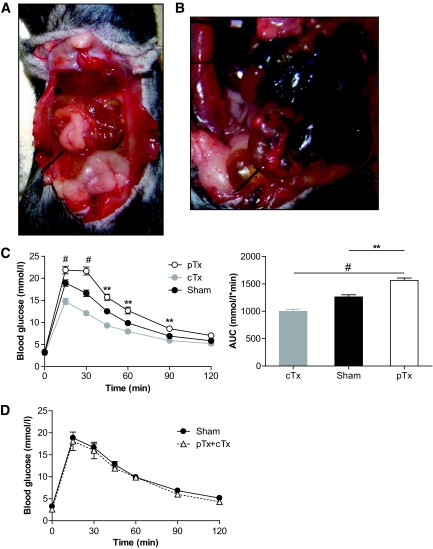
Epididymal fat pads of C57Bl6/J donor mice were transplanted into littermates, either to the parietal peritoneum (caval/systemic venous drainage) or, by using a novel approach, to the mesenterium, which confers portal venous drainage.
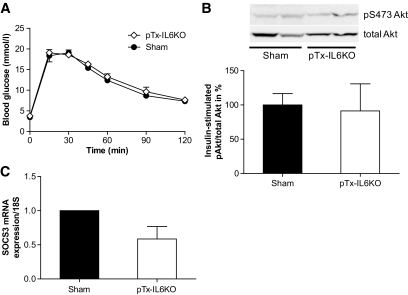
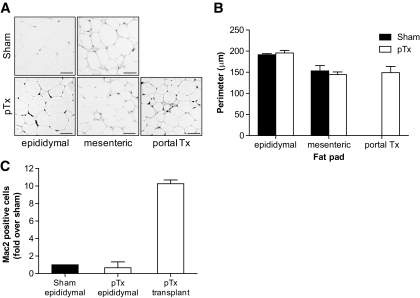
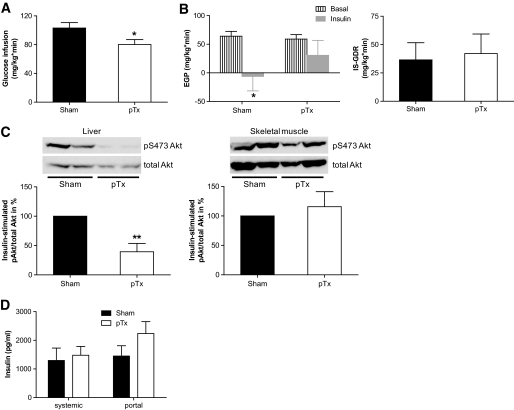
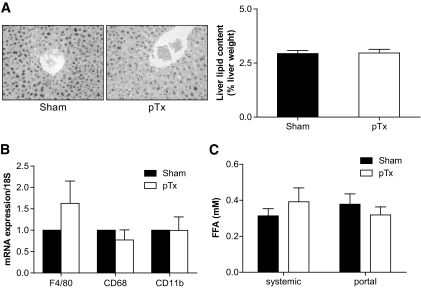
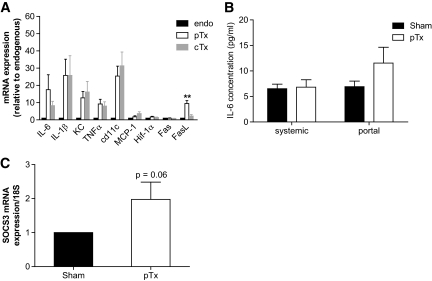
Only mice receiving the portal drained fat transplant developed impaired glucose tolerance and hepatic insulin resistance. mRNA expression of proinflammatory cytokines was increased in both portally and systemically transplanted fat pads. However, portal vein (but not systemic) plasma levels of interleukin (IL)-6 were elevated only in mice receiving a portal fat transplant. Intriguingly, mice receiving portal drained transplants from IL-6 knockout mice showed normal glucose tolerance.
These results demonstrate that the metabolic fate of intra-abdominal fat tissue transplantation is determined by the delivery of inflammatory cytokines to the liver specifically via the portal system, providing direct evidence in support of the portal hypothesis.
“门脉假说”提出,肥胖个体内脏脂肪组织不断向门静脉释放游离脂肪酸和细胞因子,使肝脏直接暴露于此,从而导致内脏脂肪堆积对肝胰岛素抵抗和 2 型糖尿病的发生特别危险。本研究采用脂肪移植模型(人为)增加腹内脂肪量,以验证这样一个假说,即脂肪组织的静脉引流决定其对糖代谢稳态的影响。
将 C57Bl6/J 供体小鼠的附睾脂肪垫移植到同窝仔鼠体内,分别移植到壁腹膜(腔静脉/全身静脉引流)或采用一种新方法移植到肠系膜,后者赋予门静脉引流。
只有接受门静脉引流脂肪移植的小鼠出现葡萄糖耐量受损和肝胰岛素抵抗。两种移植脂肪垫中促炎细胞因子的 mRNA 表达均增加。然而,只有接受门静脉脂肪移植的小鼠门静脉(而非全身)血浆中白细胞介素(IL)-6 水平升高。有趣的是,接受来自 IL-6 基因敲除小鼠门静脉引流移植的小鼠表现出正常的葡萄糖耐量。
这些结果表明,腹内脂肪组织移植的代谢命运取决于炎症细胞因子通过门静脉系统特异性递送至肝脏,为“门脉假说”提供了直接证据支持。