African Population & Health Research Centre, Nairobi, Kenya.
Glob Health Action. 2010 Sep 27;3. doi: 10.3402/gha.v3i0.2138.
Globally, it is estimated that people aged 60 and over constitute more than 11% of the population, with the corresponding proportion in developing countries being 8%. Rapid urbanisation in sub-Saharan Africa (SSA), fuelled in part by rural-urban migration and a devastating HIV/AIDS epidemic, has altered the status of older people in many SSA societies. Few studies have, however, looked at the health of older people in SSA. This study aims to describe the health and well-being of older people in two Nairobi slums.
Data were collected from residents of the areas covered by the Nairobi Urban Health and Demographic Surveillance System (NUHDSS) aged 50 years and over by 1 October 2006. Health status was assessed using the short SAGE (Study on Global AGEing and Adult Health) form. Mean WHO Quality of Life (WHOQoL) and a composite health score were computed and binary variables generated using the median as the cut-off. Logistic regression was used to determine factors associated with poor quality of life (QoL) and poor health status.
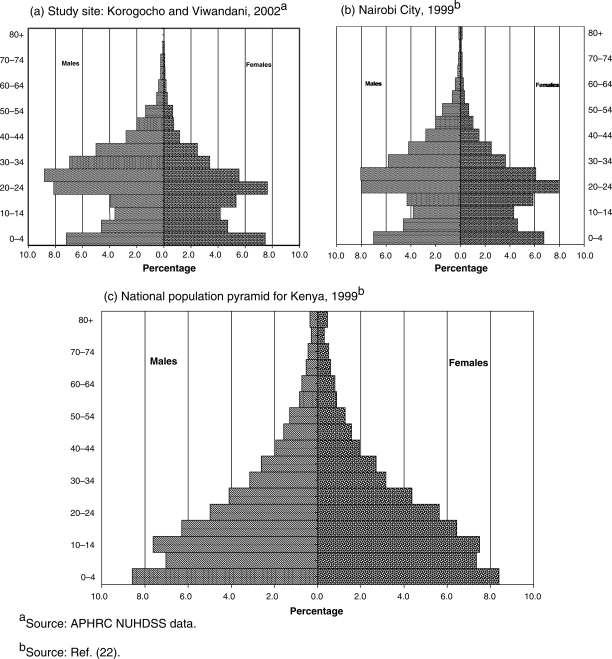
Out of 2,696 older people resident in the NUHDSS surveillance area during the study period, data were collected on 2,072. The majority of respondents were male, aged 50-60 years. The mean WHOQoL score was 71.3 (SD 6.7) and mean composite health score was 70.6 (SD 13.9). Males had significantly better QoL and health status than females and older respondents had worse outcomes than younger ones. Sex, age, education level and marital status were significantly associated with QoL, while slum of residence was significantly associated with health status.
The study adds to the literature on health and well-being of older people in SSA, especially those in urban informal settlements. Further studies are needed to validate the methods used for assessing health status and to provide comparisons from other settings. Health and Demographic Surveillance Systems have the potential to conduct such studies and to evaluate health and well-being over time.
全球范围内,60 岁及以上的人口占总人口的 11%以上,发展中国家的这一比例为 8%。撒哈拉以南非洲(SSA)的快速城市化,部分是由农村向城市的迁移和毁灭性的艾滋病毒/艾滋病流行推动的,改变了许多 SSA 社会中老年人的地位。然而,很少有研究关注 SSA 老年人的健康状况。本研究旨在描述内罗毕两个贫民窟中老年人的健康和福祉。
数据来自截至 2006 年 10 月 1 日居住在内罗毕城市健康和人口监测系统(NUHDSS)覆盖地区的年龄在 50 岁及以上的居民。使用简短的 SAGE(全球老龄化和成人健康研究)表格评估健康状况。计算了平均世卫组织生活质量(WHOQoL)和综合健康评分,并使用中位数作为截断值生成了二进制变量。使用逻辑回归确定与生活质量差(QoL)和健康状况差相关的因素。
在所研究期间,有 2696 名老年人居住在 NUHDSS 监测区,收集了 2072 名老年人的数据。大多数受访者为男性,年龄在 50-60 岁之间。平均 WHOQoL 评分为 71.3(SD 6.7),平均综合健康评分为 70.6(SD 13.9)。男性的生活质量和健康状况明显好于女性,而年龄较大的受访者的结果比年龄较小的受访者差。性别、年龄、教育水平和婚姻状况与生活质量显著相关,而居住的贫民窟与健康状况显著相关。
本研究增加了关于 SSA 老年人健康和福祉的文献,特别是城市非正规住区的老年人。需要进一步的研究来验证评估健康状况的方法,并提供来自其他环境的比较。健康和人口监测系统有潜力进行这样的研究,并随着时间的推移评估健康和福祉。