Department of Cardiology, Ajou University School of Medicine, Suwon, Korea.
Korean Circ J. 2010 Sep;40(9):468-70. doi: 10.4070/kcj.2010.40.9.468. Epub 2010 Sep 30.
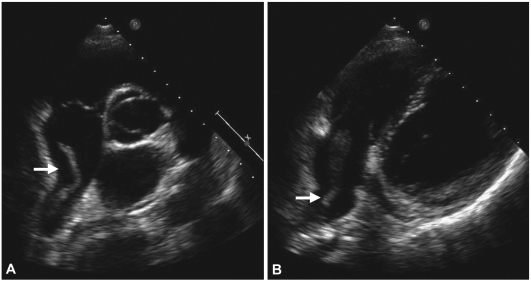
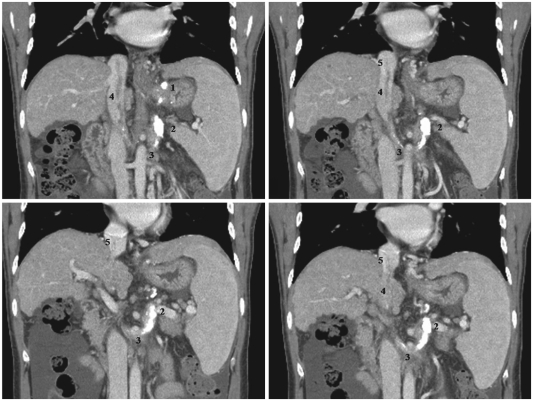
A 34-year-old man, who had been treated with an endoscopic injection of a mixture of n-butyl-2-cyanoacrylate (Histoacryl) and Lipiodol for control of variceal bleeding 6 months previously, presented with an intracardiac mass in the right atrium (RA). Two-dimensional echocardiography revealed an intracardiac mass in the RA that appeared to extend from the inferior vena cava. The origin of the sclerosant was traced by computed tomography (CT). This is a very rare case in which the sclerosant migration route was demonstrated by CT scan. The findings of this case suggest that the systemic migration of sclerosant into an intracardiac chamber should be considered in patients with an intracardiac mass, especially with a history of previous sclerotherapy for variceal bleeding.
一位 34 岁男性,6 个月前曾因静脉曲张出血接受内镜下 n-丁基-2-氰基丙烯酸酯(Histoacryl)和碘油混合物注射治疗,现因右心房(RA)内肿块就诊。二维超声心动图显示 RA 内有一肿块,似乎从下腔静脉延伸而来。通过计算机断层扫描(CT)追踪硬化剂的起源。这是一例非常罕见的病例,通过 CT 扫描显示了硬化剂的迁移途径。该病例的发现提示,对于有心脏内肿块的患者,特别是有静脉曲张出血硬化治疗史的患者,应考虑硬化剂向心脏腔内的全身迁移。