Department of Biochemistry and Cancer Biology, University of Toledo College of Medicine, Toledo, OH 43614, USA.
Mol Cancer. 2010 Oct 22;9:280. doi: 10.1186/1476-4598-9-280.
Metastatic melanoma is an aggressive malignancy that is resistant to therapy and has a poor prognosis. The progression of primary melanoma to metastatic disease is a multi-step process that requires dynamic regulation of gene expression through currently uncharacterized epigenetic mechanisms. Epigenetic regulation of gene expression often involves changes in chromatin structure that are catalyzed by chromatin remodeling enzymes. Understanding the mechanisms involved in the regulation of gene expression during metastasis is important for developing an effective strategy to treat metastatic melanoma. SWI/SNF enzymes are multisubunit complexes that contain either BRG1 or BRM as the catalytic subunit. We previously demonstrated that heterogeneous SWI/SNF complexes containing either BRG1 or BRM are epigenetic modulators that regulate important aspects of the melanoma phenotype and are required for melanoma tumorigenicity in vitro.
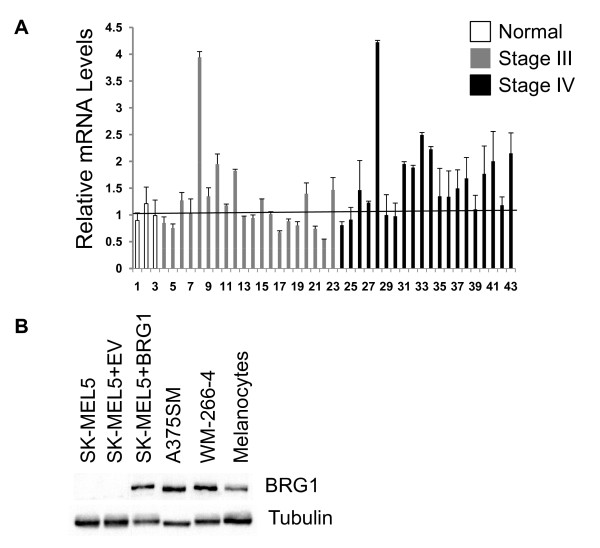
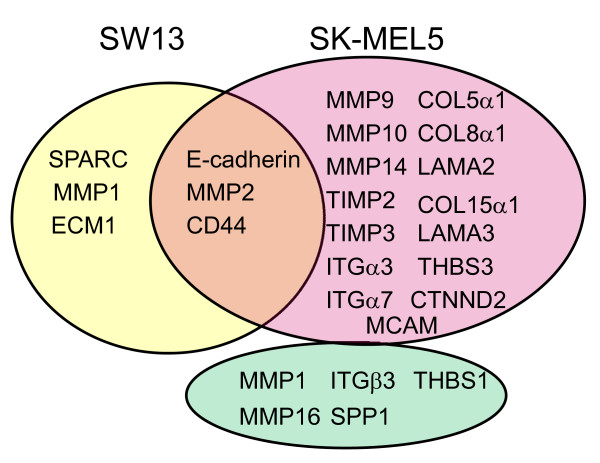
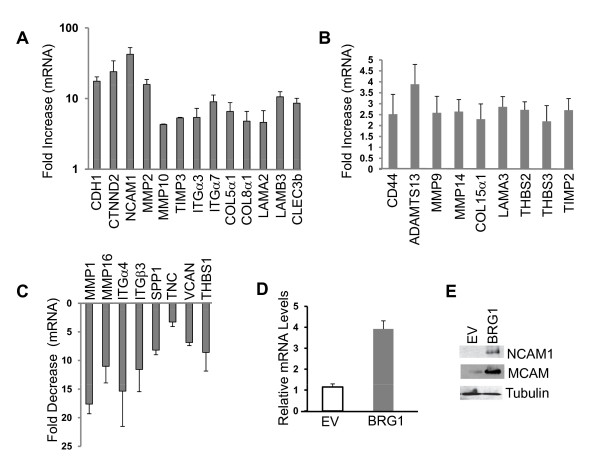
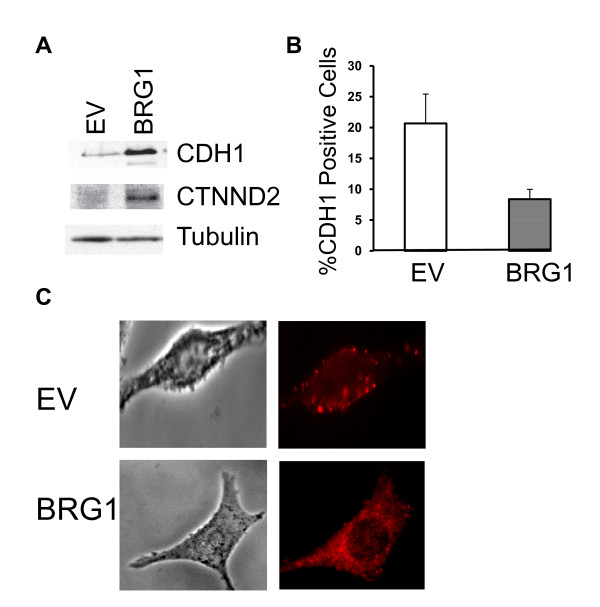
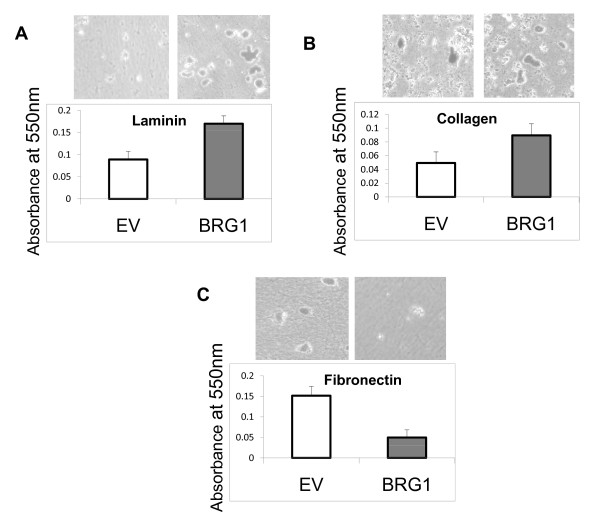
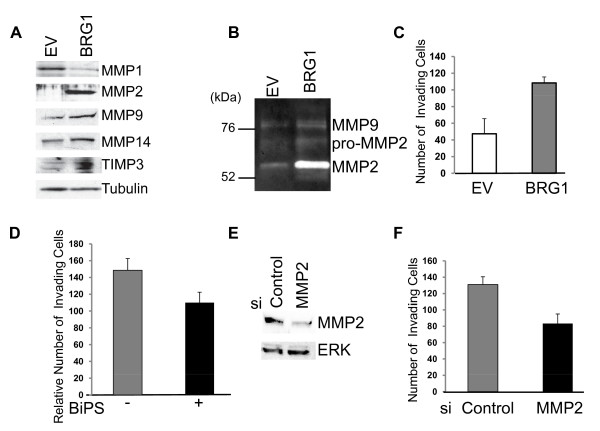
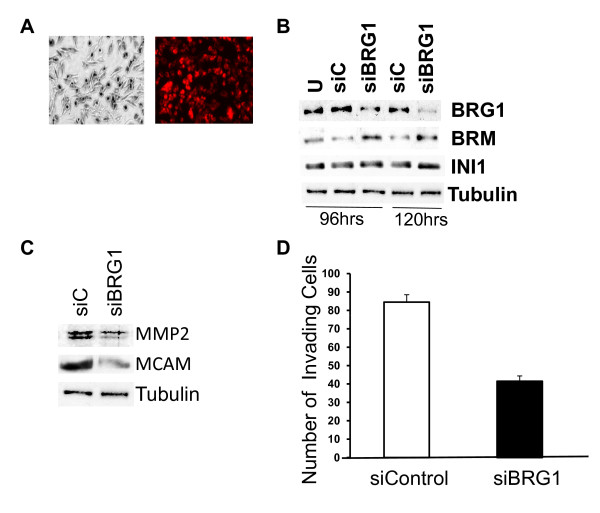
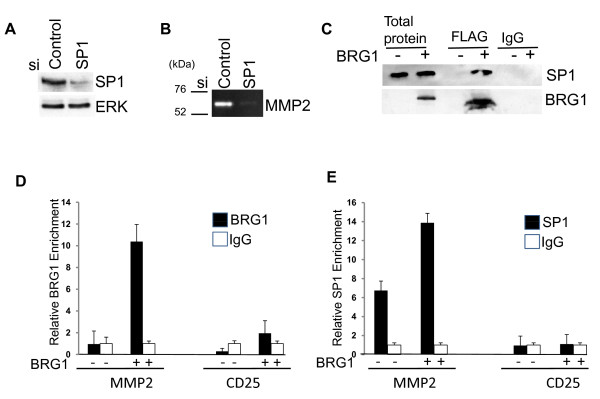
To characterize BRG1 expression during melanoma progression, we assayed expression of BRG1 in patient derived normal skin and in melanoma specimen. BRG1 mRNA levels were significantly higher in stage IV melanomas compared to stage III tumors and to normal skin. To determine the role of BRG1 in regulating the expression of genes involved in melanoma metastasis, we expressed BRG1 in a melanoma cell line that lacks BRG1 expression and examined changes in extracellular matrix and adhesion molecule expression. We found that BRG1 modulated the expression of a subset of extracellular matrix remodeling enzymes and adhesion proteins. Furthermore, BRG1 altered melanoma adhesion to different extracellular matrix components. Expression of BRG1 in melanoma cells that lack BRG1 increased invasive ability while down-regulation of BRG1 inhibited invasive ability in vitro. Activation of metalloproteinase (MMP) 2 expression greatly contributed to the BRG1 induced increase in melanoma invasiveness. We found that BRG1 is recruited to the MMP2 promoter and directly activates expression of this metastasis associated gene.
We provide evidence that BRG1 expression increases during melanoma progression. Our study has identified BRG1 target genes that play an important role in melanoma metastasis and we show that BRG1 promotes melanoma invasive ability in vitro. These results suggest that increased BRG1 levels promote the epigenetic changes in gene expression required for melanoma metastasis to proceed.
转移性黑色素瘤是一种侵袭性恶性肿瘤,对治疗具有抗性,预后不良。原发性黑色素瘤向转移性疾病的进展是一个多步骤的过程,需要通过目前尚未描述的表观遗传机制动态调节基因表达。基因表达的表观遗传调控通常涉及染色质结构的变化,这些变化是由染色质重塑酶催化的。了解转移过程中基因表达调控的机制对于开发治疗转移性黑色素瘤的有效策略非常重要。SWI/SNF 酶是包含 BRG1 或 BRM 作为催化亚基的多亚基复合物。我们之前证明,含有 BRG1 或 BRM 的异质 SWI/SNF 复合物是表观遗传调节剂,可调节黑色素瘤表型的重要方面,并且是体外黑色素瘤致瘤性所必需的。
为了描述 BRG1 在黑色素瘤进展过程中的表达,我们检测了患者来源的正常皮肤和黑色素瘤标本中 BRG1 的表达。与 III 期肿瘤和正常皮肤相比,IV 期黑色素瘤中 BRG1 mRNA 水平显著升高。为了确定 BRG1 在调节参与黑色素瘤转移的基因表达中的作用,我们在缺乏 BRG1 表达的黑色素瘤细胞系中表达 BRG1,并检测细胞外基质和粘附分子表达的变化。我们发现 BRG1 调节了一组细胞外基质重塑酶和粘附蛋白的表达。此外,BRG1 改变了黑色素瘤对不同细胞外基质成分的粘附。在缺乏 BRG1 的黑色素瘤细胞中表达 BRG1 可增加其侵袭能力,而下调 BRG1 则可抑制体外侵袭能力。金属蛋白酶 (MMP) 2 表达的激活极大地促成了 BRG1 诱导的黑色素瘤侵袭性增加。我们发现 BRG1 被募集到 MMP2 启动子并直接激活该转移相关基因的表达。
我们提供的证据表明,BRG1 的表达在黑色素瘤进展过程中增加。我们的研究已经确定了 BRG1 靶基因,这些基因在黑色素瘤转移中发挥重要作用,并且我们表明 BRG1 促进了体外黑色素瘤的侵袭能力。这些结果表明,BRG1 水平的升高促进了黑色素瘤转移所需的基因表达的表观遗传变化。