National Institute of Advanced Industrial Science and Technology, Tsukuba, Ibaraki, Japan.
PLoS One. 2010 Oct 21;5(10):e13536. doi: 10.1371/journal.pone.0013536.
Ashwagandha is a popular Ayurvedic herb used in Indian traditional home medicine. It has been assigned a variety of health-promoting effects of which the mechanisms remain unknown. We previously reported the selective killing of cancer cells by leaf extract of Ashwagandha (i-Extract) and its purified component Withanone. In the present study, we investigated its mechanism by loss-of-function screening (abrogation of i-Extract induced cancer cell killing) of the cellular targets and gene pathways.
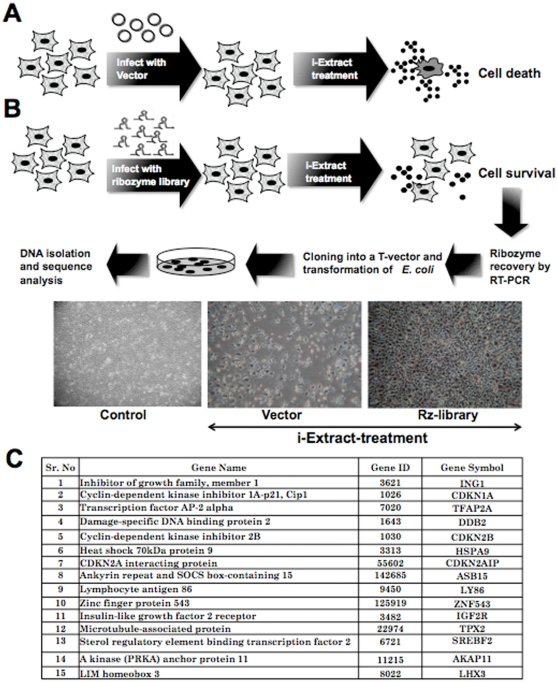
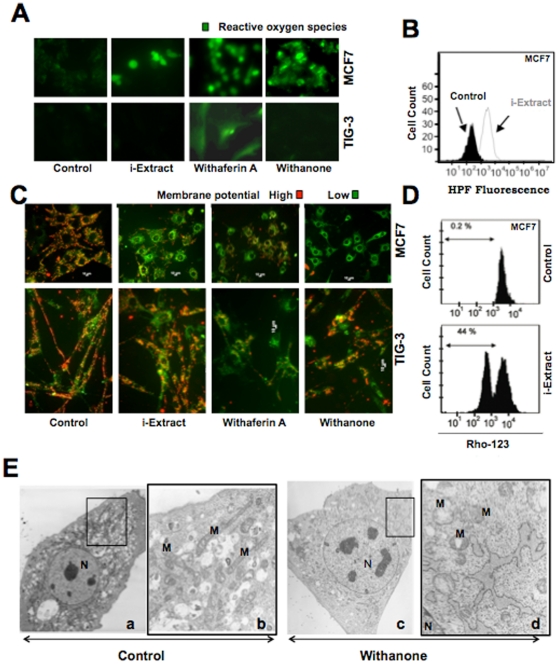
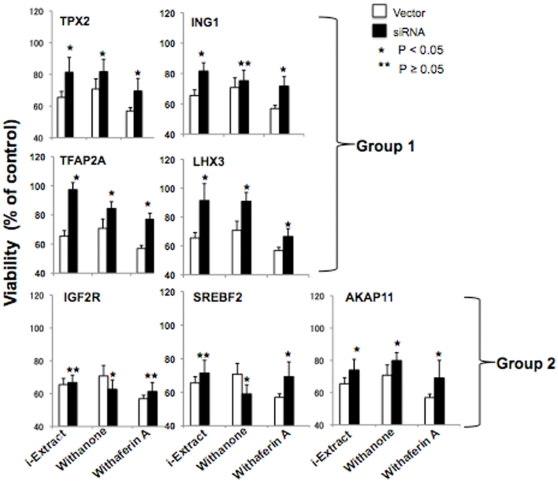
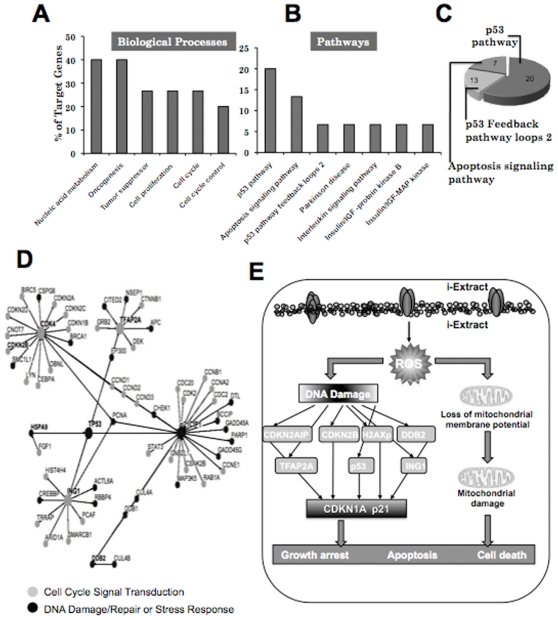
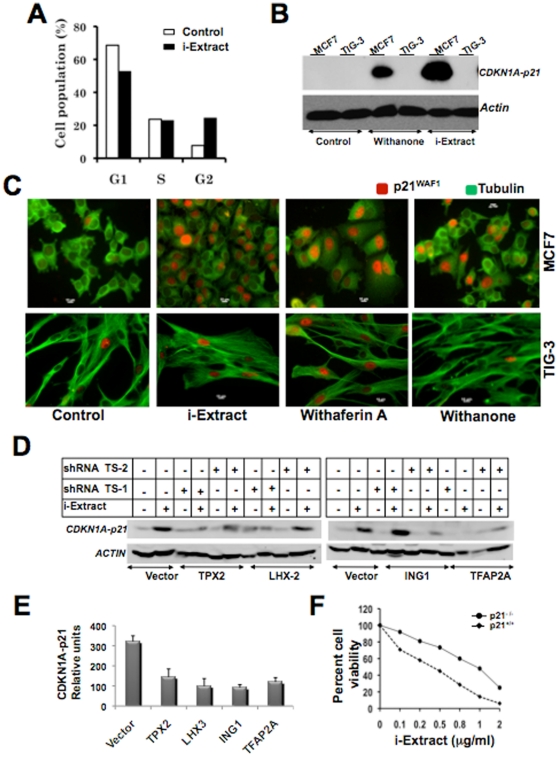
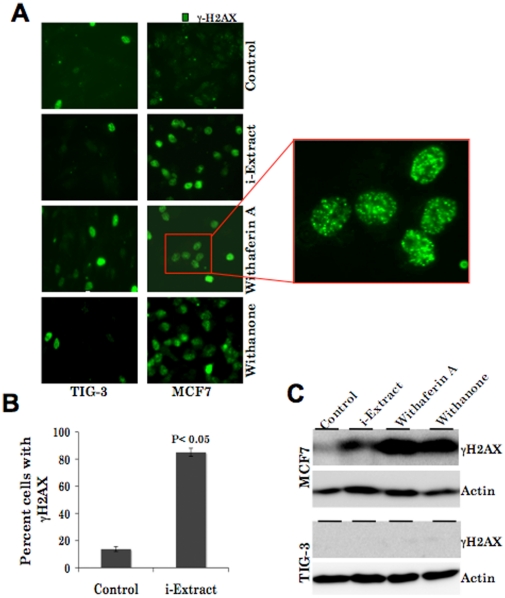
METHODOLOGY/PRINCIPAL FINDINGS: Randomized ribozyme library was introduced into cancer cells prior to the treatment with i-Extract. Ribozymes were recovered from cells that survived the i-Extract treatment. Gene targets of the selected ribozymes (as predicted by database search) were analyzed by bioinformatics and pathway analyses. The targets were validated for their role in i-Extract induced selective killing of cancer cells by biochemical and molecular assays. Fifteen gene-targets were identified and were investigated for their role in specific cancer cell killing activity of i-Extract and its two major components (Withaferin A and Withanone) by undertaking the shRNA-mediated gene silencing approach. Bioinformatics on the selected gene-targets revealed the involvement of p53, apoptosis and insulin/IGF signaling pathways linked to the ROS signaling. We examined the involvement of ROS-signaling components (ROS levels, DNA damage, mitochondrial structure and membrane potential) and demonstrate that the selective killing of cancer cells is mediated by induction of oxidative stress.
Ashwagandha leaf extract and Withanone cause selective killing of cancer cells by induction of ROS-signaling and hence are potential reagents that could be recruited for ROS-mediated cancer chemotherapy.
Ashwagandha 是一种流行的印度传统草药,用于阿育吠陀医学。它具有多种促进健康的作用,但作用机制尚不清楚。我们之前报道过 Ashwagandha 叶提取物(i-Extract)及其纯化成分 Withanone 选择性杀伤癌细胞。在本研究中,我们通过细胞靶标和基因途径的功能丧失筛选(消除 i-Extract 诱导的癌细胞杀伤)来研究其机制。
方法/主要发现: 在用 i-Extract 处理之前,将随机核酶文库引入癌细胞。从 i-Extract 处理后存活的细胞中回收核酶。通过生物信息学和途径分析对选定核酶的基因靶标(通过数据库搜索预测)进行分析。通过生化和分子测定验证这些靶标在 i-Extract 诱导的选择性杀伤癌细胞中的作用。鉴定了 15 个靶基因,并通过 shRNA 介导的基因沉默方法研究它们在 i-Extract 及其两种主要成分(Withaferin A 和 Withanone)对特定癌细胞杀伤活性中的作用。对选定基因靶标的生物信息学分析表明,p53、凋亡和胰岛素/IGF 信号通路与 ROS 信号有关。我们研究了 ROS 信号成分(ROS 水平、DNA 损伤、线粒体结构和膜电位)的参与情况,并证明了癌细胞的选择性杀伤是由氧化应激诱导的。
Ashwagandha 叶提取物和 Withanone 通过诱导 ROS 信号导致癌细胞选择性杀伤,因此是可用于 ROS 介导的癌症化疗的潜在试剂。