Biochemistry and Molecular Biology Laboratory, Department of Zoology, Banaras Hindu University, Varanasi, India.
PLoS One. 2011;6(11):e27265. doi: 10.1371/journal.pone.0027265. Epub 2011 Nov 11.
Scopolamine is a well-known cholinergic antagonist that causes amnesia in human and animal models. Scopolamine-induced amnesia in rodent models has been widely used to understand the molecular, biochemical, behavioral changes, and to delineate therapeutic targets of memory impairment. Although this has been linked to the decrease in central cholinergic neuronal activity following the blockade of muscarinic receptors, the underlying molecular and cellular mechanism(s) particularly the effect on neuroplasticity remains elusive. In the present study, we have investigated (i) the effects of scopolamine on the molecules involved in neuronal and glial plasticity both in vivo and in vitro and (ii) their recovery by alcoholic extract of Ashwagandha leaves (i-Extract).
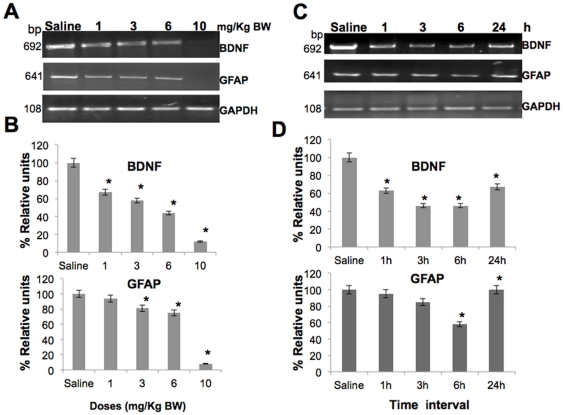
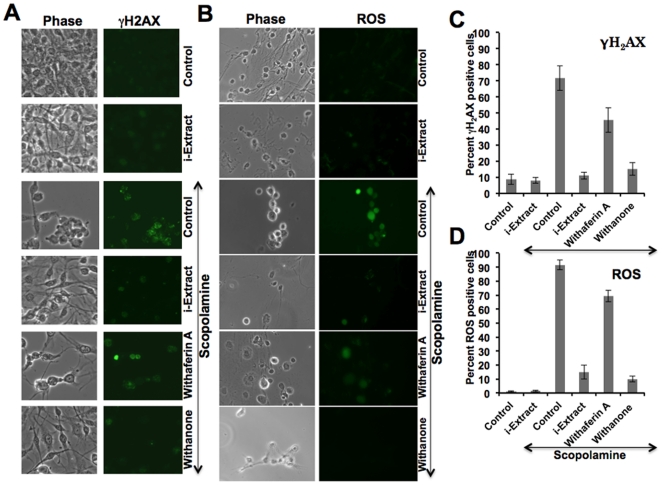
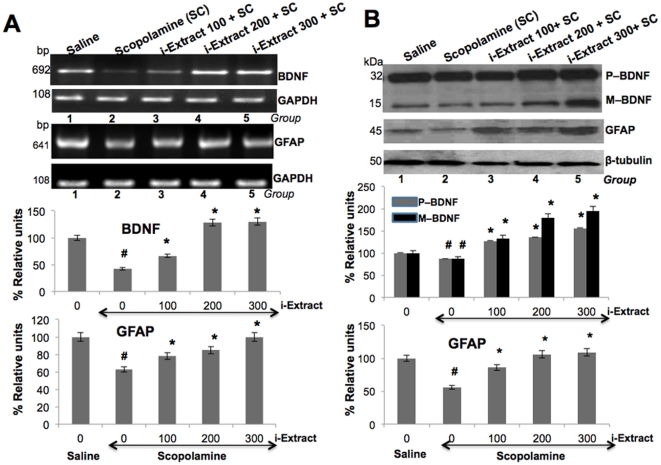
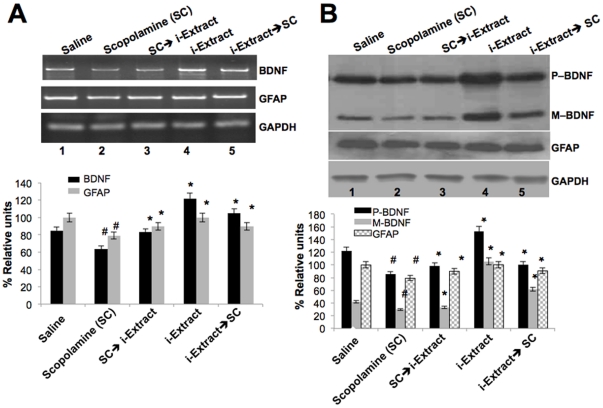
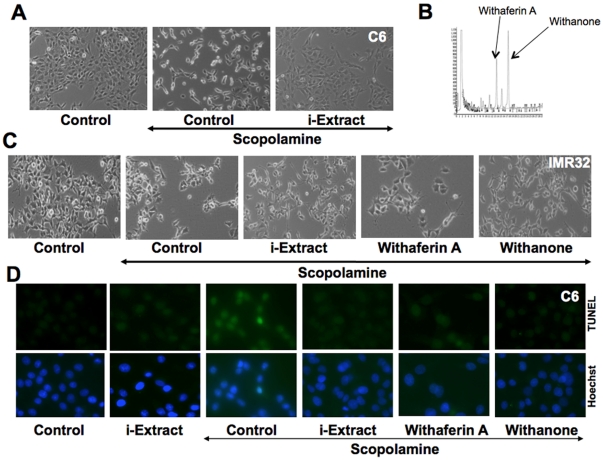
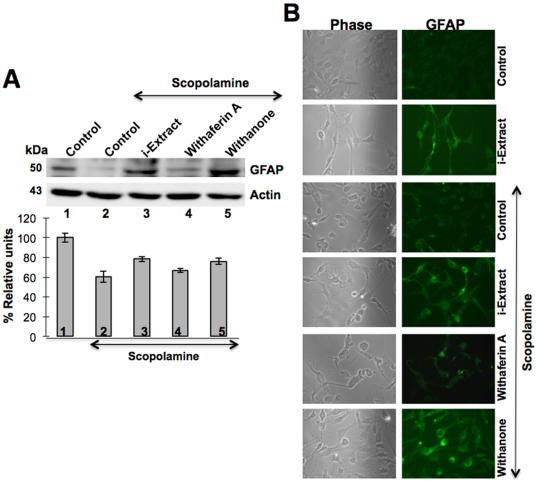
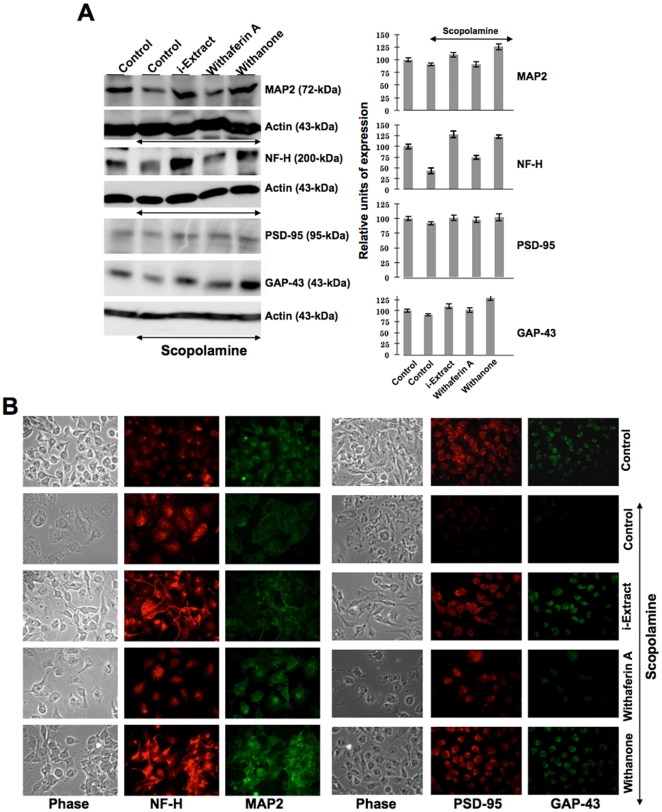
METHODOLOGY/PRINCIPAL FINDINGS: As a drug model, scopolamine hydrobromide was administered intraperitoneally to mice and its effect on the brain function was determined by molecular analyses. The results showed that the scopolamine caused downregulation of the expression of BDNF and GFAP in dose and time dependent manner, and these effects were markedly attenuated in response to i-Extract treatment. Similar to our observations in animal model system, we found that the scopolamine induced cytotoxicity in IMR32 neuronal and C6 glioma cells. It was associated with downregulation of neuronal cell markers NF-H, MAP2, PSD-95, GAP-43 and glial cell marker GFAP and with upregulation of DNA damage--γH2AX and oxidative stress--ROS markers. Furthermore, these molecules showed recovery when cells were treated with i-Extract or its purified component, withanone.
Our study suggested that besides cholinergic blockade, scopolamine-induced memory loss may be associated with oxidative stress and Ashwagandha i-Extract, and withanone may serve as potential preventive and therapeutic agents for neurodegenerative disorders and hence warrant further molecular analyses.
东莨菪碱是一种众所周知的胆碱能拮抗剂,它会在人类和动物模型中引起健忘症。在啮齿动物模型中,东莨菪碱诱导的健忘症已被广泛用于了解分子、生化、行为变化,并描绘记忆障碍的治疗靶点。尽管这与阻断毒蕈碱受体后中枢胆碱能神经元活性的降低有关,但潜在的分子和细胞机制(特别是对神经可塑性的影响)仍然难以捉摸。在本研究中,我们研究了:(i)东莨菪碱对体内和体外神经元和神经胶质可塑性相关分子的影响;(ii)其恢复作用。
方法/主要发现:作为一种药物模型,氢溴酸东莨菪碱被腹腔内给药于小鼠,并通过分子分析来确定其对大脑功能的影响。结果表明,东莨菪碱以剂量和时间依赖的方式下调了 BDNF 和 GFAP 的表达,而 i-Extract 处理明显减弱了这些影响。与我们在动物模型系统中的观察结果类似,我们发现东莨菪碱诱导了 IMR32 神经元和 C6 神经胶质瘤细胞的细胞毒性。它与神经元细胞标志物 NF-H、MAP2、PSD-95、GAP-43 和神经胶质细胞标志物 GFAP 的下调以及 DNA 损伤--γH2AX 和氧化应激--ROS 标志物的上调有关。此外,当细胞用 i-Extract 或其纯化成分,虎杖苷处理时,这些分子显示出恢复。
我们的研究表明,除了胆碱能阻断外,东莨菪碱诱导的健忘症可能与氧化应激和 Ashwagandha i-Extract 有关,而虎杖苷可能作为神经退行性疾病的潜在预防和治疗药物,因此值得进一步的分子分析。