Section of Molecular Genetics and Microbiology, and Institute for Cellular and Molecular Biology, The University of Texas at Austin, Austin, Texas, USA.
PLoS Genet. 2010 Oct 21;6(10):e1001169. doi: 10.1371/journal.pgen.1001169.
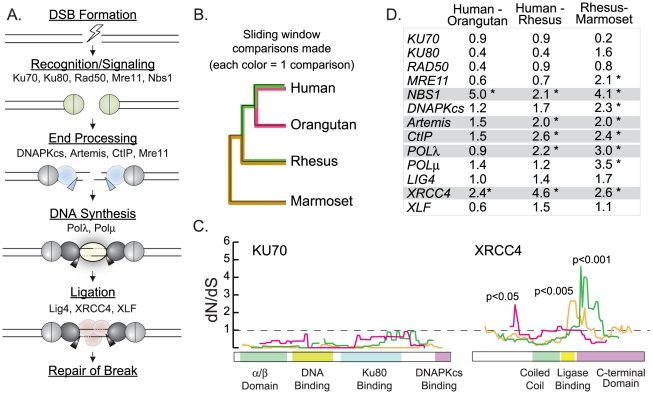
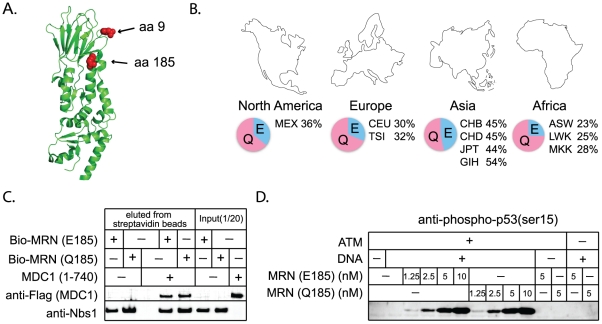
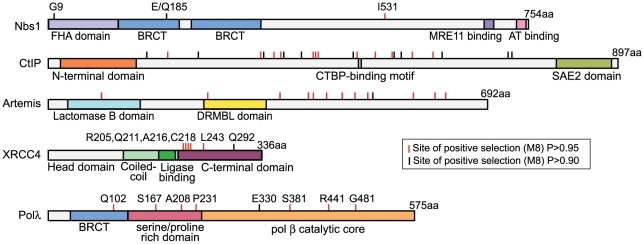
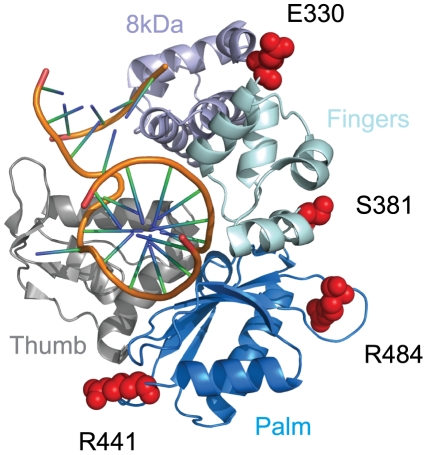
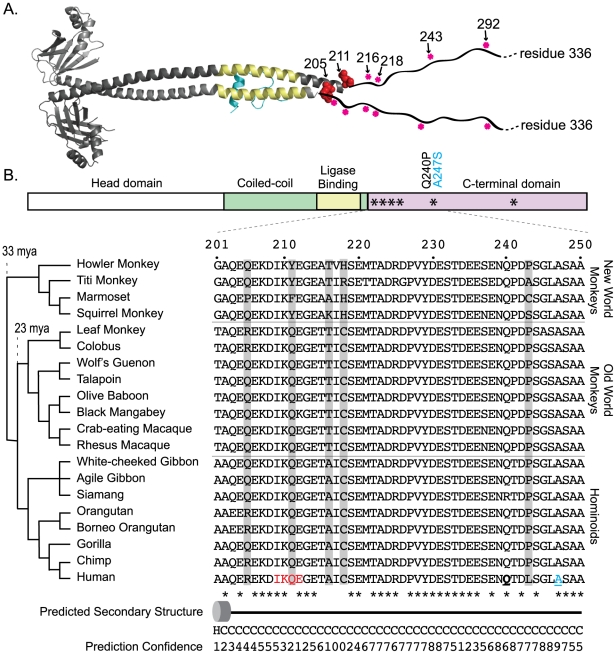
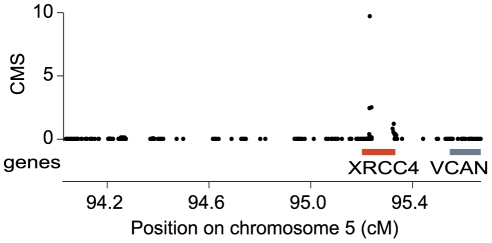
In human cells, DNA double-strand breaks are repaired primarily by the non-homologous end joining (NHEJ) pathway. Given their critical nature, we expected NHEJ proteins to be evolutionarily conserved, with relatively little sequence change over time. Here, we report that while critical domains of these proteins are conserved as expected, the sequence of NHEJ proteins has also been shaped by recurrent positive selection, leading to rapid sequence evolution in other protein domains. In order to characterize the molecular evolution of the human NHEJ pathway, we generated large simian primate sequence datasets for NHEJ genes. Codon-based models of gene evolution yielded statistical support for the recurrent positive selection of five NHEJ genes during primate evolution: XRCC4, NBS1, Artemis, POLλ, and CtIP. Analysis of human polymorphism data using the composite of multiple signals (CMS) test revealed that XRCC4 has also been subjected to positive selection in modern humans. Crystal structures are available for XRCC4, Nbs1, and Polλ; and residues under positive selection fall exclusively on the surfaces of these proteins. Despite the positive selection of such residues, biochemical experiments with variants of one positively selected site in Nbs1 confirm that functions necessary for DNA repair and checkpoint signaling have been conserved. However, many viruses interact with the proteins of the NHEJ pathway as part of their infectious lifecycle. We propose that an ongoing evolutionary arms race between viruses and NHEJ genes may be driving the surprisingly rapid evolution of these critical genes.
在人类细胞中,DNA 双链断裂主要通过非同源末端连接(NHEJ)途径修复。鉴于其关键性质,我们预计 NHEJ 蛋白在进化上是保守的,随着时间的推移,其序列变化相对较小。在这里,我们报告说,尽管这些蛋白质的关键结构域如预期的那样保守,但 NHEJ 蛋白的序列也受到了反复正选择的影响,导致其他蛋白结构域的快速序列进化。为了描述人类 NHEJ 途径的分子进化,我们生成了大量灵长类动物 NHEJ 基因的序列数据集。基于密码子的基因进化模型为五个 NHEJ 基因在灵长类进化过程中的反复正选择提供了统计支持:XRCC4、NBS1、Artemis、POLλ和 CtIP。使用多重信号(CMS)测试对人类多态性数据进行分析,揭示了 XRCC4 在现代人类中也受到了正选择的影响。XRCC4、Nbs1 和 Polλ 有晶体结构;正选择的残基仅落在这些蛋白质的表面上。尽管这些残基受到正选择的影响,但 Nbs1 中一个正选择位点的变体的生化实验证实了修复 DNA 和检查点信号所必需的功能已经得到了保守。然而,许多病毒作为其感染生命周期的一部分与 NHEJ 途径的蛋白质相互作用。我们提出,病毒和 NHEJ 基因之间持续的进化军备竞赛可能是导致这些关键基因惊人快速进化的原因。