Decision and Policy Analysis Program, International Center for Tropical Agriculture, Cali, Colombia.
PLoS One. 2010 Oct 20;5(10):e13497. doi: 10.1371/journal.pone.0013497.
The wild relatives of crops represent a major source of valuable traits for crop improvement. These resources are threatened by habitat destruction, land use changes, and other factors, requiring their urgent collection and long-term availability for research and breeding from ex situ collections. We propose a method to identify gaps in ex situ collections (i.e. gap analysis) of crop wild relatives as a means to guide efficient and effective collecting activities.
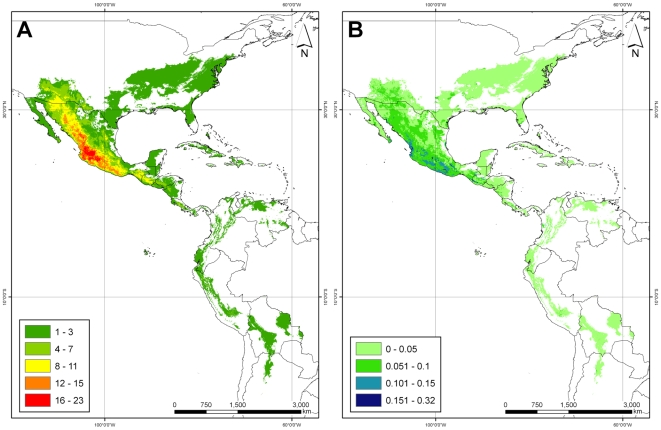
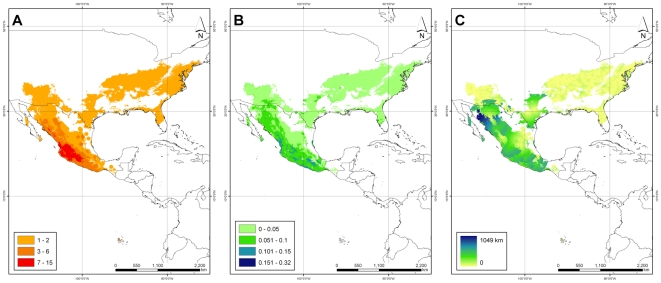
METHODOLOGY/PRINCIPAL FINDINGS: The methodology prioritizes among taxa based on a combination of sampling, geographic, and environmental gaps. We apply the gap analysis methodology to wild taxa of the Phaseolus genepool. Of 85 taxa, 48 (56.5%) are assigned high priority for collecting due to lack of, or under-representation, in genebanks, 17 taxa are given medium priority for collecting, 15 low priority, and 5 species are assessed as adequately represented in ex situ collections. Gap "hotspots", representing priority target areas for collecting, are concentrated in central Mexico, although the narrow endemic nature of a suite of priority species adds a number of specific additional regions to spatial collecting priorities.
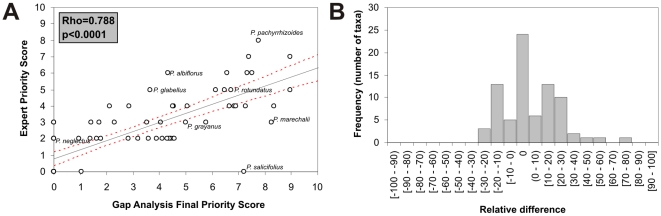
CONCLUSIONS/SIGNIFICANCE: Results of the gap analysis method mostly align very well with expert opinion of gaps in ex situ collections, with only a few exceptions. A more detailed prioritization of taxa and geographic areas for collection can be achieved by including in the analysis predictive threat factors, such as climate change or habitat destruction, or by adding additional prioritization filters, such as the degree of relatedness to cultivated species (i.e. ease of use in crop breeding). Furthermore, results for multiple crop genepools may be overlaid, which would allow a global analysis of gaps in ex situ collections of the world's plant genetic resources.
作物的野生近缘种是改良作物的重要有价值性状的主要来源。这些资源受到生境破坏、土地利用变化等因素的威胁,需要从原地收集并通过离体收集长期提供,以用于研究和培育。我们提出了一种方法来识别作物野生近缘种的离体收集(即缺口分析)中的空白,以指导高效、有效的收集活动。
方法/主要发现:该方法基于采样、地理和环境缺口的组合对分类群进行优先级排序。我们将缺口分析方法应用于菜豆属植物的野生类群。在 85 个分类群中,由于在基因库中缺乏或代表性不足,有 48 个(56.5%)被分配为高度优先收集的分类群,17 个被分配为中度优先收集的分类群,15 个被分配为低度优先收集的分类群,5 个被评估为在离体收集中有足够的代表性。缺口“热点”,代表优先收集的目标区域,集中在墨西哥中部,但一系列优先物种的狭窄特有性质增加了许多特定的额外区域作为空间收集的优先事项。
结论/意义:缺口分析方法的结果与离体收集缺口的专家意见非常吻合,只有少数例外。通过在分析中纳入预测性威胁因素(如气候变化或生境破坏),或者通过添加额外的优先级筛选器(如与栽培种的亲缘关系程度(即作物育种中的易用性),可以更详细地对分类群和地理区域进行优先级排序。此外,还可以叠加多个作物基因库的结果,从而可以对全球植物遗传资源的离体收集中的缺口进行全面分析。