School of Chinese Medicine, College of Chinese Medicine, China Medical University, Taichung 404, Taiwan.
Evid Based Complement Alternat Med. 2011;2011:459531. doi: 10.1155/2011/459531. Epub 2010 Sep 26.
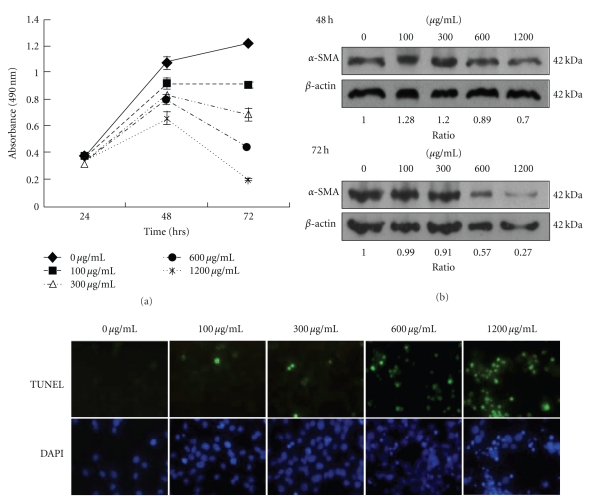
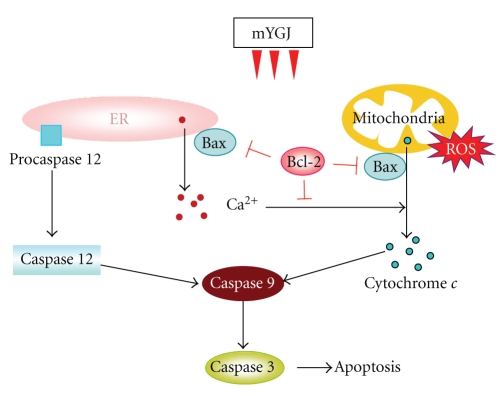
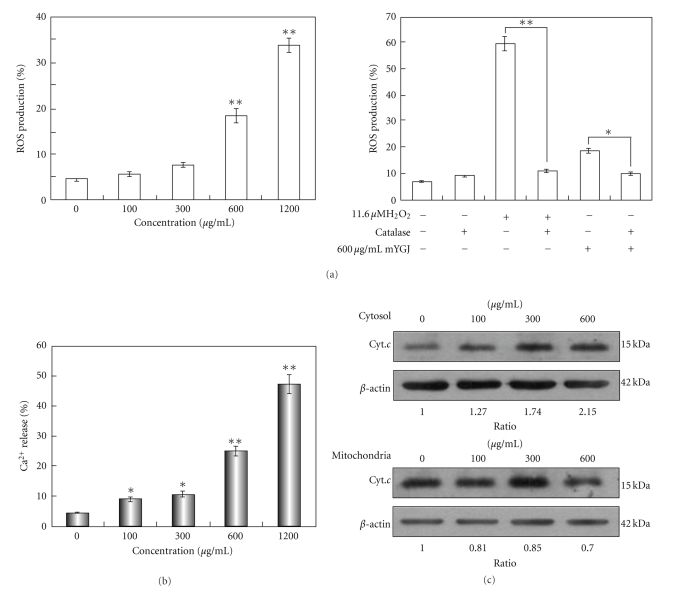
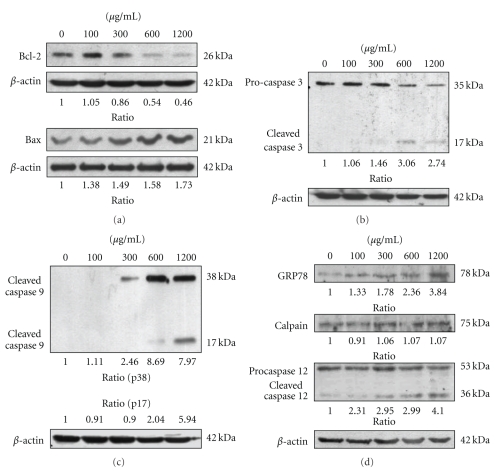
The Chinese herb modified Yi Guan Jian (mYGJ) is an effective regimen that is usually used in outpatients with chronic liver diseases such as fibrosis and cirrhosis. However, the mechanism for the action of mYGJ on liver fibrosis is not yet clear. In this study, we found that mYGJ induced hepatic stellate cells (HSCs) apoptosis concomitant with the downregulation of Bcl-2 expression and slight elevation of Bax level. Moreover, the reactive oxygen species (ROS) were generated in the early stages of mYGJ-induced HSCs apoptosis to facilitate calcium and cytochrome c release from the mitochondria to cytosol. Subsequently, caspase 9 and caspase 3 were activated. Furthermore, the activation of ER stress-associated caspase 12 in HSCs was also evaluated. Together, we report the first evidence-based study to demonstrate that mYGJ decoction induces HSCs apoptosis through ROS accumulation and the intrinsic apoptosis pathway. These findings provide rationale for further clinical investigation of traditional Chinese medicine recipes against liver fibrosis.
中药复方一贯煎(mYGJ)是一种有效的治疗方案,通常用于治疗慢性肝病患者,如纤维化和肝硬化。然而,mYGJ 对肝纤维化作用的机制尚不清楚。在这项研究中,我们发现 mYGJ 诱导肝星状细胞(HSCs)凋亡,同时下调 Bcl-2 表达,轻度上调 Bax 水平。此外,mYGJ 诱导的 HSCs 凋亡早期会产生活性氧(ROS),促进钙和细胞色素 c 从线粒体释放到细胞质。随后,caspase 9 和 caspase 3 被激活。此外,还评估了 HSCs 中与内质网应激相关的 caspase 12 的激活。总之,我们首次报道了基于证据的研究,证明 mYGJ 汤通过 ROS 积累和内在凋亡途径诱导 HSCs 凋亡。这些发现为进一步研究中药方剂治疗肝纤维化提供了依据。