CNAP, Department of Biology, University of York, Heslington, York YO10 5YW, UK.
Biotechnol Biofuels. 2010 Oct 27;3:23. doi: 10.1186/1754-6834-3-23.
Cell wall resistance represents the main barrier for the production of second generation biofuels. The deconstruction of lignocellulose can provide sugars for the production of fuels or other industrial products through fermentation. Understanding the biochemical basis of the recalcitrance of cell walls to digestion will allow development of more effective and cost efficient ways to produce sugars from biomass. One approach is to identify plant genes that play a role in biomass recalcitrance, using association genetics. Such an approach requires a robust and reliable high throughput (HT) assay for biomass digestibility, which can be used to screen the large numbers of samples involved in such studies.
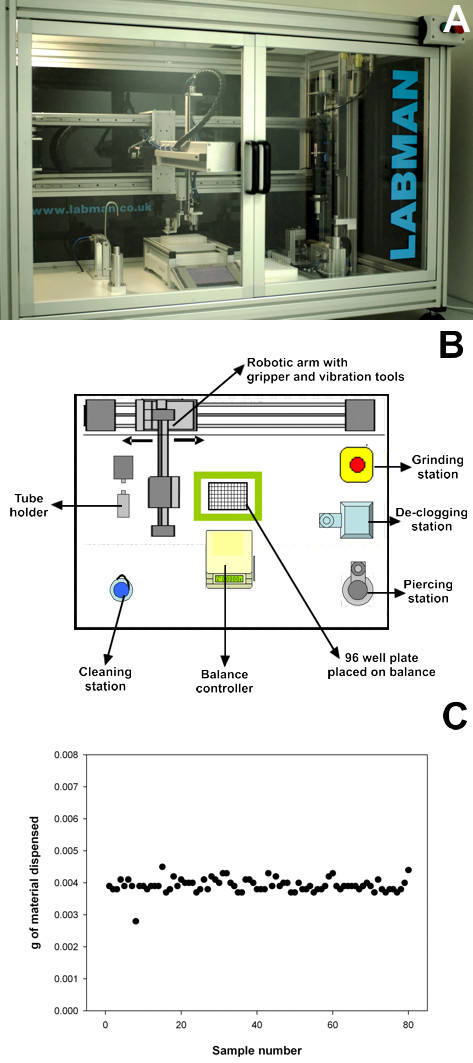
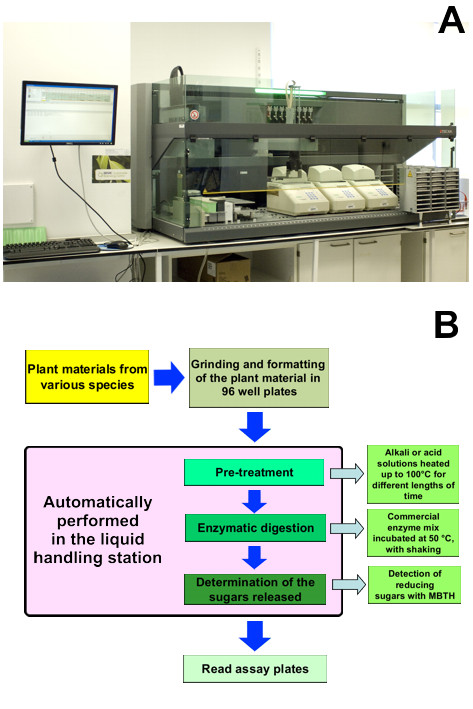
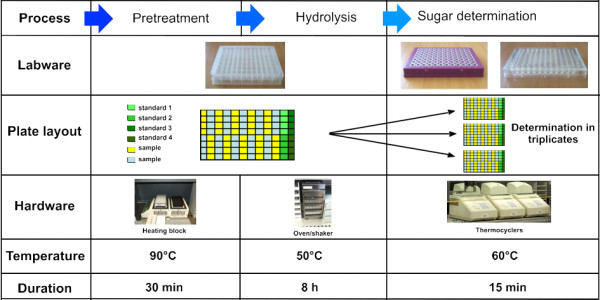
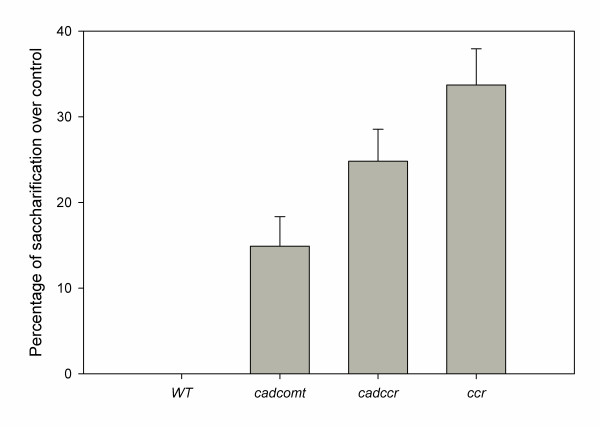
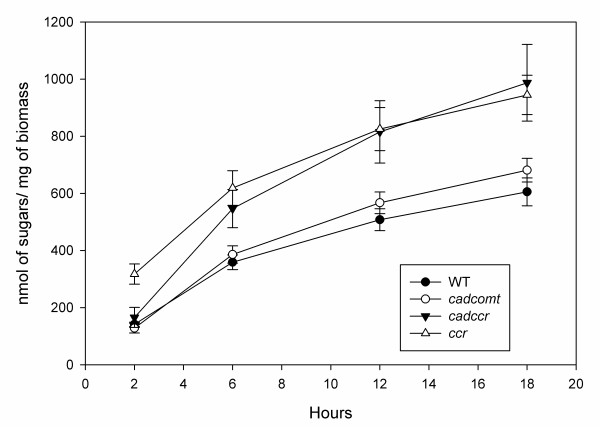
We developed a HT saccharification assay based on a robotic platform that can carry out in a 96-well plate format the enzymatic digestion and quantification of the released sugars. The handling of the biomass powder for weighing and formatting into 96 wells is performed by a robotic station, where the plant material is ground, delivered to the desired well in the plates and weighed with a precision of 0.1 mg. Once the plates are loaded, an automated liquid handling platform delivers an optional mild pretreatment (< 100°C) followed by enzymatic hydrolysis of the biomass. Aliquots from the hydrolysis are then analyzed for the release of reducing sugar equivalents. The same platform can be used for the comparative evaluation of different enzymes and enzyme cocktails. The sensitivity and reliability of the platform was evaluated by measuring the saccharification of stems from lignin modified tobacco plants, and the results of automated and manual analyses compared.
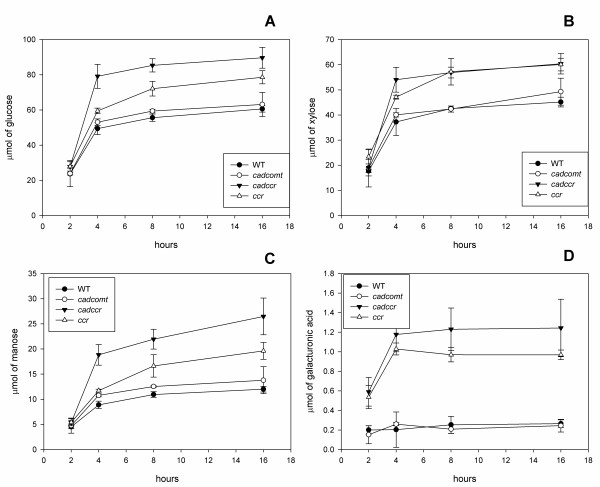
The automated assay systems are sensitive, robust and reliable. The system can reliably detect differences in the saccharification of plant tissues, and is able to process large number of samples with a minimum amount of human intervention. The automated system uncovered significant increases in the digestibility of certain lignin modified lines in a manner compatible with known effects of lignin modification on cell wall properties. We conclude that this automated assay platform is of sufficient sensitivity and reliability to undertake the screening of the large populations of plants necessary for mutant identification and genetic association studies.
细胞壁抗性是第二代生物燃料生产的主要障碍。木质纤维素的解构可以通过发酵为燃料或其他工业产品提供糖。了解细胞壁消化的生化基础将有助于开发更有效和更具成本效益的方法从生物质中生产糖。一种方法是使用关联遗传学鉴定在生物质抗性中起作用的植物基因。这种方法需要一种稳健可靠的高通量(HT)生物质消化率测定法,可用于筛选此类研究中涉及的大量样本。
我们开发了一种基于机器人平台的 HT 糖化测定法,该方法可以在 96 孔板格式中进行酶解和释放糖的定量。用于称重和格式化成 96 孔的生物质粉末的处理由机器人站执行,其中植物材料被研磨,输送到板中的所需孔中,并以 0.1mg 的精度称重。一旦板被加载,自动化的液体处理平台即可提供可选的温和预处理(<100°C),然后对生物质进行酶水解。水解的等分试样随后用于分析还原糖当量的释放。同一平台可用于比较不同酶和酶混合物的评估。通过测量木质素修饰烟草植物的茎的糖化作用来评估平台的灵敏度和可靠性,并比较自动分析和手动分析的结果。
自动化测定系统灵敏、稳健且可靠。该系统能够可靠地检测植物组织糖化的差异,并能够以最小的人为干预处理大量样本。自动化系统以与细胞壁特性的木质素修饰已知影响兼容的方式发现某些木质素修饰系的消化率显著提高。我们得出的结论是,这种自动化测定平台具有足够的灵敏度和可靠性,可以进行鉴定和遗传关联研究所需的大量植物群体的筛选。