Department of Medicinal Chemistry, University of Utah, Salt Lake City, Utah 84112, United States.
J Nat Prod. 2010 Nov 29;73(11):1922-6. doi: 10.1021/np100588c. Epub 2010 Oct 28.
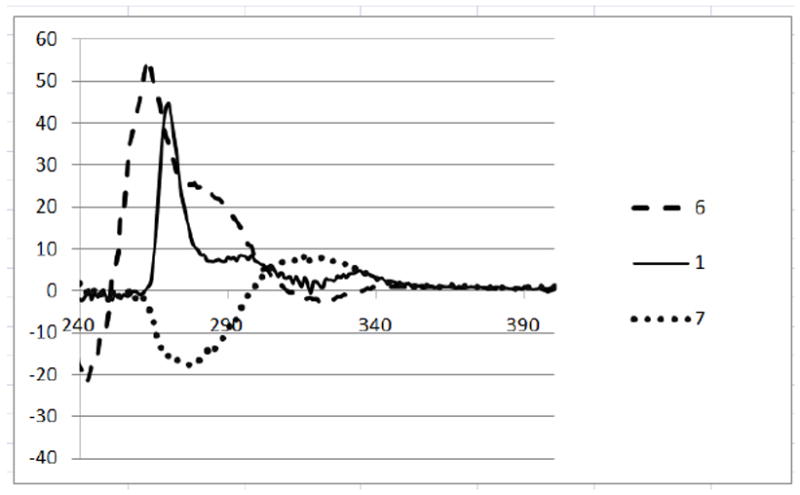
The cone snail Conus pulicarius from the Philippines provides a specific habitat for actinomycetes and other bacteria. A phenotypic screen using primary cultures of mouse dorsal root ganglion neurons revealed that one C. pulicarius associate, Streptomyces sp. CP32, produces a series of natural products that enhance or diminish whole-cell Ca(2+) flux. These compounds include known thiazoline compounds and a series of new derivatives, pulicatins A-E (6-10). Individual compounds were shown to bind to a series of human receptors, with selective binding to the human serotonin 5-HT(2B) receptor. Here, we report the structure elucidation of the new compounds and results of the neurological assays.
菲律宾的圆锥蜗牛 Conus pulicarius 为放线菌和其他细菌提供了一个特定的栖息地。利用小鼠背根神经节神经元的原代培养进行表型筛选,发现圆锥蜗牛的一种共生菌,链霉菌属 CP32,能产生一系列能增强或减弱全细胞 Ca(2+)流的天然产物。这些化合物包括已知的噻唑啉化合物和一系列新的衍生物,pulicatins A-E(6-10)。研究表明,单个化合物能与一系列人类受体结合,并能选择性地与人类 5-羟色胺 5-HT(2B)受体结合。在这里,我们报告了新化合物的结构阐明和神经学测定的结果。